

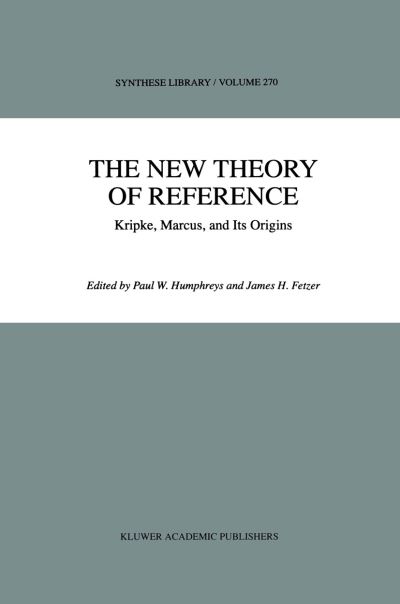
On January 20th, 22nd, and 29th, 1970 Saul Kripke delivered three lectures at Princeton University. They produced something of a sensation. In the lectures he argued, amongst other things, that many names in ordinary language referred to objects directly rather than by means of associated descriptions; that causal chains from language user to language user were an important mechanism for preserving reference; that there were necessary a posteriori and contingent a priori truths; that identity relations between rigid designators were necessary; and argued, more tentatively, that materialist identity theories in the philosophy of mind were suspect. Interspersed with this was a consider- able amount of material on natural kind terms and essentialism. As a result of these lectures and a related 1971 paper, 'Identity and Necessity' (Kripke [1971]), talk of rigid designators, Hesperus and Phosphorus, meter bars, gold and H 0, and suchlike quickly became commonplace in philosophical circles 2 and when the lectures were published under the title Naming and Necessity in the collection The Semantics of Natural Language (Davidson and Harman l [1972]), that volume became the biggest seller in the Reidel (later Kluwer) list. The cluster of theses surrounding the idea that a relation of direct reference 2 exists between names and their referents is now frequently referred to as 'The 3 New Theory of Reference'.
| ISBN: | 9780792355786 |
| Publication date: | 31st March 1999 |
| Author: | Paul W Humphreys, James H Fetzer |
| Publisher: | Springer an imprint of Springer Netherlands |
| Format: | Paperback |
| Pagination: | 290 pages |
| Series: | Synthese Library |
| Genres: |
Philosophy of language Philosophy: metaphysics and ontology Philosophy: epistemology and theory of knowledge Philosophy: logic |
On January 20th, 22nd, and 29th, 1970 Saul Kripke delivered three lectures at Princeton University. They produced something of a sensation. In the lectures he argued, amongst other things, that many names in ordinary language referred to objects directly rather than by means of associated descriptions; that causal chains from language user to language user were an important mechanism for preserving reference; that there were necessary a posteriori and contingent a priori truths; that identity relations between rigid designators were necessary; and argued, more tentatively, that materialist identity theories in the philosophy of mind were suspect. Interspersed with this was a consider- able amount of material on natural kind terms and essentialism. As a result of these lectures and a related 1971 paper, 'Identity and Necessity' (Kripke [1971]), talk of rigid designators, Hesperus and Phosphorus, meter bars, gold and H 0, and suchlike quickly became commonplace in philosophical circles 2 and when the lectures were published under the title Naming and Necessity in the collection The Semantics of Natural Language (Davidson and Harman l [1972]), that volume became the biggest seller in the Reidel (later Kluwer) list. The cluster of theses surrounding the idea that a relation of direct reference 2 exists between names and their referents is now frequently referred to as 'The 3 New Theory of Reference'.
The New Theory of Reference features in the following genres: Philosophy of language, Philosophy: metaphysics and ontology, Philosophy: epistemology and theory of knowledge, Philosophy: logic
The New Theory of Reference is available in Paperback
The New Theory of Reference was written by Paul W Humphreys, James H Fetzer and published by Springer an imprint of Springer Netherlands
The New Theory of Reference has 290 pages
Yes it is part of Synthese Library series