

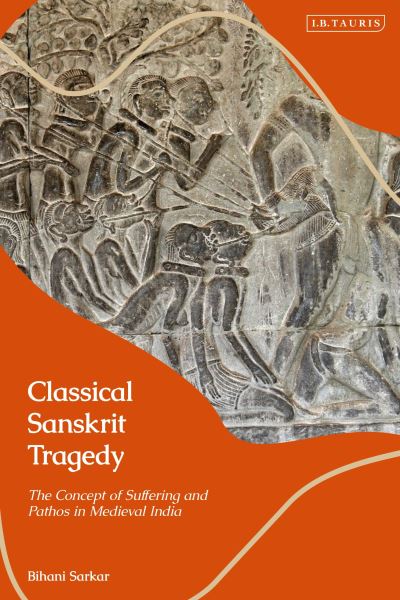
It is often assumed that classical Sanskrit poetry and drama lack a concern with the tragic. However, as Bihani Sarkar makes clear in this book, this is far from the case. In the first study of tragedy in classical Sanskrit literature, Sarkar draws on a wide range of Sanskrit dramas, poems and treatises - much of them translated for the first time into English - to provide a complete history of the tragic in Indian literature from the second to the fourth centuries.
Looking at Kalidasa, the most celebrated writer of Sanskrit poetry and drama (kavya), this book argues that constructions of absence and grief are central to Kalidasa's compositions and that these 'tragic middles' are much more sophisticated than previously understood. For Kalidasa, tragic middles are modes of thinking, in which he confronts theological and philosophical issues. Through a close literary analysis of the tragic middle in five of his works, the Abhijñanasakuntala, the Raghuva?sa, the Kumarasambhava, the Vikramorvasiya and the Meghaduta, Sarkar demonstrates the importance of tragedy for classical Indian poetry and drama in the early centuries of the common era. These depictions from the Indian literary sphere, by their particular function and interest in the phenomenology of grief, challenge and reshape in a wholly new way our received understanding of tragedy.
| ISBN: | 9780755639243 |
| Publication date: | 25th August 2022 |
| Author: | Bihani Sarkar |
| Publisher: | I.B. Tauris an imprint of Bloomsbury Publishing (UK) |
| Format: | Paperback |
| Pagination: | 224 pages |
| Genres: |
Asian history Literary studies: general History and Archaeology |
It is often assumed that classical Sanskrit poetry and drama lack a concern with the tragic. However, as Bihani Sarkar makes clear in this book, this is far from the case. In the first study of tragedy in classical Sanskrit literature, Sarkar draws on a wide range of Sanskrit dramas, poems and treatises - much of them translated for the first time into English - to provide a complete history of the tragic in Indian literature from the second to the fourth centuries.
Looking at Kalidasa, the most celebrated writer of Sanskrit poetry and drama (kavya), this book argues that constructions of absence and grief are central to Kalidasa's compositions and that these 'tragic middles' are much more sophisticated than previously understood. For Kalidasa, tragic middles are modes of thinking, in which he confronts theological and philosophical issues. Through a close literary analysis of the tragic middle in five of his works, the Abhijñanasakuntala, the Raghuva?sa, the Kumarasambhava, the Vikramorvasiya and the Meghaduta, Sarkar demonstrates the importance of tragedy for classical Indian poetry and drama in the early centuries of the common era. These depictions from the Indian literary sphere, by their particular function and interest in the phenomenology of grief, challenge and reshape in a wholly new way our received understanding of tragedy.
Classical Sanskrit Tragedy features in the following genres: Asian history, Literary studies: general, History and Archaeology
Classical Sanskrit Tragedy is available in Paperback, Hardback
Classical Sanskrit Tragedy was written by Bihani Sarkar and published by I.B. Tauris an imprint of Bloomsbury Publishing (UK)
Classical Sanskrit Tragedy has 224 pages
£28.79