British Academy Book Prize shortlist
Making the radical argument that the nation-state was born of colonialism, this book calls us to rethink political violence and reimagine political community beyond majorities and minorities.
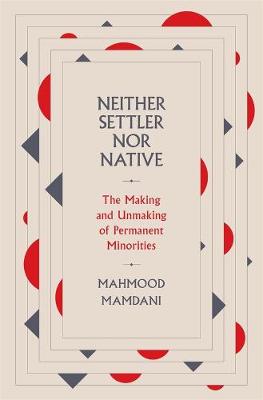
In this genealogy of political modernity, Mahmood Mamdani argues that the nation-state and the colonial state created each other. In case after case around the globe-from the New World to South Africa, Israel to Germany to Sudan-the colonial state and the nation-state have been mutually constructed through the politicization of a religious or ethnic majority at the expense of an equally manufactured minority.
The model emerged in North America, where genocide and internment on reservations created both a permanent native underclass and the physical and ideological spaces in which new immigrant identities crystallized as a settler nation. In Europe, this template would be used by the Nazis to address the Jewish Question, and after the fall of the Third Reich, by the Allies to redraw the boundaries of Eastern Europe's nation-states, cleansing them of their minorities. After Nuremberg the template was used to preserve the idea of the Jews as a separate nation. By establishing Israel through the minoritization of Palestinian Arabs, Zionist settlers followed the North American example. The result has been another cycle of violence.
Neither Settler nor Native offers a vision for arresting this historical process. Mamdani rejects the criminal solution attempted at Nuremberg, which held individual perpetrators responsible without questioning Nazism as a political project and thus the violence of the nation-state itself. Instead, political violence demands political solutions: not criminal justice for perpetrators but a rethinking of the political community for all survivors-victims, perpetrators, bystanders, beneficiaries-based on common residence and the commitment to build a common future without the permanent political identities of settler and native. Mamdani points to the anti-apartheid struggle in South Africa as an unfinished project, seeking a state without a nation.
| ISBN: | 9780674987326 |
| Publication date: | 30th November 2020 |
| Author: | Mahmood Mamdani |
| Publisher: | The Belknap Press an imprint of Harvard University Press |
| Format: | Hardback |
| Pagination: | 401 pages |
| Primary Genre | History |
| Other Genres: |
British Academy Book Prize shortlist
Making the radical argument that the nation-state was born of colonialism, this book calls us to rethink political violence and reimagine political community beyond majorities and minorities.
In this genealogy of political modernity, Mahmood Mamdani argues that the nation-state and the colonial state created each other. In case after case around the globe-from the New World to South Africa, Israel to Germany to Sudan-the colonial state and the nation-state have been mutually constructed through the politicization of a religious or ethnic majority at the expense of an equally manufactured minority.
The model emerged in North America, where genocide and internment on reservations created both a permanent native underclass and the physical and ideological spaces in which new immigrant identities crystallized as a settler nation. In Europe, this template would be used by the Nazis to address the Jewish Question, and after the fall of the Third Reich, by the Allies to redraw the boundaries of Eastern Europe's nation-states, cleansing them of their minorities. After Nuremberg the template was used to preserve the idea of the Jews as a separate nation. By establishing Israel through the minoritization of Palestinian Arabs, Zionist settlers followed the North American example. The result has been another cycle of violence.
Neither Settler nor Native offers a vision for arresting this historical process. Mamdani rejects the criminal solution attempted at Nuremberg, which held individual perpetrators responsible without questioning Nazism as a political project and thus the violence of the nation-state itself. Instead, political violence demands political solutions: not criminal justice for perpetrators but a rethinking of the political community for all survivors-victims, perpetrators, bystanders, beneficiaries-based on common residence and the commitment to build a common future without the permanent political identities of settler and native. Mamdani points to the anti-apartheid struggle in South Africa as an unfinished project, seeking a state without a nation.
Neither Settler nor Native features in the following genres: History, Comparative politics, Political oppression and persecution, Second World War, Modern warfare, Politics and government, Political science and theory, History and Archaeology, Society and Social Sciences, Political control and freedoms, Specific wars and campaigns, Military history
Neither Settler nor Native is available in Paperback, Hardback
Neither Settler nor Native was written by Mahmood Mamdani and published by The Belknap Press an imprint of Harvard University Press
Neither Settler nor Native has 401 pages