

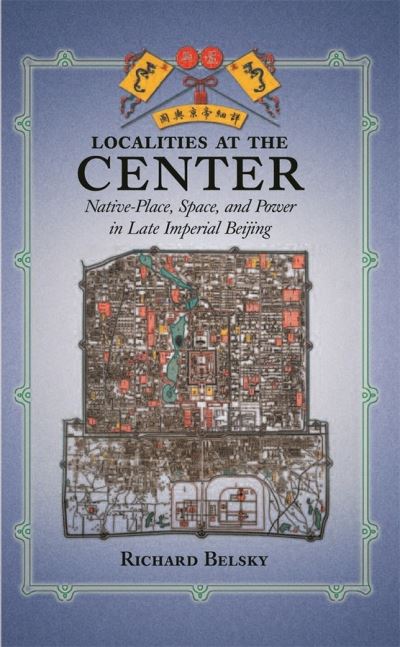
A visitor to Beijing in 1900, Chinese or foreign, would have been struck by the great number of native-place lodges serving the needs of scholars and officials from the provinces. What were these native-place lodges? How did they develop over time? How did they fit into and shape Beijing's urban ecology? How did they further native-place ties?
In answering these questions, the author considers how native-place ties functioned as channels of communication between China's provinces and the political center; how sojourners to the capital used native-place ties to create solidarity within their communities of fellow provincials and within the class of scholar-officials as a whole; how the state co-opted these ties as a means of maintaining order within the city and controlling the imperial bureaucracy; how native-place ties transformed the urban landscape and social structure of the city; and how these functions were refashioned in the decades of political innovation that closed the Qing period. Native-place lodges are often cited as an example of the particularistic ties that characterized traditional China and worked against the emergence of a modern state based on loyalty to the nation. The author argues that by fostering awareness of membership in an elite group, the native-place lodges generated a sense of belonging to a nation that furthered the reforms undertaken in the early twentieth century.
| ISBN: | 9780674019560 |
| Publication date: | 31st March 2006 |
| Author: | Richard Belsky |
| Publisher: | Harvard University Asia Center an imprint of Harvard University Press |
| Format: | Hardback |
| Pagination: | 318 pages |
| Series: | Harvard East Asian Monographs |
| Genres: |
Geography |
A visitor to Beijing in 1900, Chinese or foreign, would have been struck by the great number of native-place lodges serving the needs of scholars and officials from the provinces. What were these native-place lodges? How did they develop over time? How did they fit into and shape Beijing's urban ecology? How did they further native-place ties?
In answering these questions, the author considers how native-place ties functioned as channels of communication between China's provinces and the political center; how sojourners to the capital used native-place ties to create solidarity within their communities of fellow provincials and within the class of scholar-officials as a whole; how the state co-opted these ties as a means of maintaining order within the city and controlling the imperial bureaucracy; how native-place ties transformed the urban landscape and social structure of the city; and how these functions were refashioned in the decades of political innovation that closed the Qing period. Native-place lodges are often cited as an example of the particularistic ties that characterized traditional China and worked against the emergence of a modern state based on loyalty to the nation. The author argues that by fostering awareness of membership in an elite group, the native-place lodges generated a sense of belonging to a nation that furthered the reforms undertaken in the early twentieth century.
Localities at the Center features in the following genres: Geography
Localities at the Center is available in Hardback
Localities at the Center was written by Richard Belsky and published by Harvard University Asia Center an imprint of Harvard University Press
Localities at the Center has 318 pages
Yes it is part of Harvard East Asian Monographs series
£34.16