LoveReading Says
One of One of Will Self's favourite books.
On a June morning in 1923, Clarissa Dalloway is preparing for a party and remembering her past. Elsewhere in London, Septimus Smith is suffering from shell-shock and on the brink of madness. Their days interweave and their lives converge as the party reaches its glittering climax.
LoveReading
About Mrs. Dalloway
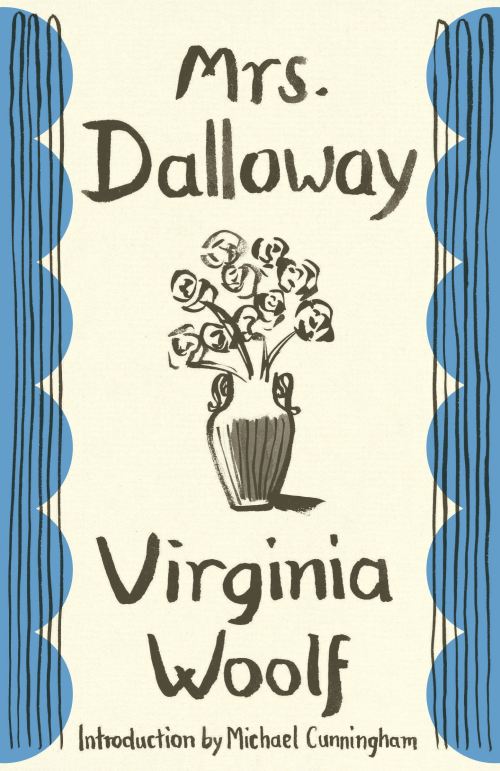
This new edition of one of Virginia Woolf's most celebrated novels features an introduction by Michael Cunningham, acclaimed bestselling author of The Hours.Mrs. Dalloway chronicles a June day in the life of Clarissa Dalloway-a day that is taken up with running minor errands in preparation for a party and that is punctuated, toward the end, by the death of a young man she has never met.
Read the full description
Find This Book In
Mrs. Dalloway Synopsis
This new edition of one of Virginia Woolf's most celebrated novels features an introduction by Michael Cunningham, acclaimed bestselling author of The Hours.
Mrs. Dalloway chronicles a June day in the life of Clarissa Dalloway-a day that is taken up with running minor errands in preparation for a party and that is punctuated, toward the end, by the death of a young man she has never met.
In giving an apparently ordinary day such immense resonance and significance-infusing it with the elemental conflict between death and life-Virginia Woolf triumphantly discovers her distinctive style as a novelist. Originally published in 1925, Mrs. Dalloway is Woolf's first complete rendering of what she described as the "luminous envelope" of consciousness: a dazzling display of the mind's inside as it plays over the brilliant surface and darker depths of reality.
This edition uses the text of the original British publication of Mrs. Dalloway, which includes changes Woolf made that never appeared in the first or subsequent American editions.
About This Edition
Virginia Woolf Press Reviews
'One of the few genuine innovations in the history of the novel'- New Yorker
'One of her greatest achievements, a book whose afterlife continues to inspire new generations of writers and readers'- Guardian
About Virginia Woolf
Virginia Woolf is now recognized as a major twentieth-century author, a great novelist and essayist and a key figure in literary history as a feminist and a modernist. Born in 1882, she was the daughter of the editor and critic Leslie Stephen, and suffered a traumatic adolescence after the deaths of her mother, in 1895, and her step-sister Stella, in 1897, leaving her subject to breakdowns for the rest of her life. Her father died in 1904 and two years later her favourite brother Thoby died suddenly of typhoid.
With her sister, the painter Vanessa Bell, she was drawn into the company of writers and artists such as Lytton Strachey and Roger Fry, later known as the Bloomsbury Group. Among them she met Leonard Woolf, whom she married in 1912, and together they founded the Hogarth Press in 1917, which was to publish the work of T. S. Eliot, E. M. Forster and Katherine Mansfield as well as the earliest translations of Freud. Woolf lived an energetic life among friends and family, reviewing and writing, and dividing her time between London and the Sussex Downs. In 1941, fearing another attack of mental illness, she drowned herself.
Her first novel, The Voyage Out, appeared in 1915, and she then worked through the transitional Night and Day (1919) to the highly experimental and impressionistic Jacob’s Room (1922). From then on her fiction became a series of brilliant and extraordinarily varied experiments, each one searching for a fresh way of presenting the relationship between individual lives and the forces of society and history. She was particularly concerned with women’s experience, not only in her novels but also in her essays and her two books of feminist polemic, A Room of One’s Own (1929) and Three Guineas (1938).
Her major novels include Mrs Dalloway (1925), the historical fantasy Orlando (1928), written for Vita Sackville-West, the extraordinarily poetic vision of The Waves (1931), the family saga of The Years (1937), and Between the Acts (1941).
More About Virginia Woolf


.jpg)