

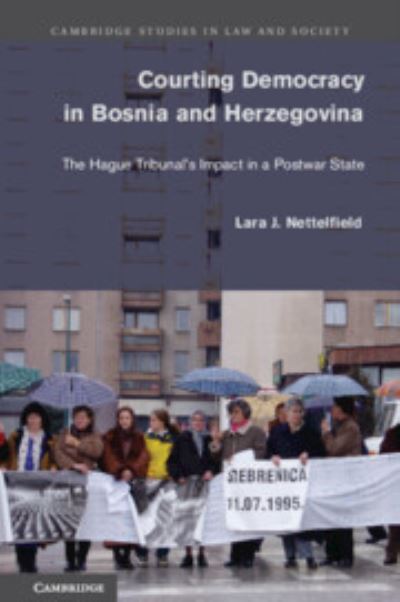
The International Criminal Tribunal for the former Yugoslavia (ICTY) struggled to apprehend and try high-profile defendants including Serbian leader Slobodan Miloševic, often receiving more criticism than praise. This volume argues that the court has made a substantial contribution to Bosnia and Herzegovina's transition to democracy. Based on over three years of field research and several hundred interviews, this study brings together multiple research methods - including surveys, ethnography and archival materials - to show the court's impact on five segments of Bosnian society, emphasizing the role of the social setting in translating international law into domestic contexts. Much of the early rhetoric about the transformative potential of international criminal law fostered unrealistic expectations of institutions like the ICTY. Judged by more realistic standards, international law is seen to play a modest yet important role in postwar transitions. These findings have implications for the study of international courts around the world and the role of law in contributing to social change.
| ISBN: | 9780521763806 |
| Publication date: | 22nd July 2010 |
| Author: | Lara J Nettelfield |
| Publisher: | Cambridge University Press |
| Format: | Hardback |
| Pagination: | 330 pages |
| Series: | Cambridge Studies in Law and Society |
| Genres: |
Public international law: international organizations and institutions |
The International Criminal Tribunal for the former Yugoslavia (ICTY) struggled to apprehend and try high-profile defendants including Serbian leader Slobodan Miloševic, often receiving more criticism than praise. This volume argues that the court has made a substantial contribution to Bosnia and Herzegovina's transition to democracy. Based on over three years of field research and several hundred interviews, this study brings together multiple research methods - including surveys, ethnography and archival materials - to show the court's impact on five segments of Bosnian society, emphasizing the role of the social setting in translating international law into domestic contexts. Much of the early rhetoric about the transformative potential of international criminal law fostered unrealistic expectations of institutions like the ICTY. Judged by more realistic standards, international law is seen to play a modest yet important role in postwar transitions. These findings have implications for the study of international courts around the world and the role of law in contributing to social change.
Courting Democracy in Bosnia and Herzegovina features in the following genres: Public international law: international organizations and institutions, International relations
Courting Democracy in Bosnia and Herzegovina is available in Hardback
Courting Democracy in Bosnia and Herzegovina was written by Lara J Nettelfield and published by Cambridge University Press
Courting Democracy in Bosnia and Herzegovina has 330 pages
Yes it is part of Cambridge Studies in Law and Society series
£102.60