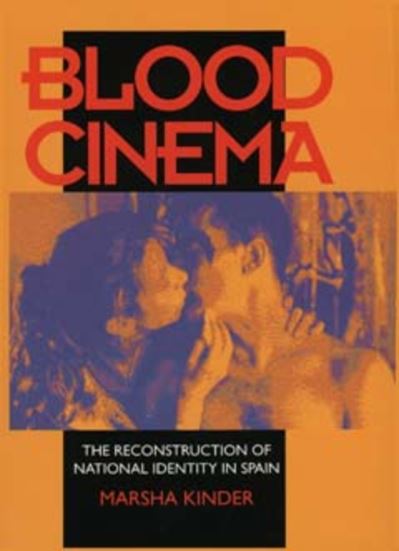
In this innovative synthesis of film history and cultural analysis, Marsha Kinder examines the films of such key directors as Buñuel, Saura, Erice, and Almodóvar, as well as works from the popular cinema and television, exploring how they manifest political and cultural tensions related to the production of Spanish national identity within a changing global context.
Concentrated on the decades from the 1950s to the 1990s, Kinder's work is broadly historical but essentially conceptual, moving backward and forward in time, drawing examples from earlier films and from works of art and literature, and providing close readings of a wide range of texts. Her questioning and internationalizing of the "national cinema" concept and her application of contemporary critical theory-especially insights from feminism, Marxism, psychoanalysis, cultural studies, and discourse theory-distinguish Blood Cinema from previous film histories. The author also makes use of a variety of sources within Spain such as the commentaries on Spanish character and culture by Unamunov and others, the contemporary debate over the restructuring of Spanish television.
Kinder's book moves Spanish cinema into the mainstream of film studies by demonstrating that a knowledge of its history alters and enriches our understanding of world cinema.
The interactive CD-ROM is available from CINE-DISCS, 2021 Holly Hill Terrace, Los Angeles, CA 90068, (213) 876-7678.
Buy from our bookstore and 25% of the cover price will be given to a school of your choice to buy more books. *15% of eBooks.
Frequently asked questions
In this innovative synthesis of film history and cultural analysis, Marsha Kinder examines the films of such key directors as Buñuel, Saura, Erice, and Almodóvar, as well as works from the popular cinema and television, exploring how they manifest political and cultural tensions related to the production of Spanish national identity within a changing global context.
Concentrated on the decades from the 1950s to the 1990s, Kinder's work is broadly historical but essentially conceptual, moving backward and forward in time, drawing examples from earlier films and from works of art and literature, and providing close readings of a wide range of texts. Her questioning and internationalizing of the "national cinema" concept and her application of contemporary critical theory-especially insights from feminism, Marxism, psychoanalysis, cultural studies, and discourse theory-distinguish Blood Cinema from previous film histories. The author also makes use of a variety of sources within Spain such as the commentaries on Spanish character and culture by Unamunov and others, the contemporary debate over the restructuring of Spanish television.
Kinder's book moves Spanish cinema into the mainstream of film studies by demonstrating that a knowledge of its history alters and enriches our understanding of world cinema.
The interactive CD-ROM is available from CINE-DISCS, 2021 Holly Hill Terrace, Los Angeles, CA 90068, (213) 876-7678.
Blood Cinema features in the following genres: Films, cinema
Blood Cinema is available in Paperback
Blood Cinema was written by Marsha Kinder and published by University of California Press
Blood Cinema has 568 pages
£27.90
Join Our Community
Join our community for the latest bookish news, reading recommendations, exclusive opening extracts, author events and competitions. It\'s all free. And enter a monthly draw to win a £50 Gift Card. See past winners here