

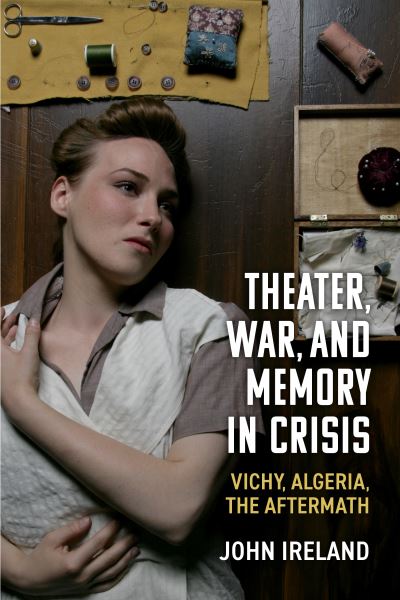
Theater, War, and Memory in Crisis explores how French and Algerian dramatists have engaged with two traumatic events that continue to haunt France: the German occupation and Vichy government from 1940 to 1944 and the Algerian War from 1954 to 1962. John Ireland's investigation is guided by one central question: can theater take on issues of violence, war trauma, and conflicted memory in a fundamentally different way from archival forms of culture such as memoirs, narrative fiction, and film? Throughout the twentieth century, French cultural anthropologists, classicists, and social scientists repeatedly revisited links between archaic religious ritual, the practice of sacrifice, and Greek tragedy as attempts to understand, regulate, and mitigate the violence of human conflict and war. Ireland argues that contemporary French playwrights dealing with war trauma and contested memory were influenced by aspects of this research that foregrounded the core virtues of oral culture: presence and the present, the "here and now" that also regulate theatrical performance. That connection to the present encouraged dramatists and performance artists to make "live" historiographical contributions to reverberating, unresolved history but also revived perennial therapeutic values of oral culture that evolved in ancient Greece. Theater, War, and Memory in Crisis brings original readings of canonical authors like Jean-Paul Sartre, Jean Genet, Bernard-Marie Koltès, and Kateb Yacine into dialogue with non-canonical dramatists such as Armand Gatti, Liliane Atlan, and Noureddine Aba.
| ISBN: | 9780472077281 |
| Publication date: | 11th March 2025 |
| Author: | John Ireland, Michigan Publishing University of Michigan |
| Publisher: | The University of Michigan Press an imprint of University of Michigan Press |
| Format: | Hardback |
| Pagination: | 375 pages |
| Series: | Theater: Theory/Text/Performance |
| Genres: |
Theatre studies History of Performing Arts European history Literature: history and criticism |
Theater, War, and Memory in Crisis explores how French and Algerian dramatists have engaged with two traumatic events that continue to haunt France: the German occupation and Vichy government from 1940 to 1944 and the Algerian War from 1954 to 1962. John Ireland's investigation is guided by one central question: can theater take on issues of violence, war trauma, and conflicted memory in a fundamentally different way from archival forms of culture such as memoirs, narrative fiction, and film? Throughout the twentieth century, French cultural anthropologists, classicists, and social scientists repeatedly revisited links between archaic religious ritual, the practice of sacrifice, and Greek tragedy as attempts to understand, regulate, and mitigate the violence of human conflict and war. Ireland argues that contemporary French playwrights dealing with war trauma and contested memory were influenced by aspects of this research that foregrounded the core virtues of oral culture: presence and the present, the "here and now" that also regulate theatrical performance. That connection to the present encouraged dramatists and performance artists to make "live" historiographical contributions to reverberating, unresolved history but also revived perennial therapeutic values of oral culture that evolved in ancient Greece. Theater, War, and Memory in Crisis brings original readings of canonical authors like Jean-Paul Sartre, Jean Genet, Bernard-Marie Koltès, and Kateb Yacine into dialogue with non-canonical dramatists such as Armand Gatti, Liliane Atlan, and Noureddine Aba.
Theater, War, and Memory in Crisis features in the following genres: Theatre studies, History of Performing Arts, European history, Literature: history and criticism
Theater, War, and Memory in Crisis is available in Hardback
Theater, War, and Memory in Crisis was written by John Ireland, Michigan Publishing University of Michigan and published by The University of Michigan Press an imprint of University of Michigan Press
Theater, War, and Memory in Crisis has 375 pages
Yes it is part of Theater: Theory/Text/Performance series