

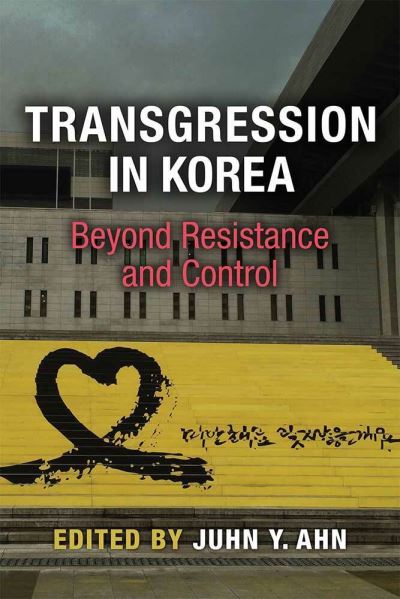
Since the turn of the millennium South Korea has continued to grapple with transgressions that shook the nation to its core. Following the serial killings of Korea's raincoat killer, the events that led to the dissolution of the United Progressive Party, the criminal negligence of the owner and also the crew members of the sunken Sewol Ferry, as well as the political scandals of 2016, there has been much public debate about morality, transparency, and the law in South Korea. Yet, despite its prevalence in public discourse, transgression in Korea has not received proper scholarly attention.
Transgression in Korea challenges the popular conceptions of transgression as resistance to authority, the collapse of morality, and an attempt at self- empowerment. Examples of transgression from premodern, modern, and contemporary Korea are examined side by side to underscore the possibility of reading transgression in more ways than one. These examples are taken from a devotional screen from medieval Korea, trickster tales from the late Choson period, reports about flesheating humans, newspaper articles about same- sex relationships from colonial Korea, and films about extramarital affairs, wayward youths, and a vengeful vigilante. Bringing together specialists from various disciplines such as history, art history, anthropology, premodern
literature, religion, and fi lm studies, the context- sensitive readings of transgression provided in this book suggest that transgression and authority can be seen as forming something other than an antagonistic relationship.
| ISBN: | 9780472073771 |
| Publication date: | 26th February 2018 |
| Author: | Juhn Young Ahn |
| Publisher: | The University of Michigan Press an imprint of University of Michigan Press |
| Format: | Hardback |
| Pagination: | 254 pages |
| Series: | Perspectives on Contemporary Korea |
| Genres: |
Performance art Asian history Literature: history and criticism |
Since the turn of the millennium South Korea has continued to grapple with transgressions that shook the nation to its core. Following the serial killings of Korea's raincoat killer, the events that led to the dissolution of the United Progressive Party, the criminal negligence of the owner and also the crew members of the sunken Sewol Ferry, as well as the political scandals of 2016, there has been much public debate about morality, transparency, and the law in South Korea. Yet, despite its prevalence in public discourse, transgression in Korea has not received proper scholarly attention.
Transgression in Korea challenges the popular conceptions of transgression as resistance to authority, the collapse of morality, and an attempt at self- empowerment. Examples of transgression from premodern, modern, and contemporary Korea are examined side by side to underscore the possibility of reading transgression in more ways than one. These examples are taken from a devotional screen from medieval Korea, trickster tales from the late Choson period, reports about flesheating humans, newspaper articles about same- sex relationships from colonial Korea, and films about extramarital affairs, wayward youths, and a vengeful vigilante. Bringing together specialists from various disciplines such as history, art history, anthropology, premodern
literature, religion, and fi lm studies, the context- sensitive readings of transgression provided in this book suggest that transgression and authority can be seen as forming something other than an antagonistic relationship.
Transgression in Korea features in the following genres: Performance art, Asian history, Literature: history and criticism
Transgression in Korea is available in Paperback, Hardback
Transgression in Korea was written by Juhn Young Ahn and published by The University of Michigan Press an imprint of University of Michigan Press
Transgression in Korea has 254 pages
Yes it is part of Perspectives on Contemporary Korea series