

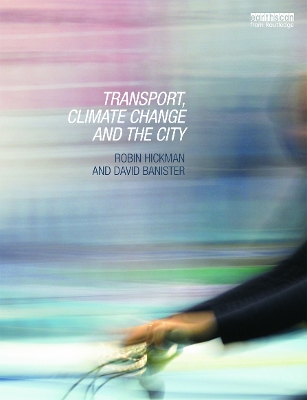
Sustainable travel behaviours have long been sought after in cities around the world, particularly in industrialised countries, but also increasingly in the emerging cities of Asia, South America and Africa. Progress however appears difficult to make as the private car, still largely fuelled by petrol or diesel, remains the mainstream mode of use. Transport is the key sector where carbon dioxide (CO2) emissions are difficult to reduce. This book seeks to develop achievable low CO2 emission futures for transport in a range of international case studies. The aim is that the scenarios as developed, and the consideration of implementation and transition issues, can help us plan for and achieve attractive future lifestyles at the city level, rather than ‘sleepwalk’ into climate change difficulties, oil scarcity, poor qualities of life, and to continue with the large casualty figures. High fuel prices in the future may mean that parts of our cities and wider regions become redundant and residents suffer from low levels of accessibility. The topic is thus critical, with transport viewed as central to the achievement of the sustainable city and reduced CO2 emissions. The book’s original content and presentation draws on contemporary culture to demonstrate the need for a wider and more transparent debate on future travel behaviours and lifestyles, acceptability and implementability, and the potential for using different means to sell a different but attractive future.
| ISBN: | 9780415660037 |
| Publication date: | 9th February 2015 |
| Author: | Robin Hickman, David Banister |
| Publisher: | Routledge an imprint of Taylor & Francis Ltd |
| Format: | Paperback |
| Pagination: | 400 pages |
| Series: | Routledge Advances in Climate Change Research |
| Genres: |
Transport planning and policy Climate change Urban and municipal planning and policy |
Sustainable travel behaviours have long been sought after in cities around the world, particularly in industrialised countries, but also increasingly in the emerging cities of Asia, South America and Africa. Progress however appears difficult to make as the private car, still largely fuelled by petrol or diesel, remains the mainstream mode of use. Transport is the key sector where carbon dioxide (CO2) emissions are difficult to reduce. This book seeks to develop achievable low CO2 emission futures for transport in a range of international case studies. The aim is that the scenarios as developed, and the consideration of implementation and transition issues, can help us plan for and achieve attractive future lifestyles at the city level, rather than ‘sleepwalk’ into climate change difficulties, oil scarcity, poor qualities of life, and to continue with the large casualty figures. High fuel prices in the future may mean that parts of our cities and wider regions become redundant and residents suffer from low levels of accessibility. The topic is thus critical, with transport viewed as central to the achievement of the sustainable city and reduced CO2 emissions. The book’s original content and presentation draws on contemporary culture to demonstrate the need for a wider and more transparent debate on future travel behaviours and lifestyles, acceptability and implementability, and the potential for using different means to sell a different but attractive future.
Transport, Climate Change and the City features in the following genres: Transport planning and policy, Climate change, Urban and municipal planning and policy
Transport, Climate Change and the City is available in Paperback, Ebook, Hardback
Transport, Climate Change and the City was written by Robin Hickman, David Banister and published by Routledge an imprint of Taylor & Francis Ltd
Transport, Climate Change and the City has 400 pages
Yes it is part of Routledge Advances in Climate Change Research series
£47.69