

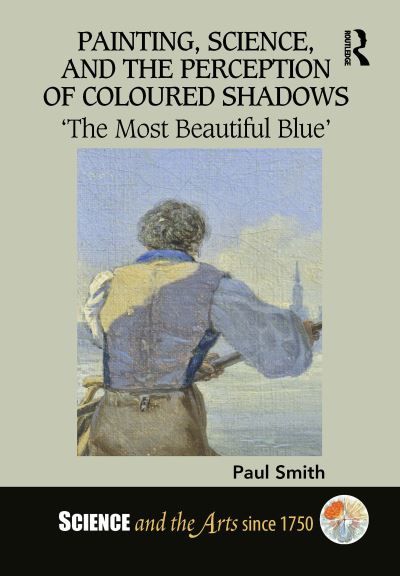
Many artists and scientists - including Buffon, Goethe, and Philipp Otto Runge - who observed the vividly coloured shadows that appear outdoors around dawn and dusk, or indoors when a candle burns under waning daylight, chose to describe their colours as 'beautiful'.
Paul Smith explains what makes these ephemeral effects worthy of such appreciation - or how depictions of coloured shadows have genuine aesthetic and epistemological significance. This multidisciplinary book synthesises methodologies drawn from art history (close pictorial analysis), psychology and neuroscience (theories of colour constancy), history of science (the changing paradigms used to explain coloured shadows), and philosophy (theories of perception and aesthetic value drawn from Wittgenstein and Merleau-Ponty).
This title will be of interest to scholars in art history, art theory, and the history of science and technology.
| ISBN: | 9780367716424 |
| Publication date: | 27th May 2024 |
| Author: | Paul Smith |
| Publisher: | Routledge an imprint of Taylor & Francis |
| Format: | Paperback |
| Pagination: | 176 pages |
| Series: | Science and the Arts Since 1750 |
| Genres: |
Theory of art Phenomenology and Existentialism Philosophy: epistemology and theory of knowledge Philosophy: aesthetics History of art History of science Physics History |
Many artists and scientists - including Buffon, Goethe, and Philipp Otto Runge - who observed the vividly coloured shadows that appear outdoors around dawn and dusk, or indoors when a candle burns under waning daylight, chose to describe their colours as 'beautiful'.
Paul Smith explains what makes these ephemeral effects worthy of such appreciation - or how depictions of coloured shadows have genuine aesthetic and epistemological significance. This multidisciplinary book synthesises methodologies drawn from art history (close pictorial analysis), psychology and neuroscience (theories of colour constancy), history of science (the changing paradigms used to explain coloured shadows), and philosophy (theories of perception and aesthetic value drawn from Wittgenstein and Merleau-Ponty).
This title will be of interest to scholars in art history, art theory, and the history of science and technology.
Painting, Science, and the Perception of Coloured Shadows features in the following genres: Theory of art, Phenomenology and Existentialism, Philosophy: epistemology and theory of knowledge, Philosophy: aesthetics, History of art, History of science, Physics, History
Painting, Science, and the Perception of Coloured Shadows is available in Paperback, Hardback, Ebook
Painting, Science, and the Perception of Coloured Shadows was written by Paul Smith and published by Routledge an imprint of Taylor & Francis
Painting, Science, and the Perception of Coloured Shadows has 176 pages
Yes it is part of Science and the Arts Since 1750 series
£37.79