

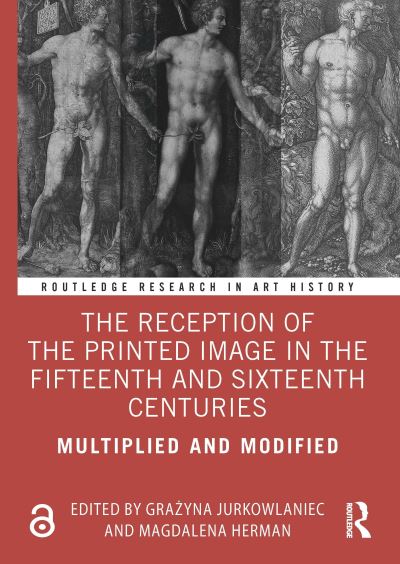
This book examines the early development of the graphic arts from the perspectives of material things, human actors and immaterial representations while broadening the geographic field of inquiry to Central Europe and the British Isles and considering the reception of the prints on other continents.
The role of human actors proves particularly prominent, i.e. the circumstances that informed creators', producers', owners' and beholders' motivations and responses. Certainly, such a complex relationship between things, people and images is not an exclusive feature of the pre-modern period's print cultures. However, the rise of printmaking challenged some established rules in the arts and visual realms and thus provides a fruitful point of departure for further study of the development of the various functions and responses to printed images in the sixteenth century.
The book will be of interest to scholars working in art history, print history, book history and European studies.
The introduction of this book is freely available as a downloadable Open Access PDF under a Creative Commons Attribution-Non Commercial-No Derivatives 4.0 license at https://www.taylorfrancis.com/chapters/oa-edit/10.4324/9781003029199-1/introduction-gra%C5%BCyna-jurkowlaniec-magdalena-herman?context=ubx&refId=b6a86646-c9f3-490d-8a06-2946acd75fda
| ISBN: | 9780367539405 |
| Publication date: | 9th January 2023 |
| Author: | Grazyna Jurkowlaniec, Magdalena Herman |
| Publisher: | Routledge an imprint of Taylor & Francis |
| Format: | Paperback |
| Pagination: | 298 pages |
| Series: | Routledge Research in Art History |
| Genres: |
The arts: general topics European history History of art Regional / International studies The Arts: art forms History and Archaeology |
This book examines the early development of the graphic arts from the perspectives of material things, human actors and immaterial representations while broadening the geographic field of inquiry to Central Europe and the British Isles and considering the reception of the prints on other continents.
The role of human actors proves particularly prominent, i.e. the circumstances that informed creators', producers', owners' and beholders' motivations and responses. Certainly, such a complex relationship between things, people and images is not an exclusive feature of the pre-modern period's print cultures. However, the rise of printmaking challenged some established rules in the arts and visual realms and thus provides a fruitful point of departure for further study of the development of the various functions and responses to printed images in the sixteenth century.
The book will be of interest to scholars working in art history, print history, book history and European studies.
The introduction of this book is freely available as a downloadable Open Access PDF under a Creative Commons Attribution-Non Commercial-No Derivatives 4.0 license at https://www.taylorfrancis.com/chapters/oa-edit/10.4324/9781003029199-1/introduction-gra%C5%BCyna-jurkowlaniec-magdalena-herman?context=ubx&refId=b6a86646-c9f3-490d-8a06-2946acd75fda
The Reception of the Printed Image in the Fifteenth and Sixteenth Centuries features in the following genres: The arts: general topics, European history, History of art, Regional / International studies, The Arts: art forms, History and Archaeology
The Reception of the Printed Image in the Fifteenth and Sixteenth Centuries is available in Paperback, Hardback
The Reception of the Printed Image in the Fifteenth and Sixteenth Centuries was written by Grazyna Jurkowlaniec, Magdalena Herman and published by Routledge an imprint of Taylor & Francis
The Reception of the Printed Image in the Fifteenth and Sixteenth Centuries has 298 pages
Yes it is part of Routledge Research in Art History series
£39.59