

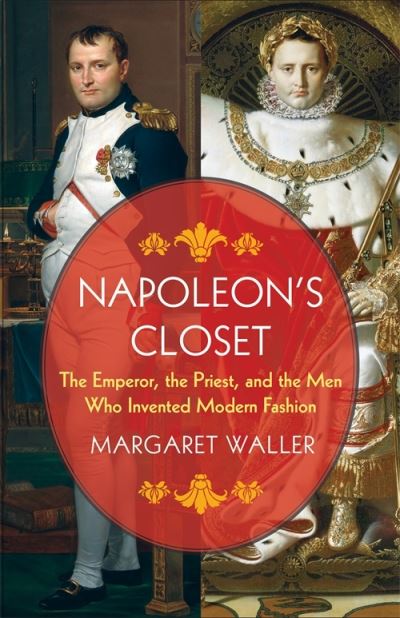
Why do the most powerful men in the West wear sober, understated attire? Until the "Great Masculine Renunciation" in the eighteenth century, luxurious and often flamboyant clothing signaled social superiority for men as well as women.
Margaret Waller's fresh account of this historic recalibration of gender and class centers on an unlikely pair: Napoleon Bonaparte, the Corsican upstart who crowned himself emperor of France, and Pierre Antoine Le Boux La Mésangère, the defrocked priest who became Europe's premier fashion editor. Looking at knee breeches, schoolboy and officer uniforms, priests' robes, and imperial regalia, this book shows how misogyny and homophobia helped make Bonaparte, La Mésangère, and their peers men.
Napoleon's Closet shows when male fashion editors first associated women with fashion and urged men to renounce "feminine" frivolity in their dress. It connects French revolutionaries' masculinist construction of citizenship to the Church's long-standing requirement that its rank and file wear plain, modest clothing. It demonstrates that although Napoleon's reinstitution of sumptuous uniforms for men might seem the exception, he reserved for himself the modern male privilege of dressing down.
A lively and unorthodox exploration of the paradoxical history of male clothing, this book unveils the origins of modern ideas about normative masculinity, queerness, and "the closet."
| ISBN: | 9780231223331 |
| Publication date: | 18th August 2026 |
| Author: | Margaret Waller |
| Publisher: | Columbia University Press |
| Format: | Paperback |
| Pagination: | 360 pages |
| Series: | Gender and Culture |
| Genres: |
History of art Design, Industrial and commercial arts, illustration European history Gender studies, gender groups |
Why do the most powerful men in the West wear sober, understated attire? Until the "Great Masculine Renunciation" in the eighteenth century, luxurious and often flamboyant clothing signaled social superiority for men as well as women.
Margaret Waller's fresh account of this historic recalibration of gender and class centers on an unlikely pair: Napoleon Bonaparte, the Corsican upstart who crowned himself emperor of France, and Pierre Antoine Le Boux La Mésangère, the defrocked priest who became Europe's premier fashion editor. Looking at knee breeches, schoolboy and officer uniforms, priests' robes, and imperial regalia, this book shows how misogyny and homophobia helped make Bonaparte, La Mésangère, and their peers men.
Napoleon's Closet shows when male fashion editors first associated women with fashion and urged men to renounce "feminine" frivolity in their dress. It connects French revolutionaries' masculinist construction of citizenship to the Church's long-standing requirement that its rank and file wear plain, modest clothing. It demonstrates that although Napoleon's reinstitution of sumptuous uniforms for men might seem the exception, he reserved for himself the modern male privilege of dressing down.
A lively and unorthodox exploration of the paradoxical history of male clothing, this book unveils the origins of modern ideas about normative masculinity, queerness, and "the closet."
Napoleon's Closet features in the following genres: History of art, Design, Industrial and commercial arts, illustration, European history, Gender studies, gender groups
Napoleon's Closet is available in Paperback
Napoleon's Closet was written by Margaret Waller and published by Columbia University Press
Napoleon's Closet has 360 pages
Yes it is part of Gender and Culture series
£19.80