

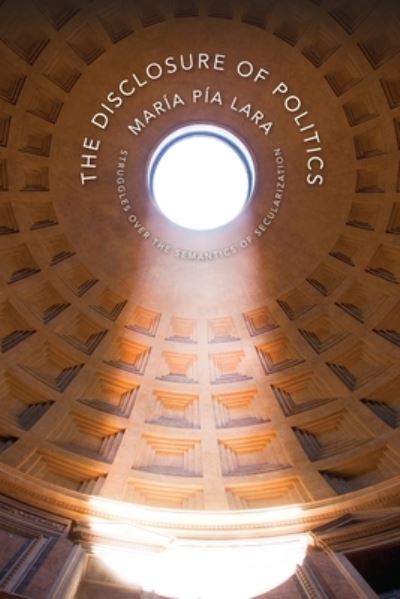
Postmodern political critiques speak of the death of ideology, the end of history, and the postsecular return of religious attitudes, yet radical conservative theorists such as Mark Lilla argue religion and politics are inextricably intertwined. Returning much-needed uncertainty to debates over the political while revitalizing the very terms in which they are defined, Marìa Pìa Lara explores the ambiguity of secularization and the theoretical potential of a structural break between politics and religion.
For Lara, secularization means three things: the translation of religious semantics into politics; a transformation of religious notions into political ideas; and the reoccupation of a space left void by changing political actors that gives rise to new conceptions of political interaction. Conceptual innovation redefines politics as a horizontal relationship between governments and the governed and better enables societies (and individual political actors) to articulate meaning through action-that is, through the emergence of new concepts. These actions, Lara proves, radically transform our understanding of politics and the role of political agents and are further enhanced by challenging the structural dependence of politics on religious phenomena.
| ISBN: | 9780231162807 |
| Publication date: | 6th September 2013 |
| Author: | María Pía Lara |
| Publisher: | Columbia University Press |
| Format: | Hardback |
| Pagination: | 256 pages |
| Series: | New Directions in Critical Theory |
| Genres: |
Political science and theory |
Postmodern political critiques speak of the death of ideology, the end of history, and the postsecular return of religious attitudes, yet radical conservative theorists such as Mark Lilla argue religion and politics are inextricably intertwined. Returning much-needed uncertainty to debates over the political while revitalizing the very terms in which they are defined, Marìa Pìa Lara explores the ambiguity of secularization and the theoretical potential of a structural break between politics and religion.
For Lara, secularization means three things: the translation of religious semantics into politics; a transformation of religious notions into political ideas; and the reoccupation of a space left void by changing political actors that gives rise to new conceptions of political interaction. Conceptual innovation redefines politics as a horizontal relationship between governments and the governed and better enables societies (and individual political actors) to articulate meaning through action-that is, through the emergence of new concepts. These actions, Lara proves, radically transform our understanding of politics and the role of political agents and are further enhanced by challenging the structural dependence of politics on religious phenomena.
The Disclosure of Politics features in the following genres: Political science and theory
The Disclosure of Politics is available in Hardback
The Disclosure of Politics was written by María Pía Lara and published by Columbia University Press
The Disclosure of Politics has 256 pages
Yes it is part of New Directions in Critical Theory series