

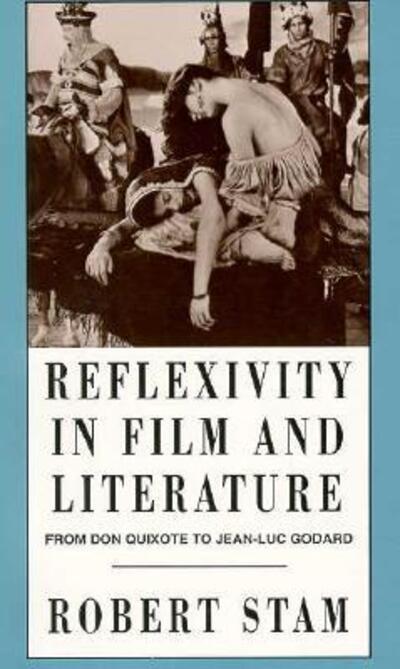
Reflexivity refers to those moments in fiction and film when the work suddenly calls attention to itself as a fictional construct. For example, in literature a character might suddenly step out of the story and address the reader.;This study of reflexivity in film and literature pays special attention to "Don Quixote", one of the first such examples of reflexivity in the novel, and to Jean-Luc Godard and the nouvelle vague in cinema, where self-reflection prevailed. It examines the rise of modernism, the complicity of the reader-spectator in creating illusion and the production process in film. The discussion of film includes "Rear Window", "Tom Jones" and "The French Lieutenant's Woman".
| ISBN: | 9780231079457 |
| Publication date: | 1st August 1964 |
| Author: | Robert Stam |
| Publisher: | Columbia University Press |
| Format: | Paperback |
| Pagination: | 288 pages |
| Genres: |
Literary theory Communication studies |
Reflexivity refers to those moments in fiction and film when the work suddenly calls attention to itself as a fictional construct. For example, in literature a character might suddenly step out of the story and address the reader.;This study of reflexivity in film and literature pays special attention to "Don Quixote", one of the first such examples of reflexivity in the novel, and to Jean-Luc Godard and the nouvelle vague in cinema, where self-reflection prevailed. It examines the rise of modernism, the complicity of the reader-spectator in creating illusion and the production process in film. The discussion of film includes "Rear Window", "Tom Jones" and "The French Lieutenant's Woman".
Reflexivity in Film and Culture features in the following genres: Literary theory, Communication studies
Reflexivity in Film and Culture is available in Paperback
Reflexivity in Film and Culture was written by Robert Stam and published by Columbia University Press
Reflexivity in Film and Culture has 288 pages