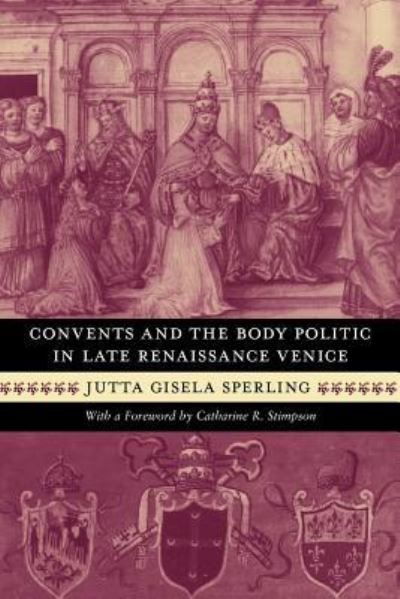
Convents and the Body Politic in Late Renaissance Venice Synopsis
In late sixteenth-century Venice, nearly 60 percent of all patrician women joined convents, and only a minority of these women did so voluntarily. In trying to explain why unprecedented numbers of patrician women did not marry, historians have claimed that dowries became too expensive. However, Jutta Gisela Sperling debunks this myth and argues that the rise of forced vocations happened within the context of aristocratic culture and society.
Sperling explains how women were not allowed to marry beneath their social status while men could, especially if their brides were wealthy. Faced with a shortage of suitable partners, patrician women were forced to offer themselves as "a gift not only to God, but to their fatherland," as Patriarch Giovanni Tiepolo told the Senate of Venice in 1619. Noting the declining birth rate among patrician women, Sperling explores the paradox of a marriage system that preserved the nobility at the price of its physical extinction. And on a more individual level, she tells the fascinating stories of these women. Some became scholars or advocates of women's rights, some took lovers, and others escaped only to survive as servants, prostitutes, or thieves.
Buy from our bookstore and 25% of the cover price will be given to a school of your choice to buy more books. *15% of eBooks.
Frequently asked questions
In late sixteenth-century Venice, nearly 60 percent of all patrician women joined convents, and only a minority of these women did so voluntarily. In trying to explain why unprecedented numbers of patrician women did not marry, historians have claimed that dowries became too expensive. However, Jutta Gisela Sperling debunks this myth and argues that the rise of forced vocations happened within the context of aristocratic culture and society.
Sperling explains how women were not allowed to marry beneath their social status while men could, especially if their brides were wealthy. Faced with a shortage of suitable partners, patrician women were forced to offer themselves as "a gift not only to God, but to their fatherland," as Patriarch Giovanni Tiepolo told the Senate of Venice in 1619. Noting the declining birth rate among patrician women, Sperling explores the paradox of a marriage system that preserved the nobility at the price of its physical extinction. And on a more individual level, she tells the fascinating stories of these women. Some became scholars or advocates of women's rights, some took lovers, and others escaped only to survive as servants, prostitutes, or thieves.
Convents and the Body Politic in Late Renaissance Venice features in the following genres: History and Archaeology, Feminism and feminist theory
Convents and the Body Politic in Late Renaissance Venice is available in Hardback
Convents and the Body Politic in Late Renaissance Venice was written by Jutta Gisela Sperling and published by The University of Chicago Press an imprint of University of Chicago Press
Convents and the Body Politic in Late Renaissance Venice has 417 pages
Join our community for the latest bookish news, reading recommendations, exclusive opening extracts, author events and competitions. It\'s all free. And enter a monthly draw to win a £50 Gift Card. See past winners here