

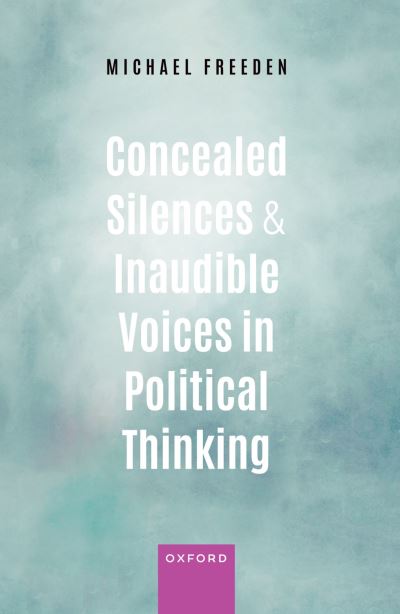
Concealed Silences and Inaudible Voices in Political Thinking investigates silence as a normal, ubiquitous, and indispensable element of political thinking, theory, and language. It explores the diverse dimensions in which silences mould the different core features of the political, as a highly flexible power resource, both enabling and constraining major social practices, traditions, and currents. Departing from the typical focus on intentional silencing and the dominance of logos, the book instead highlights the concealed and unrecognized ways through which silence pervades socio-political life and adopts the guises of the unspeakable, the ineffable, the inarticulable, and the unconceptualizable. Drawing extensively from historical, philosophical, anthropological, psychoanalytical, theological, linguistic, and literary viewpoints, the book demonstrates the common threads that connect silences to those different disciplines, alongside the features that pull them asunder. In extracting and decoding their political implications, it explores both academic literature and colloquial, everyday discourse. Michael Freeden uses select case-studies to explore topics such as Buddhist nondualism, Locke's tacit consent, the submerging of historical narratives, state neutrality, Pinter's miscommunications and menace, and the separate ways ideologies integrate silence into their beliefs. The book offers an analysis of silence from a multi-perspectival range of disciplines, providing a comprehensive and holistic view of silence and the political.
| ISBN: | 9780198981329 |
| Publication date: | 28th August 2025 |
| Author: | Michael Freeden |
| Publisher: | Oxford University Press an imprint of OUP OXFORD |
| Format: | Paperback |
| Pagination: | 304 pages |
| Genres: |
History of ideas Political science and theory Semantics, discourse analysis, stylistics |
Concealed Silences and Inaudible Voices in Political Thinking investigates silence as a normal, ubiquitous, and indispensable element of political thinking, theory, and language. It explores the diverse dimensions in which silences mould the different core features of the political, as a highly flexible power resource, both enabling and constraining major social practices, traditions, and currents. Departing from the typical focus on intentional silencing and the dominance of logos, the book instead highlights the concealed and unrecognized ways through which silence pervades socio-political life and adopts the guises of the unspeakable, the ineffable, the inarticulable, and the unconceptualizable. Drawing extensively from historical, philosophical, anthropological, psychoanalytical, theological, linguistic, and literary viewpoints, the book demonstrates the common threads that connect silences to those different disciplines, alongside the features that pull them asunder. In extracting and decoding their political implications, it explores both academic literature and colloquial, everyday discourse. Michael Freeden uses select case-studies to explore topics such as Buddhist nondualism, Locke's tacit consent, the submerging of historical narratives, state neutrality, Pinter's miscommunications and menace, and the separate ways ideologies integrate silence into their beliefs. The book offers an analysis of silence from a multi-perspectival range of disciplines, providing a comprehensive and holistic view of silence and the political.
Concealed Silences and Inaudible Voices in Political Thinking features in the following genres: History of ideas, Political science and theory, Semantics, discourse analysis, stylistics
Concealed Silences and Inaudible Voices in Political Thinking is available in Paperback, Ebook
Concealed Silences and Inaudible Voices in Political Thinking was written by Michael Freeden and published by Oxford University Press an imprint of OUP OXFORD
Concealed Silences and Inaudible Voices in Political Thinking has 304 pages
£27.00