

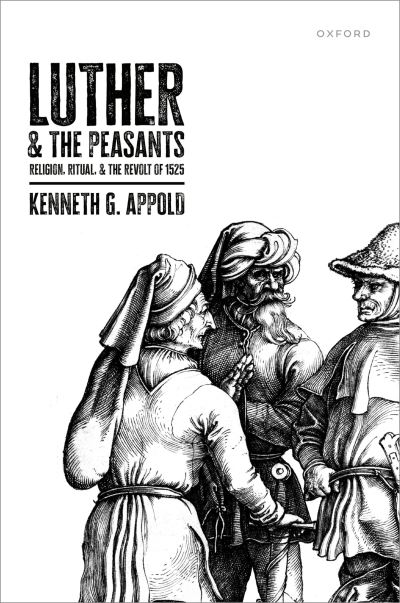
The German Peasants' Revolts of 1525 were a defining moment both for the Protestant Reformation and the history of European culture. But while the conflicts are well-studied, they are typically analyzed today from political and socioeconomic perspectives, whereas the protagonists themselves framed them in religious and theological terms. Luther and the Peasants takes these perspectives seriously to offer a novel and timely reinterpretation of the uprisings. A detailed examination of peasants' religious lives reveals commitments to peace, social harmony, and the environment that came into conflict with spiritual priorities of the Protestant Reformation, notably with those of Martin Luther. Drawing on the peasants' own documents, such as the famous manifesto The Twelve Articles, the book provides a thorough re-examination their actions, including their negotiations with lords and their organization into bands and Christian brotherhoods, and a fresh analysis of their behavior in battle. This ritual reconstruction makes peasants' statements and behaviors historiographically legible for the first time, effectively giving voice to an illiterate rural people, and offers new ways of reading Luther's 1525 writings on peasants, which are among his most challenging works. In this context, the 1525 conflict between Luther and the peasants comes to light as the collision of two different religious worlds, each incomprehensible to the other. This, in turn, reveals the important role played by religion in a defining moment of early modern European history.
| ISBN: | 9780198946892 |
| Publication date: | 25th April 2025 |
| Author: | Kenneth G Appold |
| Publisher: | Oxford University Press an imprint of OUP OXFORD |
| Format: | Hardback |
| Pagination: | 224 pages |
| Genres: |
Roman Catholicism, Roman Catholic Church Protestantism and Protestant Churches Revolutions, uprisings, rebellions History of religion European history |
The German Peasants' Revolts of 1525 were a defining moment both for the Protestant Reformation and the history of European culture. But while the conflicts are well-studied, they are typically analyzed today from political and socioeconomic perspectives, whereas the protagonists themselves framed them in religious and theological terms. Luther and the Peasants takes these perspectives seriously to offer a novel and timely reinterpretation of the uprisings. A detailed examination of peasants' religious lives reveals commitments to peace, social harmony, and the environment that came into conflict with spiritual priorities of the Protestant Reformation, notably with those of Martin Luther. Drawing on the peasants' own documents, such as the famous manifesto The Twelve Articles, the book provides a thorough re-examination their actions, including their negotiations with lords and their organization into bands and Christian brotherhoods, and a fresh analysis of their behavior in battle. This ritual reconstruction makes peasants' statements and behaviors historiographically legible for the first time, effectively giving voice to an illiterate rural people, and offers new ways of reading Luther's 1525 writings on peasants, which are among his most challenging works. In this context, the 1525 conflict between Luther and the peasants comes to light as the collision of two different religious worlds, each incomprehensible to the other. This, in turn, reveals the important role played by religion in a defining moment of early modern European history.
Luther and the Peasants features in the following genres: Roman Catholicism, Roman Catholic Church, Protestantism and Protestant Churches, Revolutions, uprisings, rebellions, History of religion, European history
Luther and the Peasants is available in Hardback
Luther and the Peasants was written by Kenneth G Appold and published by Oxford University Press an imprint of OUP OXFORD
Luther and the Peasants has 224 pages