

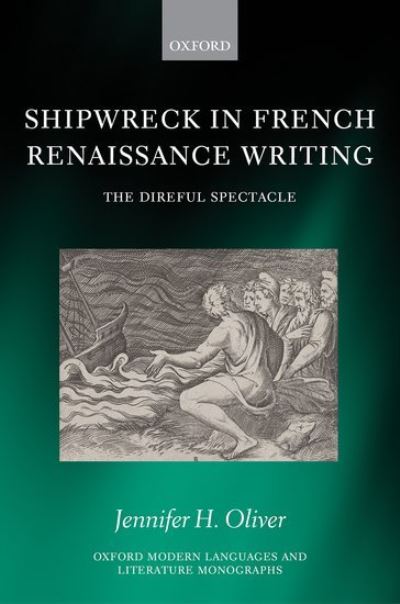
In the sixteenth century, a period of proliferating transatlantic travel and exploration, and, latterly, religious civil wars in France, the ship is freighted with political and religious, as well as poetic, significance; symbolism that reaches its height when ships--both real and symbolic--are threatened with disaster. The Direful Spectacle argues that, in the French Renaissance, shipwreck functions not only as an emblem or motif within writing, but as a part, or the whole, of a narrative, in which the dynamics of spectatorship and of co-operation are of constant concern. The possibility of ethical distance from shipwreck--imagined through the Lucretian suave mari magno commonplace--is constantly undermined, not least through a sustained focus on the corporeal. This book examines the ways in which the ship and the body are made analogous in Renaissance shipwreck writing; bodies are described and allegorized in nautical terms, and, conversely, ships themselves become animalized and humanized. Secondly, many texts anticipate that the description of shipwreck will have an affect not only on its victims, but on those too of spectators, listeners, and readers. This insistence on the physicality of shipwreck is also reflected in the dynamic of bricolage that informs the production of shipwreck texts in the Renaissance. The dramatic potential of both the disaster and the process of rebuilding is exploited throughout the century, culminating in a shipwreck tragedy. By the late Renaissance, shipwreck is not only the end, but often forms the beginning of a story.
| ISBN: | 9780198831709 |
| Publication date: | 29th August 2019 |
| Author: | Jennifer Oliver |
| Publisher: | Oxford University Press an imprint of OUP OXFORD |
| Format: | Hardback |
| Pagination: | 240 pages |
| Series: | Oxford Modern Languages and Literature Monographs |
| Genres: |
Literary studies: general |
In the sixteenth century, a period of proliferating transatlantic travel and exploration, and, latterly, religious civil wars in France, the ship is freighted with political and religious, as well as poetic, significance; symbolism that reaches its height when ships--both real and symbolic--are threatened with disaster. The Direful Spectacle argues that, in the French Renaissance, shipwreck functions not only as an emblem or motif within writing, but as a part, or the whole, of a narrative, in which the dynamics of spectatorship and of co-operation are of constant concern. The possibility of ethical distance from shipwreck--imagined through the Lucretian suave mari magno commonplace--is constantly undermined, not least through a sustained focus on the corporeal. This book examines the ways in which the ship and the body are made analogous in Renaissance shipwreck writing; bodies are described and allegorized in nautical terms, and, conversely, ships themselves become animalized and humanized. Secondly, many texts anticipate that the description of shipwreck will have an affect not only on its victims, but on those too of spectators, listeners, and readers. This insistence on the physicality of shipwreck is also reflected in the dynamic of bricolage that informs the production of shipwreck texts in the Renaissance. The dramatic potential of both the disaster and the process of rebuilding is exploited throughout the century, culminating in a shipwreck tragedy. By the late Renaissance, shipwreck is not only the end, but often forms the beginning of a story.
Shipwreck in French Renaissance Writing features in the following genres: Literary studies: general
Shipwreck in French Renaissance Writing is available in Hardback
Shipwreck in French Renaissance Writing was written by Jennifer Oliver and published by Oxford University Press an imprint of OUP OXFORD
Shipwreck in French Renaissance Writing has 240 pages
Yes it is part of Oxford Modern Languages and Literature Monographs series