

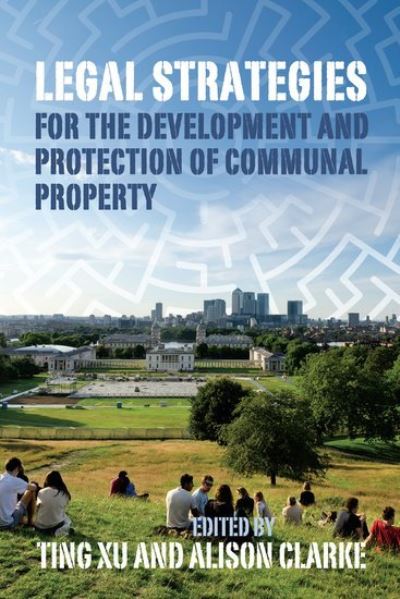
Whilst historically communal property has had very different meanings and functions in the UK, China, and other regions of the world, parallel developments are emerging, and modern perceptions are converging even as each region faces its own unique challenges in the management of land and natural resources. These developments have raised an important question: What legal strategies are most likely to promote the development and protection of communal property? Answers to this question will not only guide domestic debates on resource governance and community development, but also provoke global discussions and help to formulate global guidelines to address pressing challenges. Contributions to Legal Strategies for the Development and Protection of Communal Property focus on legal strategies for the development and protection of communal property as it relates to land and other natural resources, considering how these strategies 'map' over different jurisdictions (England and Wales, Scotland, South Africa, Cameroon, Italy, Israel, and China) and through different jurisprudential approaches. Legal Strategies for the Development and Protection of Communal Property looks at property beyond the traditional, individualist, and exclusive ownership model, placing the focus on communal property from different standpoints and linking the empirical perspective with the theoretical perspective. In doing so, it challenges the theory of communal property through empirical case studies, not only linking theory with practice but also linking the local with the global.
| ISBN: | 9780197266380 |
| Publication date: | 4th October 2018 |
| Author: | Ting Xu, Alison Clarissa Clarke |
| Publisher: | Oxford University Press an imprint of OUP OXFORD |
| Format: | Hardback |
| Pagination: | 256 pages |
| Series: | Proceedings of the British Academy |
| Genres: |
Comparative law Property law: general |
Whilst historically communal property has had very different meanings and functions in the UK, China, and other regions of the world, parallel developments are emerging, and modern perceptions are converging even as each region faces its own unique challenges in the management of land and natural resources. These developments have raised an important question: What legal strategies are most likely to promote the development and protection of communal property? Answers to this question will not only guide domestic debates on resource governance and community development, but also provoke global discussions and help to formulate global guidelines to address pressing challenges. Contributions to Legal Strategies for the Development and Protection of Communal Property focus on legal strategies for the development and protection of communal property as it relates to land and other natural resources, considering how these strategies 'map' over different jurisdictions (England and Wales, Scotland, South Africa, Cameroon, Italy, Israel, and China) and through different jurisprudential approaches. Legal Strategies for the Development and Protection of Communal Property looks at property beyond the traditional, individualist, and exclusive ownership model, placing the focus on communal property from different standpoints and linking the empirical perspective with the theoretical perspective. In doing so, it challenges the theory of communal property through empirical case studies, not only linking theory with practice but also linking the local with the global.
Legal Strategies for the Development and Protection of Communal Property features in the following genres: Comparative law, Property law: general
Legal Strategies for the Development and Protection of Communal Property is available in Hardback
Legal Strategies for the Development and Protection of Communal Property was written by Ting Xu, Alison Clarissa Clarke and published by Oxford University Press an imprint of OUP OXFORD
Legal Strategies for the Development and Protection of Communal Property has 256 pages
Yes it is part of Proceedings of the British Academy series
£58.50