The end papers of the book testify to the Catastrophe of the title, we start with an idyllic late Victorian boating scene and end with a scene of carnage at the Battle of the Marne. The tragedy of the war is caught brilliantly by Max Hastings who records not just the military and political views and actions but the experiences of the ordinary man and woman whose records brings an added vividness to the narrative. We see political grandstanding, armies coming to terms with the horrors of the new mechanical war and devastating loss of human life. I would also add praise for two things; Max Hastings’ decision to include the battlefronts of Serbia and Galicia thus extending our knowledge of the war and for his ability to separate the fact from the fiction, the amount of fakery and destroyed and corrupt material historians contend with is quite astounding. A remarkable record of a terrible year.
Like for Like Reading
1913: The World Before the Great War, Charles Emmerson
The War that Ended Peace: How Europe Abandoned Peace for the First World War, Margaret MacMillan
| Primary Genre | Biographies & Autobiographies |
| Other Genres: | |
| Recommendations: |
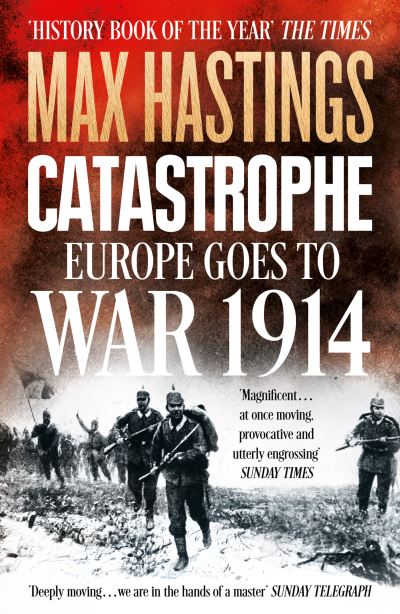
In 1914, Europe plunged into the 20th century's first terrible act of self-immolation- what was then called The Great War. On the eve of its centenary, Max Hastings seeks to explain both how the conflict came about and what befell millions of men and women during the first months of strife. He finds the evidence overwhelming, that Austria and Germany must accept principal blame for the outbreak. While what followed was a vast tragedy, he argues passionately against the 'poets' view', that the war was not worth winning. It was vital to the freedom of Europe, he says, that the Kaiser's Germany should be defeated. His narrative of the early battles will astonish those whose images of the war are simply of mud, wire, trenches and steel helmets. Hastings describes how the French Army marched into action amid virgin rural landscapes, in uniforms of red and blue, led by mounted officers, with flags flying and bands playing. The bloodiest day of the entire Western war fell on 22 August 1914, when the French lost 27,000 dead. Four days later, at Le Cateau the British fought an extraordinary action against the oncoming Germans, one of the last of its kind in history. In October, at terrible cost they held the allied line against massive German assaults in the first battle of Ypres. The author also describes the brutal struggles in Serbia, East Prussia and Galicia, where by Christmas the Germans, Austrians, Russians and Serbs had inflicted on each other three million casualties. This book offers answers to the huge and fascinating question 'what happened to Europe in 1914?', through Max Hastings's accustomed blend of top-down and bottom-up accounts from a multitude of statesmen and generals, peasants, housewives and private soldiers of seven nations. His narrative pricks myths and offers some striking and controversial judgements. For a host of readers gripped by the author's last international best-seller All Hell Let Loose, this will seem a worthy successor.
Catastrophe Europe Goes to War 1914 features in the following genres: Biographies & Autobiographies, History, eBooks of the Month, Biography, Literature and Literary studies, History and Archaeology, Recommendations
Catastrophe Europe Goes to War 1914 is available in Paperback, Hardback
Catastrophe Europe Goes to War 1914 was written by Sir Max Hastings and published by William Collins an imprint of HarperCollins Publishers
Catastrophe Europe Goes to War 1914 has 672 pages
£11.69