"Set on a Caribbean island in the first half of the 20th-century, this immersive, illuminating novel explores identity, independence, colonial oppression, reconciliation, and love in all its forms."
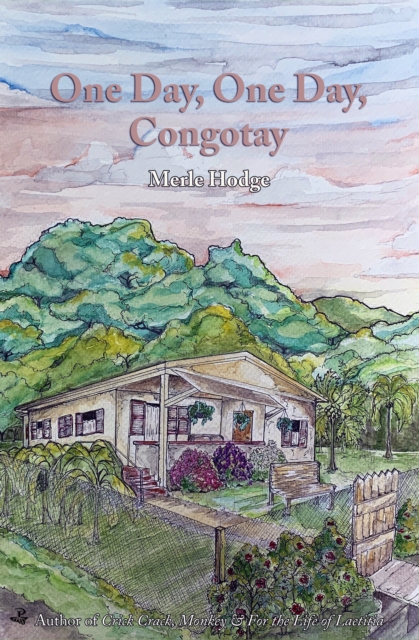
Rooted in the cultural complexities of a Caribbean island, where colonialism constricts and oppresses deeper-rooted connections, beliefs, and potential futures, Merle Hodge’s One Day, One Day Congotay is a mighty achievement. Set on shifting sands, and ringing with iron band rhythms, this is an ambitious, immersive, tragi-comic tour de force that draws readers into an enlightening journey through generations, family tensions, village life, and community conflict through the first half of the 20th-century.
Gwynneth Cuffie — teacher, music-lover and champion of children — lives in a rural village on the Caribbean island of Cayeri where she treads a tight-rope between very different worlds. Conflict simmers at the heart of the Cuffie family. Through their lives, they follow very different, and often opposing, paths.
While Gwynneth’s father is a Catholic schoolmaster driven by a desire to be seen as “respectable”, her seamstress Mumma is devoted to the Spiritual Baptist church, which has been banned by the colonial authorities who fear it.
Meanwhile, Gwynneth and her sister Viola are at odds with their brother. Favoured by their father, Roy’s education at an elite school leads him to feel ashamed of his race, while Gwynneth becomes deeply involved in the anti-colonial struggle (cue further conflict with her father), and devotes her life to various forms of reconciliation.
Working within the colonial education system, Gwynneth facilitates the forming of a school tamboo bamboo band, and supports emerging iron bands. Pertinent to current times, she notes the lack of representation in children’s books, the fact they only depict “rosy-cheeked children”. And so Gwynneth encourages her pupils to be creative, to write and illustrate their own stories, “to convince them that Cayerian children and their lives were just as worthy of being written about”.
She brings this same ethos and passion to music, declaring, “Cayerian children should also be learning some songs of their ancestors across the ocean — songs of African and India”, since this will “help ground our children in their own reality”.
Rich with details of everyday life, the complexities of family relationships, political context, and the human impulse to strive for better, fairer days, this is a novel to savour and return to.
Keen to read more novels by Caribbean writers? We have a Collection devoted to exactly that. And you can discover more about this book’s fabulous publisher, Peepal Tree Press, in our Industry Insights feature interview.

Merle Hodge's rare achievement is to create a dynamic portrait of the life of an unquestionably good woman: Gwynneth Cuffie, teacher, lover of children and music, and pillar of her community. Though devastated by tragedy in her politically militant youth, Gwynneth never gives up the struggle against colonialism on the Caribbean island of Cayeri. Her triumph is to find a way between the aspirations of her wounded father, whom colonial education has taught racial self-hatred, and the world of her Mumma's Spiritual Baptist community where, though the church is banned, Africa remains a real, enlivening presence.
| Primary Genre | Historical Fiction |
| Other Genres: |
Tell Us What Rosie Goodwin’s Books Mean to You and Win a Signed Book Bundle
Closing date: 31/10/2026
Merle Hodge's rare achievement is to create a dynamic portrait of the life of an unquestionably good woman: Gwynneth Cuffie, teacher, lover of children and music, and pillar of her community. Though devastated by tragedy in her politically militant youth, Gwynneth never gives up the struggle against colonialism on the Caribbean island of Cayeri.
One Day, One Day, Congotay features in the following genres: Historical Fiction, Fiction, General Fiction, Narrative theme: Identity / belonging, Fiction: narrative themes
Paperback, Ebook. £5.82. Digital. Available Immediately. Country restrictions apply..
One Day, One Day, Congotay was written by Merle Hodge and published by Peepal Tree Press
£5.82. Digital. Available Immediately. Country restrictions apply..



.jpg)