Browse audiobooks narrated by Michael Lenz, listen to samples and when you're ready head over to Audiobooks.com where you can get 3 FREE audiobooks on us
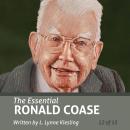
The Essential Ronald Coase (Essential Scholars)
"Ronald Coase (1910-2013) was one of the most influential economists of the 20th century. His influence is due largely to two publications, the only two cited in the announcement of his Nobel Prize: “The Nature of the Firm” (1937) and “The Problem of Social Cost” (1960). These two articles are among the most-cited works in economics. The ideas Coase developed in these two works led to entirely new fields of inquiry in economics, law, management, and political science, and in conjunction with his article on using markets to allocate radio spectrum (Coase 1959), spawned new market design theory and practice that helped to transform our society and enable innovation and digitization. Coase’s style of theory, analysis, and persuasion was narrative, fact-driven, and much less formal than is the norm in economics. Coase spent his career asking deceptively simple questions that revealed profound complexities in the arrangement of economic activity. Why do firms exist? Why don’t we allocate scarce resources such as radio spectrum by using markets instead of regulation? Can people resolve conflicts over resource use through bargaining and contracts, or is government regulation necessary? Is a lighthouse a public good that requires government provision? How does a durable goods monopolist price its output? Ronald Harry Coase was born in Willesden, a London suburb, on December 29, 1910. While attending the University of London, from which he graduated with a Bachelor of Commerce degree in 1932, Coase was awarded the Sir Ernest Cassell Travelling Scholarship. This scholarship enabled him to travel to the United States, study at the University of Chicago from 1931 to 1932 with Frank Knight and Jacob Viner, and visit several factories to learn how they organized production. In particular, his visits to Ford and General Motors factories provided an empirical foundation for his first paper, “The Nature of the Firm” (1937)."
L. Lynne Kiesling (Author), Michael Lenz (Narrator)
Audiobook
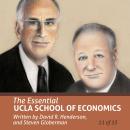
The Essential UCLA School of Economics (Essential Scholars)
"The UCLA tradition carries on in the work of dozens of economists who earned their PhDs at UCLA during its golden years. Because their work spread beyond UCLA, the tradition lives on in the work of scores of economists who had no formal connection with the School. The most important economists at UCLA during the 1970s were Armen Alchian, Harold Demsetz, Sam Peltzman, Benjamin Klein, Robert Clower, Alex Leijonhufvud, Jack Hirshleifer, William Allen, and George Hilton. A distinguishing feature of most of the UCLA economists’ contributions is that they were non-mathematical. This was especially notable in an era in which mathematics had almost taken over economics. The major UCLA School contributors used mainly words and occasionally graphs. Another distinguishing feature is their use of basic economic analysis to understand behaviour that had previously not been understood or had even been misunderstood. The best-known member of the School, Armen Alchian, taught at UCLA from 1946 until his retirement in 1984. His insights and writings underlie a distinctive theme of the School’s approach to economics: in most productive activity, the profit motive, combined with private property rights, successfully aligns the interests of producers and consumers, often in subtle ways. Alchian had no use for formal models that did not teach us to look somewhere new in the known world. Nor had he any patience for findings that relied on fancy statistical procedures. Alchian saw basic economics as a powerful tool for explaining much of human behaviour in both market and non-market settings."
David R. Henderson, Steven Globerman (Author), Michael Lenz (Narrator)
Audiobook
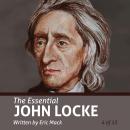
The Essential John Locke (Essential Scholars)
"No single individual is ever the sole founder of any major stance in political philosophy. Nevertheless, if one were forced to name the founder of the classical liberal perspective in political thought which holds as its primary political principle that individual liberty is to be respected and protected one would have to point to the English philosopher John Locke. This short book offers a sympathetic account of the key contentions and arguments that add up to Locke's classical liberal political philosophy. Not every claim Locke makes within political philosophy fits comfortably within the classical liberal paradigm. Nor was every policy stance Locke took consistent with the abstract principles of his political doctrine. Nevertheless, the picture found in this book of Locke as the fountainhead of classical liberal political thinking both captures the essence of Locke as a normative political theorist and reveals a good deal of the character and plausibility of the classical liberal vision."
Eric Mack (Author), Michael Lenz (Narrator)
Audiobook
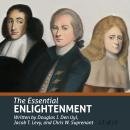
The Essential Enlightenment (Essential Scholars)
"The political ideas that fully came together under the name “liberal” in the early nineteenth century—the ideas we often now refer to as “classical liberalism”—emerged out of major debates and developments from the late 1600s to the late 1700s, part of the broad European intellectual movement of that era that came to be known as “the Enlightenment.” This volume shows how the Enlightenment and the development of liberal ideas were woven together by looking at three defining figures of the era: Baruch Spinoza (writing in the mid-1600s), the Baron de Montesquieu (mid-1700s) and Immanuel Kant (whose career reached its height in the final two decades of the 1700s). Both Spinoza and Kant were concerned with fundamental philosophical questions about what we could know about God, morality, the nature of the world, and humanity’s place in it. Montesquieu wrote almost nothing about such questions, drawing instead from global history and comparative law. While the Enlightenment is associated with many things, one of them was the struggle to understand morality and human nature through the use of reason rather than relying on religious authority; another was the attempt to understand political and social orders in ways that would prevent a return to the wars of religion that had divided Europe in the 1500s and the first half of the 1600s. In various ways, Spinoza, Montesquieu, and Kant all argued for religious toleration—for the peaceful coexistence of different organized ways of understanding God within civil governments that didn’t enforce any one of those ways. Their support of freedom of religious thought also made all of them supporters of free inquiry and free speech. The three thinkers likewise shared commitments to the rule of law and to constitutional forms of government that would constrain the discretionary power of any one ruler."
Chris W. Suprenant, Douglas J. Den Uyl, Jacob T. Levy (Author), Michael Lenz (Narrator)
Audiobook
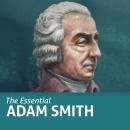
The Essential Adam Smith (Essential Scholars)
"Adam Smith (1723–1790) is widely hailed as the founding father of the discipline now known as economics, and he is widely credited as the founding father of what is now known as capitalism. Smith’s 1776 book, An Inquiry into the Nature and Causes of the Wealth of Nations, is often cited as the beginning of both economics and capitalism, and its influence since its publication ranks it among the most important works of the last millennium."
James R. Otteson (Author), Michael Lenz (Narrator)
Audiobook
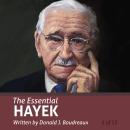
The Essential Hayek (Essential Scholars)
"Nobel laureate economist F.A.Hayek first revolutionized economists' understanding of markets, and then profoundly challenged the public's understanding of government. Hayek is one of only a few social scientists over the past 200 years who thoroughly rethought the relationship between individual people and both the market and the state. While countless works have discussed the importance of Hayek and his ideas, none have focused on making his core ideas accessible to average people. This volume highlights and explains Hayek's basic insights in plain language to ensure that his critical ideas about the nature of society are both accessible and enduring."
Donald J. Boudreaux (Author), Michael Lenz, Satauna Howery (Narrator)
Audiobook
[German] - Die unendliche Geschichte
"'Antiquariat' steht auf der Glastür des kleinen Ladens, in den Bastian Balthasar Bux eines Tages hineingerät. Und hier stößt der Junge auf ein Buch, das sein Leben verändern wird: 'Die unendliche Geschichte'. Das wunderbare Land Phantasién beginnt sich aufzulösen. Als die Kindliche Kaiserin davon erfährt, wird sie schwer krank. Der junge Atréju erhält den Auftrag, das Heilmittel für sie zu finden und Phantasién zu retten. Nicht nur der Glücksdrache Fuchur hilft ihm dabei. Auch Bastian soll eine wichtige Rolle in der Geschichte des Buches spielen."
Michael Ende (Author), Alexander Malachowsky, Christoph Quest, Clemens Kleiber, Emely Reuer, Franz Rudnick, Gerd Günther Hoffmann, Günter Sauer, Hanne Wieder, Harald Leipnitz, Harry Kalenberg, Helga Dners, Herbert Bötticher, Horst Breitenfeld, Horst Sachtleben, Jochen Striebeck, Jürgen Goslar, Karl Renar, Kurt Zips, Matthias Von Stegmann, Michael Lenz, Renate Grosser, Ulli Philipp, Ursula Traun, Wolfgang Büttner (Narrator)
Audiobook
©PTC International Ltd T/A LoveReading is registered in England. Company number: 10193437. VAT number: 270 4538 09. Registered address: 157 Shooters Hill, London, SE18 3HP.
Terms & Conditions | Privacy Policy | Disclaimer
Join our community for the latest bookish news, reading recommendations, exclusive opening extracts, author events and competitions. It\'s all free. And enter a monthly draw to win a £50 Gift Card. See past winners here
Join Our Community