Browse audiobooks narrated by Martin Shaw, listen to samples and when you're ready head over to Audiobooks.com where you can get 3 FREE audiobooks on us
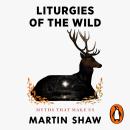
"Brought to you by Penguin. From “one of the greatest storytellers we have” (Robert Bly), an urgent invitation to allow the oldest stories — and the Greatest Story — to reshape our own. There’s an old Irish belief that if you aren’t wrapped in a cloak of story you will be unprepared for what the world will hurl at you. You remain adolescent at just the moment a culture worth its salt requires you to become a real, grown, human being. In Liturgies of the Wild, acclaimed mythographer, storyteller and Christian thinker Martin Shaw argues that we live in a myth-impoverished age and that such poverty has left us vulnerable to stories that may not wish us well. Drawing on the “ancient technologies” of myths and initiatory rites, Shaw provides a road to wholeness, maturity and connection. He teaches us to read a myth the way it wants to be read; provides vivid retellings of tales powerful enough to carry you through life’s travails; and shows you how to gather and reshape your own thrown-away stories. Most vividly, he shares how these ancient technologies led him—unexpectedly—to Christ, “the True Myth,” by way of a thirty-year journey and a 101-night vigil in a Dartmoor forest. Combining scholarly erudition with nimble storytelling in the tradition of C.S. Lewis and J.R.R. Tolkien, Liturgies of the Wild is a thrilling counsel of resistance and delight in the face of many modern monsters. © Martin Shaw 2026 (P) Penguin Audio 2026"
Martin Shaw (Author), Martin Shaw (Narrator)
Audiobook
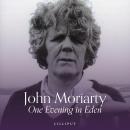
"The One Evening in Eden audiobook gives insight into the spiritual goals and progression of the poet-philosopher John Moriarty, including readings from the booklet Serious Sounds. Blending Eastern and Western philosophies, Moriarty seeks to unveil the innate connection between religion and spirituality. 'Seeking to Walk Beautifully on the Earth' details Moriarty's exploration of six Indian-American stories, capturing the time when Moriarty de-Europeanised himself and lived through the Native American myths, as he felt they had more resonance than some European myths. Here are stories that permit us to stand in a new way and a better way upon the Earth. There is an outer journey and there is an inner journey with an inner Eucharist that we can listen to, to help us on our way. There is a self-singing Sanctus that is un-fallen at the core of our being. 'Tridium Sacrum' is our transition back into the divine and back into the Earth as well. Moriarty did not believe that the Christian way was the only way to God. However, he remained Christian because Jesus pioneered a way for everyone and everything by starting below in the canyon – the lowest point in the Earth. Moriarty wanted to put the bright angel trail (the path that leads down to the floor of the grand canyon) back at the heart of a new culture. Moriarty proclaimed a new Christian epoch called canyon Christianity – where Jesus took on not only the sins of the world but also the impulses and the energies of the human psyche and of animals. 'Six Stories' do not ask too much or too little of ourselves. Moriarty inherits his humanity in all its awkwardness and crookedness and all its contradiction and as long as he does not hurt anyone else he allows his nature to happen to him. The vernacular is very important – the author believed that Theology, or the words Theo Logos meaning discourse or an account of or an understanding of God, was a contradiction in itself. We cannot talk about God at all but we can talk about the journey back to God. These six stories are about the journey back to God. 'The Eden Collection' is a set of poems in which Moriarty confronts his own darkness as Faust did – consciously. At the age of twenty eight Moriarty underwent Ragnorok (Nordic for 'the end of the world') after which he wrote no more poetry. Feeling there was 'too much happening between the lines …' Moriarty returned instead to prose. Modern poetry read to Moriarty like crafted prose. He liked cadence and rhythm and felt it was absent in modern poetry. He wanted to write poems that were almost incantatory. Moriarty believed that cadence and rhythm were essential to poetry and he challenged modern poets to produce poetry like this again. These philosophies and beliefs culminate into a sensuous world of lyrical mysticism, told only as John Moriarty could."
John Moriarty (Author), Martin Shaw (Narrator)
Audiobook
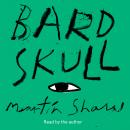
"Bardskull is the record of three journeys made by Martin Shaw, the celebrated storyteller and interpreter of myth, in the year before he turned fifty. It is unlike anything he has written before. This is not a book about myth or story. It is a sequence of incantations and a series of battles. For each of the three journeys, he walks alone into a forest in the heart of Dartmoor and waits. What arrives are stories - fragments of myth and folk tale that he has carried within him for decades: the deep myths of Dartmoor itself, tales from distant family members, Arthurian legend, folk tales from India, Persia, Lapland, the Caucasus and Siberia. But these stories and their tellers don't arrive as the bearers of solace or easy wisdom. They come to challenge, to undermine, to sow doubt."
Martin Shaw (Author), Martin Shaw (Narrator)
Audiobook
"BBC radio productions of the first four bestselling V.I. Warshawski novels from Sara Paretsky - plus a short story featuring the hardboiled PI, read by Buffy Davis One of the most popular female sleuths in modern crime fiction, Chicago private eye V.I. Warshawski is a strong, smart, independent heroine in a male-dominated world. She tracks down corrupt businessmen, ruthless blackmailers and cold-blooded murderers - while trying not to get killed herself. Indemnity Only The first novel in the V.I. Warshawski series introduces one of the world's best-loved private detectives. V.I. meets an anonymous client on a sizzling summer night, but soon discovers that he has been lying to her. As she questions his motives, she sinks deeper into Chicago's underworld of gangsters, insurance fraud and contract killings. Read by Liza Ross. Deadlock At the funeral of her cousin, ice hockey hero Boom Boom, V.I. becomes suspicious that his death wasn't an accident. Her investigation leads her to the heart of Chicago's shipping industry, where someone powerful will stop at nothing to get her off the case. A full-cast dramatisation, adapted by Michelene Wandor and starring Kathleen Turner. Killing Orders When forged share certificates are discovered at a Dominican priory, V.I. really doesn't want to get involved. Because agreeing to investigate would mean doing a favour for Aunt Rosa, who hates her - and the feeling's mutual. A full-cast dramatisation, adapted by Michelene Wandor and starring Kathleen Turner. Bitter Medicine Private eye V.I. Warshawski suspects all is not well at a hospital after a young pregnant girl dies. A full-cast dramatisation, adapted by Michelene Wandor and starring Sharon Gless. Publicity Stunts V.I. Warshawski is being set up for a murder she didn't commit - of a woman she hardly knew. Can she find out the truth before the law closes in on her? Read by Buffy Davis."
Sara Paretsky (Author), Buffy Davis, Eleanor Bron, Full Cast, Kathleen Turner, Liza Ross, Martin Shaw, Sharon Gless (Narrator)
Audiobook
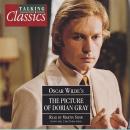
"The Picture Of Dorian Gray is the novel of the decadent 1890's. Wilde's only full length novel, it is a thrilling, melodramatic tale of love, murder, thwarted revenge and final justice. But in its pages Wilde also expressed his own distinctive views on art, life and beauty through Lord Henry Wotton, the immoral aristocrat who corrupts Dorian Gray. In some ways both Dorian and Lord Henry are self-portraits of Wilde - not as he was but as he would have liked to appear. This adds to the novel's power and poignancy. 1. A WISH UTTERED. The book opens on a scene of typical luxury. Lord Henry Wotton, lolling on a divan, teases his friend Basil Hallward about his infatuation with the young Dorian Gray. Hallward, who is painting Dorian's portrait, warns Lord Henry against corrupting the youth. But when Dorian appears, he is overwhelmed by Lord Henry's daring views. Hallward completes his picture and Dorian, gazing at it, wishes that the portrait might grow old and ugly while he himself remained untouched by the passing years. 2. YOUNG LOVERS. A month later Dorian, a close friend of Lord Henry and much under his influence, reveals to him that he has fallen in love with Sibyl Vane, a young actress at a minor theatre. Lord Henry wonders what she is like when she is not on stage, but he consents to come to see her act that evening. Meanwhile, Sibyl tells her own family - her mother, a disappointed actress, and her brother James, who is going to sea - that she is in love with a young man whom she knows only by the name Prince Charming. James Vane swears that if this man ever harms his sister, he will find him and kill him. 3. A BRIEF ENGAGEMENT. That evening, while waiting for Dorian, Lord Henry tells Basil of Dorian's engagement to Sibyl. When Dorian arrives aglow with love, he relates how they fell into each other's arms, and how Sibyl makes him forget Lord Henry's poisonous ideas. Lord Henry protests, but at the theatre he is charmed by his first sight of Sibyl. She, however, appals Dorian by acting very badly. After the show, he is unimpressed by her explanation that she no longer feels that the theatre is worthwhile compared to the passion she feels for Dorian. Claiming that she has killed his love, he contemptuously abandons her. 4. THE PORTRAIT STARTS TO SNEER. After a night roaming the streets, Dorian returns to find something strange in his portrait: it now has a trace of cruelty not visible in his own face. Deeply shaken, he decides the next day to make amends to Sibyl. Lord Henry turns up to offer sympathy unaware that Dorian does not know of Sybil's suicide. When he does, he is grief-stricken for a moment but accepts Lord Henry's explanation that Sibyl never really lived as a person - only as an actress. The next day Basil is shocked to find that Dorian has spent the previous night at the opera and now dismisses the whole affair. Reluctantly accepting Dorian's conduct, Basil asks to see the portrait which is hidden by a screen. Dorian, terrified that Basil will notice the change, refuses him. 5. A PICTURE IS HIDDEN. Dorian asks Basil why he never exhibited the picture. Basil confesses that there is something extraordinary about his portrait. After he has gone, Dorian hides the picture in disused room. He then becomes entranced by a fantastic yellow book, which Lord Henry has sent him. 6. THE ROAD TO RUIN. Influenced by the yellow book, Dorian starts to live a life of secret debauchery, corrupting other young men and women. Soon, evil rumours start circulating about him but he still appears as fresh and pure as day his portrait was painted. That, however, grows steadily more menacing. One night, he meets Basil Hallward near his home and shows him the portrait. The shocked painter urges Dorian to repent but he refuses and, in a sudden fit of anger, kills Basil. The next day, Dorian summons Alan Campbell, a scientist and blackmails him into helping dispose of Basil Hallward's body. 7. THE COILS OF CRIME. Once the body and other evidences are destroyed, Dorian visits an opium den in the slum of the East End of London. There, his nickname. Prince Charming is overhead by James Vane, now back in England and intent on avenging his sister. Dorian saves himself by showing that he is far too young to have committed a crime 18 years old. Stunned, Vane lets him go. But women whom Dorian has ruined years before tells Vane the truth and he resumes his quest. 8. THE PICTURE RESTORED. Entertaining guests at his country house, Selby Royal, Dorian suddenly faints when he sees James Vane's face pressed against a window; he has been followed. But the next day Vane is killed in a shooting accident and Dorian can breathe easily again. He also seems to have escaped blame for the death of Basil Hallward. Back in London he started to finds his own ageless beauty intolerable and decides at last to give up his evil ways. Eagerly, he rushes upstairs and searches his own monstrous portrait for the first signs of his repentance. All he sees is look of cunning hypocrisy. Enraged by this, he picked up a knife to slash the picture - and a terrible cry is heard across London. When the room is finally forced open, his servants find on the wall a portrait of Dorian in his perfect youth - and a hideous old man stabbed to death on the floor, recognisable only by his rings."
Oscar Wilde (Author), Martin Shaw (Narrator)
Audiobook
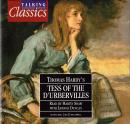
"This masterpiece is beautiful constructed. 1. A QUESTION OF ANCESTRY. Most of the elements of the novel are set in place. From the moment Parson Tringham suggests to Tess's father that he may be descended from a noble family, Tess's life changes. She meets Angel for the first time at the May dance, where, to her slight irritation, he dances with other girls, missing her out. The section ends when Tess's negligence leads to the death of Price, the Durbeyfield horse - who is also the family's breadwinner. Listen for the description of price's of death and see how elsewhere in the novel-most notably in track 9, at Sandbourne - the image of blood comes up again and again. 2. AT TRANTRIDGE. Tess is persuaded by her family to go to Trantridge to find what they believe to be another branch of the family. Mrs Stoke d'Urberville offers work to Tess, who then encounters her seducer, Alec, for the first time. Hardy takes pains to point out that Alec is not related to Tess at all- his family merely acquired the d'Urberville name - a tragic irony in view of what is about to happen. 3. MAIDEN NO MORE. The seduction marks the end of a sustained campaign by Alec. The scene is full of power and pathos. Imagine 'the darkness and the silence' on The Chase that night with only the sound of Tess's breathing as she lies there asleep in white muslin, the birds roosting in the trees above them. No wonder Hardy asks: 'where was her guardian angel?' 4. AT TALBOTHAYS. Back at Marlott, Tess gives birth to the slickly Sorrow. Pathetically, because of his illegitimacy, Tess has to christen him herself - watched by her sister 'Liza-Lu and her other brothers and sisters - before he dies. Stifled at home and determined to make a new start, she takes a job as a milkmaid at Talbothays Dairy, where she meets Angel again. 5. HALCYON DAYS. Angel pursues Tess as earnestly as Alec did but in a more gentlemanly fashion. He kisses her for the first time and then proposes marriage. Aware of the effect knowledge of the past would have on him, Tess refuses. But as the section closes, she gives in to her need for a chance of happiness and in spite of her misgiving, she accepts him. 6. REVELATIONS. This is the centrepiece of the novel. Tess tries unsuccessfully to tell Angel of her past before the wedding but Angel brushes her aside. The marriage appears to be culmination of their love, but we are made aware that Tess's period of happiness is about to come to a close. Only on their wedding night, after Angel has confessed to a short period of debauchery, can she tell her story. The story is observed from Angel's point of view- and his reaction is made all the more sinister because we never hear it. He reacts by stoking the fire - a meaning act - before reply almost in monotone. He is unable to live with this revelation on her past, despite his own past sexual exploits. 7. FLASHBACK. Eight months later, Tess is penniless and is forced to search for Angel's parents for assistance. On her way to Emminster, she finds Alec, now a preacher, addressing his throng in a country barn. He is stunned to see her and genuinely shocked to hear of her situation. He is also immediately attracted to her again. 8. 'MAN AND WIFE'. Alec abandons preaching and wins Tess back with memorable, if chilling, words: 'I was your master once! I will be your master again'. Angel, now in South America, at last rethinks his position and decides to return to England. Tess's father dies, leaving her and the Durbeyfield family homeless. 8. THE FINAL RECKONING. Angel discovers Tess living with Alec at Sandbourne as man and wife. The image of blood reappears with the landlady see the red spot on her ceiling - the first sign that Tess has murdered Alec in the room above. She and Angel are briefly reunited at Stonehenge before their discovery by the police. She is tried and then hanged at Winchester Gaol as Angel, at Tess's bequest walks away with 'Liza-Lu."
Thomas Hardy (Author), Martin Shaw (Narrator)
Audiobook
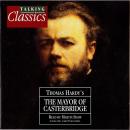
"This epic work is one of the most tragic of Thomas Hardy's stories. The novel comes full circle as Michael Henchard rises from poverty and drunkenness to wealth and position, ultimately to die poor and bitter. The Mayor's own story is linked to the almost mythological struggle of the old with the new, as his power, his business and even his love for a woman are challenged by the young and thrusting Donald Farfrae. Progress must ultimately triumph over the old way of life, leaving Henchard defeated and disgraced. 1. DRINK AND DISASTER. Michael Henchard, with his wife Susan and their baby daughter, approaches a village, seeking work. A fair is in progress; the family enter a tent selling furmity (a milk drink) and Henchard has rum added to his. He becomes very drunk, and on seeing an auction puts Susan up for sale. A sailor buys her five guineas Henchard falls asleep. When he wakes, repentant, he swears that he will not drink for 21 years. Long after, Susan returns to the same spot with her grown-up daughter Elizabeth-Jane and learns that Henchard went to Casterbridge, Once there, she is amazed to find that he is Mayor. 2. FRESH STARTS. Donald Farfrae, a young Scot, is passing through Casterbridge at the same time as Susan arrives. He overhears the Mayor say that nothing can be done about the rotten wheat he has been selling and sends him a formula for saving it; Henchard is so impressed that he appoints Farfrae as manager of his business. Elizabeth-Jane calls on Henchard, who is moved by her revelation that his wife has returned, the sailor who brought her being presumed dead. He sends Susan a note containing five guineas to buy her back and arranges to meet her secretly. They agree not to reveal their past and to remarry. 3. PARTNERS QUARREL. Henchard confides in Farfrae, admitting both his past treatment of Susan and his liaison with, and subsequent engagement to, a woman in Jersey. Henchard re-remarries Susan who, like her daughter, enjoys life in their comfortable new home. The corn business also thrives under Farfrae's management, but the two men argue. Soon after, on a special day, Farfrae organises a fair. Piqued that he was not been consulted - and did not think of its first - Henchard organises his own fair, which is rained off. By contrast, Farfrae's is a success; he even dances with Elizabeth. In a fit of anger, he sacks Farfrae and forbids Elizabeth to see him again. The Scot then starts his own corn-dealing business. 4. TRUTH CONCEALED. Susan Henchard falls ill and dies, an event which draws Henchard and Elizabeth closer. He decides to tell her the truth - as he knows it - and explains that he is her father, to her great shock. However, Henchard discovers from a letter which Susan left that his own daughter died in infancy, and that Elizabeth's father is Richard Newson, the sailor who bought Susan, but his behaviour towards Elizabeth changes for the worse. Bewildered, she is weeping by her mother's grave when she meets a lady who invites her to live with her as her companion. 5. LOVES CROSSED CURRENTS. Henchard's ex-fiancée, Lucetta Templeman, send him a letter announcing her arrival in Casterbridge, then another saying that she has persuaded Elizabeth to live with her in High Place Hall. Henchard, feeling his old ardour rekindled, calls on her but is told to return the next day. He then writes to Farfrae, giving him to permission to woo Elizabeth again. Next day, Farfrae goes to High Place but sees Lucetta, not Elizabeth. She herself was expecting Henchard but, after meeting the Scotsman, falls in love with him instead. She than refuses Henchard's proposal of marriage. Henchard tells Farfrae that his former fiancée has now refused him, but the latter does not realise that she and his beloved are one and the same. 6. RUIN. To avenge himself on Farfrae, Henchard appoints a new manager, Jopp, and plans to corner the corn market, anticipating a poor harvest. But the harvest is good and Henchard is half-ruined. Soon after, the old furmity seller appears before Henchard in court and accuses him of having sold his wife years before. Lucetta when she hears the story is appalled. Henchard pressed for money, asks Lucetta to announce their engagement, so her wealth will secure his credit. She replies that she has already married Farfrae. Both Henchard and Elizabeth have lost the ones they love. 7. DISGRACE AND DEATH. Henchard's affairs go from bad to worse and he is bankrupted. Meanwhile, Farfrae is made Mayor, but rumours of Lucetta's past liaison spread rapidly and a 'skimmington-ride' is planed to humiliate her. When Lucetta sees the effigies of herself and Henchard hauled though the streets, she collapses and dies. 8. FINAL DECLINE. Elizabeth is asleep in Henchard's cottage - he has had to leave his large, expensive house - when a stranger calls. It is Newson; he has heard that Susan is dead and Henchard tells him that Elizabeth is too. Newson leaves Casterbridge, and Henchard and Elizabeth set up shop together. But Farfrae starts wooing Elizabeth again and Newson returns. Henchard making off before Elizabeth learns the truth. Henchard goes to Elizabeth's wedding party with a gift of a goldfinch, but she rejects him. Soon after, she is stricken with remorse and sets off with her husband to find him - but Henchard dies before they reach him."
Thomas Hardy (Author), Martin Shaw (Narrator)
Audiobook
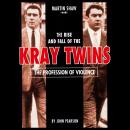
The Profession of Violence: The Rise and Fall of the Kray Twins
"The Profession Of Violence; The Rise And Fall Of The Kray Twins. Heroes or villains? In the 1960's London's gangland was ruled by two men - Reggie and Ronnie Kray. Building an empire of crime by intimidation, extortion and terror on a scale never seen before or since, they feted stars of stage and screen, sportsmen and even politicians to gain the respectability they craved. Listen to the story of the rise and fall of the Krays. On the 17th March 1995, Ronnie Kray died suddenly of a heart attack while serving a life sentence for murder. His funeral was watched by over 50,000 people. Reggie died of cancer in 2000. Read by acclaimed actor Martin Shaw, probably most famous for his role as Doyle in The Professionals, he is hugely respected and talented and a regular favourite on TV and in the theatre."
John Pearson (Author), Martin Shaw (Narrator)
Audiobook

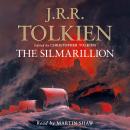
"The forerunner to The Lord of the Rings, The Silmarillion tells the earlier history of Middle-earth, recounting the events of the First and Second Ages, and introducing some of the key characters, such as Galadriel, Elrond, Elendil and the Dark Lord, Sauron. The tales of The Silmarillion are set in an age when Morgoth, the first Dark Lord, dwelt in Middle-Earth, and the High Elves made war upon him for the recovery of the Silmarils, the jewels containing the pure light of Valinor. Included in the book are several shorter works. The Ainulindale is a myth of the Creation and in the Valaquenta the nature and powers of each of the gods is described. The Akallabeth recounts the downfall of the great island kingdom of Númenor at the end of the Second Age and Of the Rings of Power tells of the great events at the end of the Third Age, as narrated in The Lord of the Rings."
J.R.R. Tolkien (Author), Martin Shaw (Narrator)
Audiobook
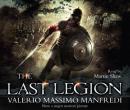
"Valerio Massimo Manfredi's The Last Legion opens on the day that the Western Roman Empire collapses finally in 470AD, as the Last Emperor of Rome is encamped and protected by the Nova Invicta Legion. All is lost in the space of a few minutes as a horde of Barbarians sweep through the camp in the fog, kill the Imperial family and take the young Emperor captive. The Roman Empire is in ruins . . . But all is not lost. From the dust of battlefields emerges a small team of invincible warriors – The Last Legion. Their task is to rescue the Emperor and his enigmatic tutor and to try and resurrect the glory of Rome. All their strength of character and bravery come into play as they guide the last Caesar in a dramatic journey of escape through a devastated Italy and Northern Europe to their ultimate destinies in the land of the Britons . . . and the beginning of a new legend. Filled with myth, legend and gladiators, The Last Legion was made into a film starring Colin Firth and Ben Kingsley and directed by Doug Lefler."
Valerio Massimo Manfredi (Author), Martin Shaw (Narrator)
Audiobook
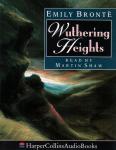
"‘Is Mr. Heathcliff a man? If so, is he mad? And if not, is he a devil?’ Set on the bleak moors of Yorkshire, Lockwood is forced to seek shelter at Wuthering Heights, the home of his new landlord, Heathcliff. The intense and wildly passionate Heathcliff tells the story of his life, his all-consuming love for Catherine Earnshaw and the doomed outcome of that relationship, leading to his revenge. Poetic, complex and grand in its scope, Emily Brontë's masterpiece is considered one of the most unique gothic novels of its time."
Emily Brontë (Author), Martin Shaw (Narrator)
Audiobook
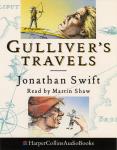
"Swift’s scornful satire, written “to vex the world rather than divert it”, takes a caustic look at those most contemporary concerns irrational prejudice, social inequality, ivory tower elitism and the correct way to open a boiled egg. 'I cannot but conclude the bulk of your natives to be the most pernicious race of little odious vermin that nature ever suffered to crawl upon the surface of the earth.' Shipwrecked on the high seas, Lemuel Gulliver finds himself washed up on the strange island of Lilliput, a land inhabited by quarrelsome miniature people. On his travels he continues to meet others who force him to reflect on human behaviour – the giants of Brobdingnag, the Houyhnhnms and the Yahoos. In this scathing satire on the politics and morals of the 18th Century, Swift's condemnation of society and its institutions still resonates today."
Jonathan Swift (Author), Martin Shaw (Narrator)
Audiobook

©PTC International Ltd T/A LoveReading is registered in England. Company number: 10193437. VAT number: 270 4538 09. Registered address: 157 Shooters Hill, London, SE18 3HP.
Terms & Conditions | Privacy Policy | Disclaimer
Join our community for the latest bookish news, reading recommendations, exclusive opening extracts, author events and competitions. It\'s all free. And enter a monthly draw to win a £50 Gift Card. See past winners here
Join Our Community