Browse audiobooks narrated by Janet Fullerlove, listen to samples and when you're ready head over to Audiobooks.com where you can get 3 FREE audiobooks on us
"Ulric Evan Daubeny born in 1888 published only a single collection of short supernatural fiction; ‘The Elemental’. It’s stand out piece was 'The Sumach'.He died in 1922."
Ulric Daubeny (Author), Janet Fullerlove (Narrator)
Audiobook
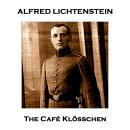
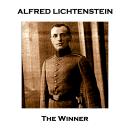
"Alfred Lichtenstein was born on the 23rd August 1889, in Berlin-Wilmersdorf, the son of a Jewish manufacturer. He grew up in Berlin before studying law at Erlangen in Bavaria. A writer in the Expressionist style his poems and stories are short but beautifully honed works. His tragically curtailed life allowed only a small part of his talents to rest with us. Undoubtedly a full life would have given the world a very gifted literary force.Alfred Lichenstein volunteered for duty in the German Army for World War I. He died on the front at the Somme in the early months of combat on the 25th September 1914. He was 25"
Alfred Lichtenstein (Author), Janet Fullerlove (Narrator)
Audiobook
"Alfred Lichtenstein was born on the 23rd August 1889, in Berlin-Wilmersdorf, the son of a Jewish manufacturer. He grew up in Berlin before studying law at Erlangen in Bavaria. A writer in the Expressionist style his poems and stories are short but beautifully honed works. His tragically curtailed life allowed only a small part of his talents to rest with us. Undoubtedly a full life would have given the world a very gifted literary force.Alfred Lichenstein volunteered for duty in the German Army for World War I. He died on the front at the Somme in the early months of combat on the 25th September 1914. He was 25"
Alfred Lichtenstein (Author), Janet Fullerlove (Narrator)
Audiobook
"Lettice Galbraith is yet another of those mysterious women of British literature of whom little was recorded.Lizzie Susan Gibson was born on the 27th January 1859 in Kingston-Upon-Hull in Yorkshire into a comfortable middle-class family.Her education was primarily private but at fifteen her father died, and life became rather different.After several years in London, she moved with her mother to Reigate in Surrey. In 1885 she published her first story anonymously and her pseudonym ‘Lettice Galbraith’ only appeared from late 1892.Although her canon of works is small, she mainly achieved her reputation on a single volume of ghost and supernatural stories entitled ‘New Ghost Stories’.After her mother’s death in 1901 she moved to London and continued to write, this time moving on from the short story to the novel, as well as reverting to her given name.For the last two decades of her life, she did not continue her literary career.Lettice Galbraith died on 8th July 1932 at Downe, then in Kent. She was 73"
Lettice Galbrath (Author), Janet Fullerlove (Narrator)
Audiobook
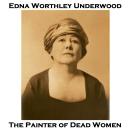
"Edna Worthley Underwood was born in Maine in 1873. Her first published work was a collaborative translation of materials by Nikolai Gogol.Her talents included both translating (she was an expert linguist), poetry and noted author of short stories.By the 1940’s her literary efforts ceased and, after being admitted to a sanitorium for dementia in 1953, died several years later."
Edna Worthley Underwood (Author), Janet Fullerlove (Narrator)
Audiobook
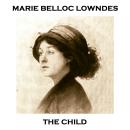
"Marie Adelaide Elizabeth Rayner Lowndes (née Belloc) was born in 1868. She had a distinguished and prolific literary career and 4 of her works were adapted (some several times) for film.She died in 1947."
Marie Belloc Lowndes (Author), Janet Fullerlove (Narrator)
Audiobook
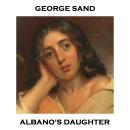
"Amantine Lucile Aurore Dupin was born on the 1st July, 1804, in Paris, France, to an unconventional family who were from different classes—her father being from noble lineage whilst her mother from rather more modest origins. Following her father’s early death, Sand was raised by her aristocratic grandmother at the family estate in Nohant, which she later inherited at 17. The house and surrounding countryside was a profound influence on her writing which often highlighted pastoral themes and the natural world, particularly in her later, possibly most critically, acclaimed novels.Sand’s life and writings were unconventional and very progressive. At the age of 18, she married Baron Casimir Dudevant, with whom she had two children. However, the marriage was unhappy, and Sand left in 1831, moving to Paris to pursue her literary ambitions. This point also marked her adoption of the pseudonym ‘George Sand’ to help her in the male dominated world of publishing. Her first major novel was ‘Indiana’ (1832). It was a critical success and there now followed a series of successful novels which established her as more famous and successful than Victor Hugo or Honoré de Balzac. Her writing, a blend of romance and realism, had an effortless spontaneity which neither sacrificed style or form and tackled the complexities of politics, society, and gender.Sand was a bohemian. She wore men's clothing, smoked cigars, and engaged in several high-profile romantic relationships including Prosper Mérimée and Frédéric Chopin.She was a staunch advocate for social justice, women's rights, and workers' welfare and championed democratic and socialist causes. As a Republican she supported the 1848 Revolution and was a member of the provisional government. Despite criticism for her lifestyle and feminist views she continued her literary career across novels, plays, essays, and memoirs. Her defiance of societal expectations and her commitment to social and gender equality continue to inspire readers and writers alike, cementing her place as a central figure in the history of French literature. George Sand died on 8th June,1876, at her childhood home in Nohant and was buried in the private graveyard there. She was 71."
George Sand (Author), Janet Fullerlove (Narrator)
Audiobook
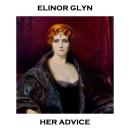
"Elinor Sutherland was born on the 17th October 1864 in Saint Helier, Jersey, in the Channel Islands.Her father died when she was 2 months old and her mother returned to Canada with both baby Elinor and her sister. In the 7 years they were there Elinor was taught by her grandmother. Her mother remarried in 1871 and the family returned again to Jersey and her education continued, this time under the supervision of Governesses.Elinor married in 1892 to a wealthy but spendthrift barrister and Essex landowner.She began writing late in her life and it was only in 1900 that her first book was published. By 1908 her husband had fallen into debt and she was now writing a novel a year to maintain the family’s standard of living.The marriage was troubled, and she had affairs with several British aristocrats, notably Lord Curzon, the Viceroy of India, that lasted almost a decade.Her literary style was very successful and, although by modern standards would be called ‘romance’, in those days it was considered racy and erotic fiction. She coined the first use of the word the ‘It girl’.During World War I, Glyn became a war correspondent and at the signing of the Treaty of Versailles, in 1919 was one of only two women present.In the 1920’s Glyn went to Hollywood, for the filming of her novel ‘The Great Moment’. Thereafter she was engaged to write stories and screenplays and became one of the most famous and successful women screenwriters of the era. She had a brief career as one of the first female directors and on one occasion in the film ‘It’, made a cameo appearance.In 1929 Glyn returned to England in part because of tax demands. She now formed her own production company, Elinor Glyn Ltd, to which she assigned her copyrights, and in return received an income and later an annuity. The firm was an early pioneer of cross-media branding. However, the forays into producing and financing caused the company to fail. She now took up again with her first love; writing novels.Elinor Glyn died on the 23rd September 1943 in Chelsea, London. She was 78."
Elinor Glyn (Author), Janet Fullerlove (Narrator)
Audiobook

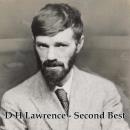
"David Herbert Lawrence was born on the 11th September 1885 in Eastwood, Nottinghamshire, a coal mining town where the reality of a harsh life was only useful as experiences for future literary works.He was educated at Beauvale Board School and became the first local boy to receive a scholarship to attend Nottingham High School. After 3 years he became a junior clerk in Haywood’s surgical appliances factory. He was also attempting a literary career which, in the short term, led to a teacher training position in Eastwood and later a teaching qualification from University College, Nottingham. Lawrence’s first efforts were poems, short stories and a draft of ‘The White Peacock’. Moving to London and a teaching position in Croydon his writing attracted the attention of Ford Madox Ford, editor of The English Review, and he commissioned him to write ‘Odour of Chrysanthemums’. Wanting to write full-time he now began work on what would become ‘Sons and Lovers. In 1912 he met the older and married mother-of-three Frieda Weekley. They eloped to Germany and here Lawrence could see for himself the growing tensions with France. So keen was his interest that he was arrested and accused of being a British spy. In early 1914 Frieda obtained her divorce and they returned to Britain to be married just days before the outbreak of war. Owing to her German parentage, and his own public dislike of militarism and violence, the couple were treated with contempt and suspicion throughout the war years. Despite this he continued to write but his reputation in England was so tarnished and, mirrored by his own disdain for the country, he and Frieda left England in November 1919, first for Europe and then America via Ceylon and Australia.They bought a ranch in Taos, New Mexico and visited Mexico several times. The third visit in March 1925 caused a near fatal attack of malaria. To convalesce they moved to Florence. Here he continued work on ‘Lady Chatterley’s Lover’ which for many years would cause controversy. A renewed interest in oil painting resulted in an exhibition in 1929 which was raided by the police and several works were confiscated. D H Lawrence died of complications arising from a bout of tuberculosis on the 2nd of March 1930 in Vence, France. He was 44."
D.H. Lawrence (Author), Janet Fullerlove (Narrator)
Audiobook

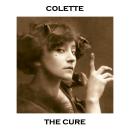
"Sidonie-Gabrielle Colette more usually known as simply ‘Colette’, was born in 1873. Her most famous work is ‘Gigi’. An author, a woman of letters, a mime, an actress, and journalist and a celebrity example the wide range of her many talents.She died in 1954."
Colette Avital (Author), Janet Fullerlove (Narrator)
Audiobook
"Tatiana Schepkina-Kupernik was born in 1874. In her literary career she was a poet, playwright, and short story writer.She died in 1952."
Madame Schepkina-Kupernick (Author), Janet Fullerlove (Narrator)
Audiobook
"There is something about the number 3. The Ancient Greeks believed 3 was the perfect number, and in China 3 has always been a lucky number, and they know a thing or two. Most religions also have 3 this and 3 that and, of course, in these more modern times, three’s a crowd may be too many, except when it’s a ménage à trois. It seems good things usually come in threes.Whatever history and culture says WE think 3, a hat-trick of stories, is a great number to explore themes and literary avenues that classic authors were so adept at creating.From their pens to your your ears. 01 - 3 Stories - Set in Summer02 - August by Bruno Schulz03 - August Heat by W F Harvey04 - Kew Gardens by Virginia Woolf"
Bruno Schultz, Virginia Woolf, W F Harvey (Author), Ghizela Rowe, Janet Fullerlove, Mark Rice-Oxley (Narrator)
Audiobook
©PTC International Ltd T/A LoveReading is registered in England. Company number: 10193437. VAT number: 270 4538 09. Registered address: 157 Shooters Hill, London, SE18 3HP.
Terms & Conditions | Privacy Policy | Disclaimer
Join our community for the latest bookish news, reading recommendations, exclusive opening extracts, author events and competitions. It\'s all free. And enter a monthly draw to win a £50 Gift Card. See past winners here
Join Our Community