Browse audiobooks narrated by AI Voice Charles Owen, listen to samples and when you're ready head over to Audiobooks.com where you can get 3 FREE audiobooks on us
39 audiobooks in our catalogue, every one with its narrator named.
"This audiobook is narrated by an AI Voice. Edgar Allan Poe left the mystery unsolved. Jules Verne dared to finish it. In 1838, Poe published The Narrative of Arthur Gordon Pym—a haunting tale of Antarctic exploration that ended abruptly with Pym's boat rushing toward a massive white figure at the South Pole. What was it? What happened to Pym? Poe never answered, leaving one of literature's great enigmas. Sixty years later, Jules Verne wrote the sequel. Jeorling, a wealthy American, finds himself aboard the sealing ship Halbrane commanded by Captain Len Guy—whose brother led the expedition that rescued Pym in Poe's original tale. When they discover evidence that Pym's companion Dirk Peters might still be alive somewhere in Antarctica, Guy becomes obsessed with penetrating the extreme south to solve the mysteries Poe left unresolved. As the Halbrane pushes through ice fields toward the pole, Verne provides what Poe withheld: detailed Antarctic geography, rational explanations for surreal phenomena, and answers to questions Poe deliberately left open. But in explaining Poe's mysteries, does Verne enhance or diminish their power? Written in 1897 near the end of Verne's career, An Antarctic Mystery is both literary homage and revealing experiment—rationalist attempting to complete surrealist, scientific explanation confronting deliberate ambiguity. Verne's documentary precision serves him well in rendering Antarctic landscapes, but his need for rational closure transforms Poe's uncanny enigmas into natural curiosities. The result is fascinating hybrid: tribute that can't help betraying its original, sequel that demonstrates both the power and limits of scientific thinking when confronting the genuinely mysterious. From the author of Twenty Thousand Leagues Under the Sea—a journey to complete Poe's greatest mystery, discovering that some questions are more powerful than their answers."
Jules Verne (Author), AI Voice Charles Owen (Narrator)
Audiobook · 14 hrs
"This audiobook is narrated by an AI Voice. A meteor of solid gold. Unlimited wealth falling from the sky. And a race that will corrupt everyone who enters it. When astronomers discover a meteor composed entirely of gold hurtling toward Earth, the world goes mad. The celestial object is worth hundreds of billions of dollars—enough to destabilize global economies, enough to trigger wars, enough to make whoever claims it the wealthiest entity on the planet. Dr. Sydney Hudelson and Dean T. Forsyth, previously friendly colleagues whose children are engaged to be married, both claim credit for discovering the meteor. Their professional rivalry escalates into bitter personal feud: they refuse to speak, sabotage each other's observations, publish competing predictions, and transform their dispute into vendetta that poisons their families and makes them objects of public ridicule. Meanwhile, the global response spirals toward chaos. Stock markets crash as investors realize that flooding the market with unlimited gold will make existing holdings worthless. Nations assert territorial claims based on predictions of where the meteor will land, and diplomatic conflicts threaten military escalation. Entrepreneurs scheme to capture the treasure. Criminals plot elaborate thefts. And ordinary people watch in fascination and terror as unlimited wealth approaches, promising either universal prosperity or economic catastrophe. From the author of Twenty Thousand Leagues Under the Sea—a satirical fable about greed and sudden wealth that resolves through technical salvation rather than human transformation."
Jules Verne (Author), AI Voice Charles Owen (Narrator)
Audiobook · 7 hrs 53 mins
"This audiobook is narrated by an AI Voice. The cannon has fired. The projectile is in motion. And now, sealed inside their metal shell with a dog, three bottles of champagne, and an alarming number of unanswered questions, Impey Barbicane, Michel Ardan, and Captain Nicholl are hurtling through space toward the Moon — or rather, as a passing meteor is about to make clear, toward something in the approximate vicinity of the Moon. Around the Moon, published in 1870 as the conclusion of the story begun in From the Earth to the Moon, is Jules Verne at his most scientifically serious and his most quietly honest. His three travelers observe the lunar surface through their portholes, calculate their trajectory, argue about philosophy, eject their dead dog through a porthole into permanent orbit, and discover — when the moment of landing arrives — that they will not be landing. The deviation from their planned course means they will circle the Moon and return to Earth, watching the surface they came to reach recede behind them. This is not a failure. It is Verne refusing to invent a solution to a problem he had not solved — the problem of how a projectile without independent propulsion could decelerate enough to land — and choosing the honest ending over the triumphant one. They orbit. They observe. They return. They splash down in the Pacific and are recovered by an American naval vessel in a sequence so close to the actual procedures of the Apollo program, conducted ninety-nine years later, that the parallel has never stopped astonishing the people who notice it. Precise, contemplative, and more interested in the texture of the journey than the glory of arrival — the rare sequel that deepens everything the first novel began."
Jules Verne (Author), AI Voice Charles Owen (Narrator)
Audiobook · 6 hrs 52 mins
"This audiobook is narrated by an AI Voice. When prejudice infects the courtroom, can justice survive? Professor Dimitri Nicolef is a respected academic and rising political figure in Russian-controlled Livonia, representing the aspirations of the ethnic Russian population against the entrenched power of the Baltic German elite. When a bank employee is found murdered at a remote inn with fifteen thousand rubles missing, Nicolef becomes the prime suspect—he was one of only two people present, he owes money to powerful German bankers, and most damningly, he refuses to explain his mysterious journey. Written by Jules Verne in 1893 but withheld from publication until 1904, A Drama in Livonia is a gripping detective novel and courtroom thriller that explores how ethnic prejudice corrupts justice. As the investigation unfolds, every ambiguous piece of evidence is interpreted through the lens of German-Russian antagonism, transforming a murder case into an ethnic confrontation that threatens to destroy an innocent man and his family. Verne departs radically from his signature adventure novels to deliver a psychologically acute legal thriller that anticipates modern understanding of systemic bias and wrongful conviction. With theatrical precision and mounting suspense, he shows how even procedurally fair systems can produce profoundly unjust outcomes when prejudice shapes perception. Published just one year before Verne's death, during the height of the Dreyfus Affair in France, this lesser-known masterwork reveals a writer deeply engaged with European politics, ethnic conflict, and the fragility of justice. A compelling mystery with enduring relevance—sophisticated, suspenseful, and disturbingly contemporary."
Jules Verne (Author), AI Voice Charles Owen (Narrator)
Audiobook · 6 hrs 52 mins
"This audiobook is narrated by an AI Voice. Leonid is a Russian revolutionary in 1908, working underground against Tsarist autocracy. When Martians—who've secretly watched Earth's politics—invite him to their planet, he finds a socialist civilization that has eliminated class exploitation, private property, patriarchal family, and alienated labor. Alexander Bogdanov's Red Star isn't wish-fulfillment; it seriously imagines socialism in practice. How do you distribute resources without markets? What replaces marriage once economic coercion disappears? The Martians have answers: workers rotate labor types; resources are allocated by scientific calculation of need; relationships form through mutual attraction; decisions emerge through collective deliberation; technology serves communal benefit, not private profit. Yet tensions emerge. Some Martians want to help Earth achieve socialism; others favor conquest, seizing Earth's resources for Martian survival. Leonid lives these debates while wrestling with his own Earth-formed psychology—jealousy, possessiveness, habits senseless on Mars but not easily shed. Bogdanov published the novel in 1908, between the failed 1905 Revolution and 1917. He was a leading Bolshevik theorist, second perhaps only to Lenin, though friction between them was already building. Red Star reflects his belief that socialism required cultural revolution, not just economic change. The novel works as speculative fiction and political treatise at once. Its didactic passages slow the story but show radicalized workers that socialism was concrete, not vague aspiration. History complicated Bogdanov's vision: the USSR that emerged looked nothing like Mars. But dismissing Red Star as naive utopianism misses its contribution: imagining real alternatives to capitalism, before experience showed which hopes were achievable."
Alexander Bogdanov (Author), AI Voice Charles Owen (Narrator)
Audiobook · 5 hrs 50 mins
Burning Islands: The Archipelago on Fire
"This audiobook is narrated by an AI Voice. The Aegean, 1827. Greece burns for independence—and one French officer is caught between duty, justice, and impossible love. Lieutenant Henry d'Albaret commands a French naval vessel patrolling the Greek archipelago during the final years of the Greek War of Independence. His mission: suppress piracy in waters where the line between patriot and criminal has dissolved into chaos. The Ottoman Empire is collapsing. European powers maneuver for advantage. And across the islands, Greeks fight desperately for freedom after four centuries of Turkish rule. When d'Albaret encounters Hadjine Elizundo, a mysterious Greek woman aboard a captured vessel, he finds himself drawn into conflicts far more dangerous than naval warfare. Hadjine seeks vengeance against Nicholas Starkos, a Greek renegade whose betrayals have brought devastation to her family and her people. As their paths intertwine, d'Albaret must navigate between his orders from the French admiralty, his growing feelings for Hadjine, and his sympathy for the Greek cause. From the burning fortresses of island strongholds to desperate naval battles in the Aegean's treacherous waters, from political intrigue in European capitals to the intimate dramas of divided loyalties, the story sweeps across a region where ancient history collides with revolutionary fervor. The novel portrays the Greek struggle for independence with sympathy while acknowledging the war's brutality and moral ambiguities. Verne's meticulous research brings the Aegean world to vivid life: the islands' stark beauty, the naval tactics of the era, the cultural crosscurrents where Greek, Turkish, and European civilizations met and clashed. From the author of Twenty Thousand Leagues Under the Sea—a stirring tale of war, love, and the fight for freedom in the burning islands of Greece."
Jules Verne (Author), AI Voice Charles Owen (Narrator)
Audiobook · 6 hrs 54 mins
"This audiobook is narrated by an AI Voice. When Alexandre Dumas witnesses a quarryman confess to a horrifying murder—claiming his wife's severed head spoke to him after death—he finds himself drawn into an evening of supernatural tales that blur the line between the living and the dead. At a dinner party in Fontenay-aux-Roses, a doctor, a priest, a police superintendent, and other guests gather to debate whether such 'deathly activity' is truly possible. One by one, they share their own chilling encounters with the supernatural: a guillotined lover's head that retains consciousness, a pale woman pursued by her dead brother's vengeful ghost, a vampire's bloody visitation in the Carpathian Mountains, and the restless spirits of France's revolutionary Terror. Written during the tumultuous revolutions of 1848, The Thousand and One Phantoms showcases Dumas at his Gothic best—weaving historical trauma with macabre imagination, revolutionary violence with supernatural horror. These frame-narrative tales reveal a different side of the master storyteller: one fascinated by death, haunted by the guillotine's shadow, and captivated by the question of what lies beyond. From the blood-soaked streets of revolutionary Paris to remote Eastern European castles, Dumas crafts an atmosphere of 'unrelenting detail and almost unbearable suspense' that rivals the greatest Gothic horror of the era. A dark masterpiece from the author of The Three Musketeers and The Count of Monte Cristo—proving Dumas could terrify as brilliantly as he could entertain."
Alexandre Dumas (Author), AI Voice Charles Owen (Narrator)
Audiobook · 6 hrs 1 min
"This audiobook is narrated by an AI Voice. Somewhere in the silence between radio transmissions, the engineer Los decoded a single word: Aelita. Where it came from, what it meant, who had sent it — these questions organized the rest of his life. He built a spacecraft, recruited a Red Army soldier named Gusev who was interested in a different kind of question entirely, and left the Earth. Mars is a dying world, governed by a ruling class called the Toltecs whose relationship to the laboring people beneath them is one that Gusev identifies immediately and correctly as revolutionary. Aelita is the daughter of the Martian ruler — the last flowering of a civilization that has been exhausting itself for centuries — and she carries in her the deep history of her people, a history that reaches back to ancient Earth and to the lost civilization of Atlantis and that she narrates to Los in passages of lyrical archaeology connecting their two worlds across a distance deeper than space. Her name means, in the language of the novel, something approximate to 'seen for the last time in the light of evening.' The 1924 film that Yakov Protazanov made from the novel, with constructivist set designs by Alexandra Exter, gave Aelita's Mars its enduring visual identity — geometric, avant-garde, one of the iconic images of early Soviet culture. Back on Earth, in the silence between broadcasts, Los continues to hear Aelita's voice calling across the void. The transmission that summoned him now carries only what it has always carried: the name of something unreachable, spoken one last time in the light of evening. One of the founding documents of Russian science fiction — and one of the most honest accounts of what it costs to live between two worlds that neither fully claims you."
Alexei Tolstoy (Author), AI Voice Charles Owen (Narrator)
Audiobook · 6 hrs 42 mins
"This audiobook is narrated by an AI Voice. What happens when perfect goodness confronts a corrupt world? Fyodor Dostoevsky's The Idiot, published in 1869, poses this devastating question through one of literature's most extraordinary characters: Prince Lev Nikolayevich Myshkin, a man so pure of heart that society can only regard him as a fool. Returning to Russia after years of treatment for epilepsy in Switzerland, Myshkin enters St. Petersburg society with the radical notion that human beings can be redeemed through love and compassion. His Christ-like innocence immediately draws him into the lives of two remarkable women: Nastasya Filippovna, a beauty whose soul has been shattered by abuse and betrayal, and Aglaya Epanchin, a spirited young woman torn between convention and her own fierce independence. What follows is a tragedy of such scope and intensity that it ranks among Dostoevsky's greatest achievements. The Idiot is far more than a character study—it is Dostoevsky's bold attempt to imagine what would happen if a truly good person walked among us. Myshkin's very existence becomes a mirror that reflects the moral compromises, petty jealousies, and desperate hungers that drive those around him. His inability to navigate the treacherous currents of social ambition and sexual desire makes him simultaneously the most innocent and most dangerous person in every room he enters. For readers willing to confront these difficult questions, The Idiot offers one of literature's most rewarding and heartbreaking experiences—a masterpiece that continues to challenge our assumptions about virtue, suffering, and what it truly means to be human."
Fyodor Dostoevsky (Author), AI Voice Charles Owen (Narrator)
Audiobook · 29 hrs 16 mins
"This audiobook is narrated by an AI Voice. In the frozen North, gold fever burns hotter than any fire—and destroys everything it touches When French-Canadian cousins Ben Raddle and Summy Skim inherit a mining claim in the Klondike, they journey north during the height of the 1890s gold rush, expecting adventure and perhaps modest fortune. What they find instead is a hell of frozen rivers, makeshift cities, desperate men, and the legend of the Gold Volcano—a mountain said to contain such wealth that it will one day erupt, showering gold across the landscape. Written by Jules Verne in 1899 and published posthumously in 1906 after substantial revision by his son Michel Verne, The Gold Volcano stands among Verne's darkest works—a relentless examination of greed's corrupting power and nature's terrible indifference to human ambition. Set during the actual Klondike Gold Rush, the novel portrays with documentary precision the brutal reality behind the dream: prospectors dying of exposure and disease, fortunes won and lost in moments, and civilization's thin veneer dissolving in the face of wealth's allure. This new translation draws on both Jules Verne's stark original manuscript and Michel Verne's revised version, offering readers access to a work that challenges everything we expect from the author of Around the World in Eighty Days. Here is Verne at his most pessimistic and psychologically acute—showing us what we become when gold fever takes hold, and what remains when the fever breaks. A masterpiece of late Verne—uncompromising, prophetic, and unforgettable."
Jules Verne (Author), AI Voice Charles Owen (Narrator)
Audiobook · 13 hrs 34 mins
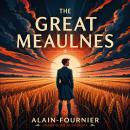
"This audiobook is narrated by an AI Voice. At seventeen, Augustin Meaulnes arrives at a remote country school in central France and transforms the quiet world of fifteen-year-old François Seurel. Tall, charismatic, and restless, Meaulnes becomes 'le Grand Meaulnes'—the great Meaulnes—to his awestruck classmates. Then, one winter evening, he disappears. Lost in the countryside, Meaulnes stumbles upon an extraordinary gathering at a half-forgotten château—a dreamlike fête where children in costume dance through candlelit halls, and where he encounters Yvonne de Galais, a young woman who will haunt him for the rest of his life. In that single enchanted night, he discovers something he can never fully name or reclaim: a realm of perfect beauty, innocence, and possibility. What follows is an obsessive quest to return to that lost domain, to find Yvonne again, and to recapture the transcendent moment when everything seemed possible. But the distance between adolescent dreams and adult realities proves devastating—and some paradises, once lost, can never be recovered. Published in 1913, a year before Alain-Fournier's death in the First World War, Le Grand Meaulnes remains one of French literature's most beloved novels. John Fowles called it 'the greatest novel of adolescence in European literature'—a haunting meditation on first love, lost innocence, and the painful passage from youth to adulthood. This edition presents Alain-Fournier's only completed novel in clear, contemporary English that preserves the dreamlike beauty of his prose."
Alain-Fournier (Author), AI Voice Charles Owen (Narrator)
Audiobook · 7 hrs 22 mins
"This audiobook is narrated by an AI Voice. Before Socrates, before reason triumphed over instinct, ancient Greece created the highest art humanity has ever known—and then destroyed it. In his explosive 1872 debut, twenty-seven-year-old Friedrich Nietzsche revolutionized how we understand art, culture, and human nature. Through a radical reinterpretation of Greek tragedy, he introduced two primal forces that shape all creativity and existence: the Apollonian drive toward order, clarity, and beautiful form, and the Dionysian impulse toward ecstasy, chaos, and the dissolution of boundaries. Greek tragedy achieved greatness, Nietzsche argues, by fusing these opposing forces into a profound affirmation of life—embracing both beauty and suffering, order and chaos, joy and horror. But this golden age was murdered by Socratic rationalism, which denied life's tragic dimensions in favor of logical optimism and the dangerous belief that knowledge could redeem existence. Nietzsche's critique extends far beyond ancient Greece to indict modern Western civilization itself. Our culture, dominated by scientific rationality and Christian morality, has lost the Dionysian capacity to affirm life in all its terrible magnificence. We need logic to make sense of chaos, but we need art to make existence bearable. This isn't merely a scholarly analysis but a passionate manifesto calling for cultural rebirth through the reawakening of tragic wisdom. Controversial, visionary, and deeply prophetic, The Birth of Tragedy announced the arrival of philosophy's most dangerous voice. The work that launched Nietzsche's career—and changed how we think about art, reason, and what it means to be human."
Friedrich Wilhelm Nietzsche (Author), AI Voice Charles Owen (Narrator)
Audiobook · 5 hrs 57 mins
The Adventures of Captain Hatteras
"This audiobook is narrated by an AI Voice. Jules Verne published The Adventures of Captain Hatteras (Voyages et Aventures du capitaine Hatteras) in 1866, and it's one of his darkest books. This isn't a cheerful adventure story—it's about what happens when ambition curdles into obsession. Captain John Hatteras has one goal: reach the North Pole, no matter what it costs. He takes his ship, the Forward, and his crew into the Arctic, where the ice and cold are just the beginning of their problems. As conditions get worse, the real challenge isn't the environment—it's Hatteras himself. His single-minded determination starts to look less like courage and more like something dangerous. The crew has to decide whether they're following a visionary or a madman. Verne doesn't pull punches here. The Arctic isn't just a setting; it's a reflection of what's happening inside Hatteras's head—vast, unforgiving, and increasingly unstable. As the ice closes in and supplies run low, the question stops being whether they'll reach the Pole and becomes whether they'll survive their captain's fixation. What makes this novel stand out, even among Verne's work, is how unflinching it is about the cost of ambition. There's real psychological tension here, watching a man's dream eat away at him and everyone around him. This edition updates the language for today's readers while keeping all of Verne's intensity. If you want an Arctic adventure that's more The Terror than feel-good exploration, this is it."
Jules Verne (Author), AI Voice Charles Owen (Narrator)
Audiobook · 15 hrs 35 mins
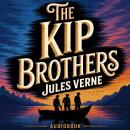
"This audiobook is narrated by an AI Voice. Two brothers. One murder. A court that has already made up its mind. Karl and Pieter Kip are Dutch sailors, castaways in the South Pacific, when they are rescued by the brig James Cook and prove their worth by helping to suppress a mutiny during a storm at sea. They are honest, brave, and entirely without guile. They are also, when the ship's captain is found dead, the most convenient suspects available. The real killers are still on board. The court in Hobart Town is not interested. And the machinery of colonial justice, once set in motion, does not easily reverse itself. Published in 1902 as the fiftieth entry in Jules Verne's celebrated Voyages Extraordinaires series, The Kip Brothers is one of the most surprising novels of his career — part South Pacific adventure, part courtroom drama, part meditation on the Dreyfus Affair that had convulsed France throughout the 1890s. Inspired by the real case of the Rorique brothers, wrongfully convicted by a French colonial court, and dedicated to the memory of Verne's own brother Paul, it is a novel about what brotherly loyalty looks like under the most extreme pressure, and about whether the truth can survive in a system that does not want to find it. Neglected for over a century and unavailable in English until 2007, The Kip Brothers reveals a Jules Verne that most readers have never encountered: darker, angrier, and more politically engaged than the optimistic adventurer of legend. By Jules Verne. Author of Twenty Thousand Leagues Under the Sea and Around the World in Eighty Days."
Jules Verne (Author), AI Voice Charles Owen (Narrator)
Audiobook · 12 hrs 6 mins
"This audiobook is narrated by an AI Voice. Father Amaro arrives in the provincial Portuguese town of Leiria without a vocation. He became a priest because he was an orphan in the care of a noblewoman who directed her charity toward the seminary, because the seminary was the institution available to a boy of no means and no family, because ordination was the end of a process that had never asked him what he actually was. He has the appearance and the social position of a priest. He has the appetites and the unresolved nature of a man. The gap between these two facts is where the novel lives. Amélia is his landlady's daughter, pious in the way the Church had been cultivating female piety for generations — as intense emotional feeling organized around devotional objects that the Church provided and controlled. When a young priest arrives who is handsome and attentive and inhabits the spiritual authority around which her feeling has always gathered, what follows is not a simple seduction. It is the logical outcome of an entire religious culture's management of desire. Eça de Queiroz published The Crime of Father Amaro in its definitive form in 1880, the opening salvo of the Geração de 70 — the Generation of 1870's project to modernize Portuguese culture through engagement with European liberalism and scientific thought — and it remains the most ferociously precise work of literary anticlericalism in the Portuguese tradition. It is the Church's crime in the systemic sense: the same institutional arrangements that produced the situation protect its perpetrator and leave its victims without recourse. One of the great overlooked masterworks of European naturalism — precise, ferocious, and as structurally honest as any novel of its century."
Eça de Queirós (Author), AI Voice Charles Owen (Narrator)
Audiobook · 18 hrs 10 mins
"This audiobook is narrated by an AI Voice. His name is Bentinho. He acquired the nickname Dom Casmurro — Lord Taciturn, Lord Sullen — from a poet on a train whose conversation he rudely ignored, and the name stuck, and he has grown into it. He is old now, living alone in a house he has built as a replica of his childhood home, in an attempt to recover a past the reconstruction immediately reveals as unrecoverable. He writes his memoirs. He wants you to understand what happened. What happened is this: he loved Capitu since childhood — his neighbor, his opposite, the one who always understood the world more quickly and more completely than he did, whose eyes he describes as olhos de ressaca, undertow eyes, riptide eyes, the eyes of someone whose depths you cannot safely measure. They married, after obstacles he recounts in detail. His best friend Escobar drowned. At the funeral, standing over the coffin, Capitu wept with an intensity that Bentinho could not explain to himself except in one way. The question cannot be answered. That is not a limitation of the novel. It is the novel's central and most precise achievement — the recognition that the most important questions in a human life are often exactly the ones that memory and jealousy and the retrospective intelligence have made permanently, irresolvably unclear. One of the great novels of world literature — and still, more than a century later, the most searching account in any language of what jealousy does to the past it touches."
Machado de Assis (Author), AI Voice Charles Owen (Narrator)
Audiobook · 8 hrs 45 mins
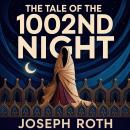
"This audiobook is narrated by an AI Voice. Vienna, 1870s. The world, as Roth tells us, is deeply and frivolously at peace. The Shah of Persia has come to visit, on the advice of his philosophical Chief Eunuch, who recommends travel as the best cure for the conviction that variety might exist. Vienna receives him with the magnificent self-assurance of a civilization that does not yet know it is running out of time. Baron Taittinger — cavalry officer, minor nobleman, chronically short of money, constitutionally incapable of foresight — is assigned to manage the Shah's entertainment. He does so with the casual irresponsibility of a man who has never once been required to consider consequences. The consequences, in this case, will be considerable. A string of pearls will change hands. A woman's life will be upended. And the social machinery of Habsburg Vienna will grind on, as elegant and as indifferent as ever. The Tale of the 1002nd Night was the last novel Joseph Roth completed, written in exile in Paris as the world he loved was being destroyed, published in 1939 — the year of his death — and suppressed by the Nazis when they invaded the Netherlands the following year. It is his most formally playful work and one of his most moving: a comedy of manners that opens like a fairy tale and darkens, gradually and with great precision, into something far more searching. By the author of The Radetzky March."
Joseph Roth (Author), AI Voice Charles Owen (Narrator)
Audiobook · 7 hrs 51 mins
"This audiobook is narrated by an AI Voice. The cortiço wakes before its inhabitants do. Aluísio Azevedo describes the awakening in the opening pages of his 1890 novel with the language of a naturalist observing an organism: the tenement as a living thing, growing and breathing, generating the people who live inside it as much as containing them. The cortiço is not a setting. It is the novel's collective protagonist — a social body subject to the same biological and environmental laws that the naturalist tradition applies to individuals, extended here to the level of the community itself. João Romão built it. He arrived from Portugal with nothing and made the accumulation of wealth the organizing principle of a life that has no other principle. The foundation of everything he builds is Bertoleza — a Black woman, formerly enslaved, who cooks and works and tends the business beside him, whose forged manumission papers give her the appearance of freedom while preserving her legal vulnerability. She believes she has found a life. He is waiting for the moment he no longer needs her. Around this central indictment, the novel renders the cortiço's collective life in its full density — the Portuguese immigrants working their way upward or failing to, the Brazilian workers and freedpeople whose relationship to that upward mobility is organized by hierarchies that abolition has just formally but not substantively altered, and Jerônimo, the Portuguese worker who comes to the tenement industrious and leaves it transformed, remade by the music and the heat and the specific vitality of a Brazil that the naturalist method renders as an environment reshaping an organism. The most morally serious novel of Brazilian naturalism — and one of the most unflinching accounts in any literature of what accumulation costs the people it uses."
Aluísio Azevedo (Author), AI Voice Charles Owen (Narrator)
Audiobook · 9 hrs 34 mins
The Woman with the Velvet Necklace
"This audiobook is narrated by an AI Voice. Paris, 1793. The guillotine's blade falls without mercy, and terror stalks the streets. Young Hoffmann arrives in the bloodsoaked capital with dreams of art and culture, bound by a sacred promise to his beloved Antonia back in Germany. But when he witnesses the horrific execution of Madame du Barry, his world tilts toward madness. At the Opera, he encounters her—Arsène, the mysterious dancer whose beauty is matched only by her terrible secret. Around her neck lies a velvet necklace with a silver clasp shaped like a guillotine. She is Danton's mistress, untouchable and irresistible. Consumed by obsession, Hoffmann breaks his solemn vow, gambling away his honor for a single night with this enigmatic woman. But in the morning, he will discover the horrifying truth about the woman with the velvet necklace—and learn that some desires exact a price beyond imagining. From the master of historical adventure comes this haunting tale of passion and terror, where the line between the living and the dead grows thin, and love becomes a dance with death itself. 'A recognized classic of the gothic fantastique genre... Dumas explores the boundaries between desire and madness with masterful precision.' Alexandre Dumas (1802-1870) is the legendary author of The Three Musketeers and The Count of Monte Cristo. In this lesser-known masterpiece, he ventures into the realm of supernatural horror, creating an unforgettable portrait of Revolutionary France at its most terrifying."
Alexandre Dumas (Author), AI Voice Charles Owen (Narrator)
Audiobook · 6 hrs 24 mins
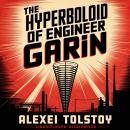
The Hyperboloid of Engineer Garin
"This audiobook is narrated by an AI Voice. Pyotr Garin has a plan. He has built a device — the hyperboloid, a concentrator of directed light energy whose cutting beam no geological formation can resist — and he intends to use it to bore through the Earth's crust to the olivine belt below, extract gold in quantities sufficient to overwhelm the world's monetary supply, destabilize global capitalism, and make himself the master of the world. The plan is megalomaniacal. It is also internally coherent, technically workable, and pursued by a man of sufficient intelligence and sufficient freedom from moral constraint to have a serious chance of carrying it out. Pursuing him across the international settings of the mid-1920s — from Soviet Russia through Germany and France to the island stronghold he eventually constructs in the Pacific — is the Soviet agent Shelga, the representative of the legitimate order that Garin has placed himself beyond. Between them moves Zoë Montrose, who understands both men completely and is drawn to Garin's genius precisely because she sees its monstrous dimension clearly, which ordinary attraction does not permit. The American capitalist Rolling wants to buy the hyperboloid and contain it within the existing structures of global finance. Garin wants to use Rolling's resources until he no longer needs them. Each intends to discard the other when the using is done. Neither is deceived about this. Garin is one of the great villain-protagonists of twentieth-century popular fiction — amoral, brilliant, and rendered with enough respect for his own internal logic that the order which defeats him is never quite as interesting as the order he was trying to build in its place. The proto-laser. The world's gold supply. The island stronghold. One of the founding works of Soviet science fiction — and one of the most honest about the specific appeal of the man the revolution was supposed to have made impossible."
Alexei Tolstoy (Author), AI Voice Charles Owen (Narrator)
Audiobook · 11 hrs 42 mins
"This audiobook is narrated by an AI Voice. In the shadow of an ancient castle lies a tale of forbidden love, dark secrets, and supernatural vengeance. Set against the romantic backdrop of the Rhine Valley, Alexandre Dumas weaves a haunting Gothic romance that will captivate readers from the very first page. When young Maximilian encounters the mysterious and beautiful Albine at the foreboding Castle Eppstein, he becomes entangled in a web of family curses, ancient prophecies, and deadly passions that span generations. As the castle's dark history begins to unfold, Maximilian discovers that some loves transcend death itself—and that the price of breaking an age-old curse may be higher than he ever imagined. With the supernatural forces that haunt the castle's halls growing stronger, time is running out to save both his beloved and his very soul. From the master storyteller who brought us The Three Musketeers and The Count of Monte Cristo comes a spellbinding tale that blends romance, mystery, and the supernatural into an unforgettable literary experience. A Gothic masterpiece that explores the eternal struggle between love and destiny, life and death. 'Dumas proves once again that no one can match his ability to weave together passion, intrigue, and the supernatural into a tale that will keep readers breathless until the final page.'"
Alexandre Dumas (Author), AI Voice Charles Owen (Narrator)
Audiobook · 8 hrs 52 mins
"This audiobook is narrated by an AI Voice. 1791. Saint-Domingue erupts in the most radical revolution the world has ever seen. Leopold d'Auverney is a young French officer on his uncle's plantation, engaged to his beautiful cousin Marie, living the privileged life of a colonial planter. Pierrot is a slave on that same plantation—silent, dignified, bearing his bondage with mysterious nobility. When the enslaved people of Saint-Domingue rise in rebellion, Leopold discovers that Pierrot is actually Bug-Jargal, nephew of an African king, sold into slavery through treachery. As the colony descends into war between revolutionaries fighting for freedom and colonists defending slavery, these two men—enemies by circumstance, allies by choice—forge an unlikely bond that transcends the violence consuming their world. Bug-Jargal leads rebel forces with courage and honor that shame the civilization that enslaved him. Leopold fights for the colonial system while recognizing its fundamental injustice. Both love the same woman. Both save each other's lives. And both will be destroyed by forces larger than individual friendship or honor. Written when Victor Hugo was just twenty-one, Bug-Jargal marks the beginning of his lifelong engagement with themes of oppression and human dignity. Set against the backdrop of the Haitian Revolution—the most consequential slave uprising in history—the novel combines romantic adventure with early exploration of the moral questions that would define Hugo's career. Some revolutions are fought with weapons. Some with words. And some challenge everything we believe about freedom, dignity, and what it means to be human. Victor Hugo's passionate early novel of slavery, rebellion, and the bonds that transcend the boundaries of race and war."
Victor Hugo (Author), AI Voice Charles Owen (Narrator)
Audiobook · 6 hrs 24 mins
"This audiobook is narrated by an AI Voice. A man denied his birthright. A society built on prejudice. A love that defies every barrier. In the lush paradise of Mauritius, Georges Munier returns from France a wealthy, educated gentleman—only to discover that in the eyes of the island's white plantation society, his mixed-race heritage makes him less than human. No amount of refinement, intelligence, or honor can overcome the color of his skin. Denied the woman he loves and humiliated at every turn, Georges transforms from idealistic romantic to calculated revolutionary. With the strategic brilliance that made Alexandre Dumas a master storyteller, this searing novel traces one man's journey from heartbreak to rebellion, as he plots to overthrow the very foundations of colonial oppression. Written in 1843—decades before such themes would dominate literature—Georges stands as Dumas's most daring exploration of racial injustice, featuring his signature blend of romance, adventure, and social commentary. This is the Dumas you thought you knew, revealing truths that still resonate today. A forgotten masterpiece of passion, prejudice, and the price of dignity."
Alexandre Dumas (Author), AI Voice Charles Owen (Narrator)
Audiobook · 13 hrs 19 mins
Castellio Against Calvin: A Conscience against Violence
"This audiobook is narrated by an AI Voice. Geneva, 1553. John Calvin rules the city as absolute theocrat. When the scholar Michael Servetus arrives, fleeing the Catholic Inquisition, Calvin has him arrested, tried for heresy, and burned alive—slowly, over green wood, taking half an hour to die. One man speaks against this atrocity: Sebastian Castellio, a scholar and former ally of Calvin's who'd been driven from Geneva for questioning the reformer's authority. From exile in Basel, Castellio publishes Concerning Heretics, Whether They Are to Be Persecuted—the first systematic defense of religious tolerance in European history, arguing that burning people for their beliefs contradicts everything Christianity claims to stand for. Stefan Zweig published Castellio Against Calvin in 1936 as Hitler consolidated power. The parallels were unmissable and deliberate: Calvin represented totalitarian tyranny claiming divine or historical justification; Castellio represented individual conscience refusing to submit. Zweig rescues Castellio from obscurity, showing how this forgotten scholar articulated principles of tolerance that took centuries to achieve partial realization. Written as fascism triumphed, the book asks: what does individual conscience matter against organized power? Zweig's answer: everything. Even when conscience loses in its own time, it plants seeds for future freedom. The subtitle—A Conscience Against Violence—captures Zweig's conviction that moral resistance matters regardless of immediate outcome. For readers confronting contemporary authoritarianism, religious extremism, or ideological intolerance, Castellio's sixteenth-century stand remains urgently relevant: the defense of human dignity against those who claim absolute truth justifies absolute power."
Stefan Zweig (Author), AI Voice Charles Owen (Narrator)
Audiobook · 7 hrs 33 mins
"This audiobook is narrated by an AI Voice. Paris, 1891. The novelist Durtal is writing a biography of Gilles de Rais — Marshal of France, companion of Joan of Arc, and one of the most prolific child-murderers in the history of the medieval world. It is difficult material, and Durtal finds it difficult to work: contemporary Paris, with its smug materialism, its comfortable mediocrity, and its contempt for anything beyond the immediately visible, offers him nothing he needs. Then he learns that Satanism is not merely a chapter of medieval history. It is alive, organized, and active in the drawing rooms and back streets of the Third Republic. And through his contacts in the city's occult underworld, and through a woman who is not quite what she seems, he is going to see it for himself. Là-Bas — Down There — is Huysmans's most famous novel after À Rebours, and it is unlike anything else in French literature: a work that weaves the documented crimes of a fifteenth-century Satanist with a firsthand investigation of living occultism in modern Paris, and arrives at a Black Mass described with a precision and an intensity that scandalized two continents. Serialized in 1891 over the furious objections of readers and moralists alike, banned from French railway kiosks, suppressed in America for indecency, and recognized by every serious reader since as a masterwork of the Decadent movement. It is also the first appearance of Durtal — the writer who will go on, across three more novels, to find his way from this darkness toward something entirely different. By Joris-Karl Huysmans. The most controversial French novel of 1891."
Joris-Karl Huysmans (Author), AI Voice Charles Owen (Narrator)
Audiobook · 10 hrs 45 mins
"This audiobook is narrated by an AI Voice. Roland is a young man without direction — sent by his father to a provincial university, indifferent to study, waiting for something he cannot name — when he encounters the professor whose lectures change everything. The man is extraordinary: a scholar who inhabits the literature he teaches, who makes intellectual life feel like something worth giving a life to. Roland is captivated. He moves into the professor's household. He becomes, over one semester, the center of a world he does not fully understand. He does not understand, in particular, why the professor sometimes burns with warmth toward him and sometimes withdraws into a coldness that feels like punishment. He does not understand the role the professor's wife plays, her particular kindness, the shadow in it. He does not, yet, understand himself. The Confusion of Emotions, first published in 1927, is Stefan Zweig at his most psychologically exact — a novella about repressed homosexual desire and the devastation it leaves in its wake, written with a compassion and a directness that were remarkable for their moment and have not aged by a day. It is narrated by an older Roland looking back on the episode that made him, finally understanding what he could not have understood at the time: what the professor was carrying, what concealment of that magnitude costs a person, and what it means to love someone you could not help. Zweig does not offer resolution. He offers something more honest: the portrait of a man who could not be what his world would not allow, and of the student who spent a lifetime trying to do justice to that fact."
Stefan Zweig (Author), AI Voice Charles Owen (Narrator)
Audiobook · 3 hrs 44 mins
"This audiobook is narrated by an AI Voice. A timeless tale of childhood rivalry and adventure in rural France Set in the French countryside at the turn of the 20th century, 'The War of the Buttons' follows the escalating conflict between two groups of village boys from neighboring communities. What begins as harmless pranks and territorial disputes quickly evolves into an elaborate campaign of mock warfare, complete with strategic planning, daring raids, and a unique system of victory trophies—the buttons cut from defeated enemies' clothing. Through the eyes of young combatants, Louis Pergaud captures the fierce loyalties, unwritten codes of honor, and intense emotions that define childhood friendships and rivalries. As the 'war' intensifies, the boys must navigate questions of leadership, courage, and the sometimes blurry line between play and real conflict. Rich with humor and authentic period detail, this beloved French classic offers a nostalgic yet unsentimental portrait of rural childhood. Pergaud draws from his own experiences growing up in the Franche-Comté region, creating characters that feel both specific to their time and place yet universally recognizable. Perfect for readers who enjoyed 'Lord of the Flies' or 'The Adventures of Tom Sawyer,' this engaging novel celebrates the imagination, resourcefulness, and complex social dynamics of childhood while gently exploring themes of belonging, identity, and growing up. Originally published in 1912, this enduring tale has charmed generations of readers and inspired multiple film adaptations."
Louis Pergaud (Author), AI Voice Charles Owen (Narrator)
Audiobook · 7 hrs 40 mins
"This audiobook is narrated by an AI Voice. They invited him into their home. He took everything. François and Marthe Mouret have carved out a life of comfortable respectability in the provincial town of Plassans. Their household is peaceful, their marriage solid, their children thriving. When financial pressures force them to rent out part of their spacious home, they expect nothing more than extra income and perhaps some quiet company. Their new tenant is Abbé Faujas—a priest of impeccable manners, modest habits, and mysterious purpose. What unfolds is not a story of obvious villainy but of patient, methodical destruction. Faujas never breaks his vows, commits no apparent crimes, violates no laws. His weapons are piety, respectability, and the systematic exploitation of institutions meant to protect family and community. As François's resistance hardens into rage and finally madness, Zola reveals how power operates not through violence but through the corruption of everyday life itself. Set in the same fictional town where the Rougon-Macquart saga began, The Conquest of Plassans is a devastating portrait of domestic invasion and political manipulation. With psychological precision and unflinching honesty, Zola dissects the mechanics of authoritarian control and the terrible ease with which homes, marriages, and entire communities can be conquered from within. Some invasions require no armies. Some conquests leave no ruins. Only the illusion that nothing has changed. From the author of Germinal and Nana—a chilling masterwork of power, manipulation, and the price of complacency."
Émile Zola (Author), AI Voice Charles Owen (Narrator)
Audiobook · 13 hrs 3 mins
"This audiobook is narrated by an AI Voice. In the shadow of duty, desire blooms—and innocence becomes obsession. Hélène Grandjean has devoted herself entirely to two things: her irreproachable virtue and her fragile daughter Jeanne. A young widow living in respectable isolation in 1850s Paris, she asks nothing more of life than peace and the chance to raise her child in safety. But when the charming Dr. Deberle moves in next door with his beautiful wife, Hélène's carefully ordered world begins to crack. A simple friendship deepens into something far more dangerous. As Hélène finds herself helplessly drawn to a man she can never have, her daughter watches with eyes that miss nothing—and forgive less. Jeanne's possessive love for her mother has always bordered on the unhealthy, but as she senses a rival for Hélène's affections, the girl's devotion transforms into something darker. Her mysterious illnesses intensify, her jealousies consume her, and the bond between mother and daughter becomes a strangling vine neither can escape. Set against the magnificent panorama of Paris—a city that watches, judges, and remains eternally indifferent to human suffering—Émile Zola crafts a devastating portrait of forbidden love, maternal sacrifice, and the terrible price of virtue. Part psychological thriller, part tragic romance, A Page of Love reveals the Naturalist master at his most intimate and unsparing. Some loves destroy. Some duties devour. And sometimes, the two cannot be separated. From the author of Germinal and Nana comes a haunting exploration of desire, duty, and the darker side of devotion."
Émile Zola (Author), AI Voice Charles Owen (Narrator)
Audiobook · 13 hrs 9 mins
"This audiobook is narrated by an AI Voice. In the new Paris, everything is for sale—including family, honor, and flesh. Aristide Saccard arrived in the capital with nothing but ambition and a willingness to profit from others' ruin. Now, as Baron Haussmann's demolition crews tear through medieval Paris to build an empire of boulevards and monuments, Saccard has positioned himself perfectly to feast on the carcass. Armed with insider knowledge and ruthless cunning, he speculates in real estate, manipulates property values, and grows rich on the destruction of the old city and the construction of the new. But in this hothouse of luxury and moral vacancy, something darker blooms. Renée and Maxime—Saccard's son from his first marriage, barely younger than his stepmother—begin an affair that transforms the family into a stage for the era's ultimate transgression. Their incestuous passion, consummated among exotic flowers in a private conservatory, becomes both symptom and symbol of a world where all boundaries have been erased by money's universal solvent. Émile Zola's most spectacular and unsettling novel is a fever dream of Second Empire Paris—a city reinventing itself through destruction, where financial speculation and sexual speculation mirror each other, where everything is simultaneously on display and for sale. With prose that glitters and corrupts in equal measure, Zola dissects the machinery of greed and the systematic monetization of human relationship. Some cities are built. Paris was bought. From the author of Germinal and Nana—a dazzling masterpiece of corruption, desire, and the price of everything."
Émile Zola (Author), AI Voice Charles Owen (Narrator)
Audiobook · 12 hrs 24 mins
"This audiobook is narrated by an AI Voice. One morning, without warning, Josef K. is arrested. For what crime? He doesn't know. The authorities won't say. The trial begins immediately—but the court operates by rules K. cannot fathom, in locations he cannot predict, with procedures that defy all logic. As K. navigates this nightmarish legal labyrinth, every attempt to defend himself only entangles him further. The court is everywhere and nowhere. Guilt is presumed but never explained. And the more desperately he seeks answers, the more the system reveals itself as an absurd, impenetrable bureaucracy designed not to dispense justice but to perpetuate itself. Franz Kafka's The Trial, written in 1914 and published posthumously in 1925, stands as one of literature's most chilling examinations of power, alienation, and the individual's helplessness before faceless institutional authority. Through Josef K.'s increasingly frantic struggle, Kafka creates a prophetic vision of modern anxiety—where guilt requires no crime, prosecution needs no evidence, and the machinery of the state operates according to its own incomprehensible logic. Blending the mundane with the surreal, bureaucratic tedium with existential terror, Kafka's masterpiece resonates more powerfully today than ever before. In an age of surveillance, algorithmic judgment, and vast impersonal systems that determine our lives, Josef K.'s nightmare feels less like fantasy and more like prophecy. A foundational work of twentieth-century literature that transformed our understanding of power, guilt, and what it means to be trapped in systems beyond our comprehension."
Franz Kafka (Author), AI Voice Charles Owen (Narrator)
Audiobook · 9 hrs 33 mins
Amerika: (The Man Who Disappeared)
"This audiobook is narrated by an AI Voice. Sixteen-year-old Karl Rossmann is sent to America by his parents after a housemaid seduced him and became pregnant. This banishment—punishment for being victimized—begins a series of displacements and arbitrary punishments that define his American experience. Franz Kafka wrote Amerika between 1911 and 1914, abandoning it unfinished. Published posthumously in 1927 by Max Brod, who assembled fragmentary manuscripts into this text, the novel follows Karl through episodic adventures: rescued by his wealthy Uncle Jakob only to be banished for violating unspoken rules, working as hotel elevator operator until losing that position through no fault of his own, exploited by vagabonds, finally escaping to join the Nature Theatre of Oklahoma—an organization promising to accept everyone. Kafka never visited America. He wrote from secondhand sources, creating a purely imaginary country constructed from clichés and fantasy. Geography makes no sense, technology appears in exaggerated dreamlike forms, buildings achieve impossible scales. 'America' becomes conceptual space representing modernity, capitalism, opportunity, alienation—the promises and failures of twentieth-century experience. Essential Kafka: the familiar made strange, revealing hidden absurdities in supposedly rational systems, social realism rendered through distorting lens. Whether realistic immigrant novel or surrealist fantasy, it's both and neither—existing in that space between that Kafka made distinctively his."
Franz Kafka (Author), AI Voice Charles Owen (Narrator)
Audiobook · 11 hrs 5 mins
Metamorphosis: A New Translation in Modern Accessible English
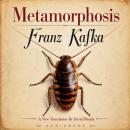
"This audiobook is narrated by an AI Voice. One morning, Gregor Samsa wakes from troubled dreams and finds himself transformed. Kafka tells us this in the first sentence, in the past tense, with the calm of a man reporting that it has rained. There is no explanation. There will not be one. The transformation is simply there, accomplished and irreversible, and the novella's task is to follow its consequences into every room of the Samsa apartment and every corner of the family's emotional life. What Gregor becomes — Kafka uses the word Ungeziefer, vermin, something without a proper place in the human order, and refuses to be more specific — matters less than what his transformation reveals. His father, it turns out, has not been as ruined as Gregor had assumed. His sister's devotion has limits. His mother cannot choose. And Gregor himself, lying on his back in a room that was once his and is now his cage, discovers that the self he has lost — the responsible son, the reliable employee, the man whose salary was the household's foundation — was perhaps not a self he had ever been allowed to choose. Franz Kafka wrote The Metamorphosis in November 1912, in a burst of concentrated work, and published it in 1915. He died in 1924, dissatisfied with almost everything he had produced, and left instructions for his manuscripts to be destroyed. His friend Max Brod preserved them instead, and the literature of the twentieth century was irreversibly shaped by what survived. This novella is where that shape is most visible: a story about a man who becomes useless to the people who needed him, rendered in prose of bureaucratic clarity applied to material of absolute strangeness, in which the horror and the comedy and the grief are not separate registers but the same thing seen from different distances. One of the most important works of modern literature — and still, more than a century later, one of the most unsettling."
Franz Kafka (Author), AI Voice Charles Owen (Narrator)
Audiobook · 2 hrs 33 mins
Beyond Good and Evil: A New Translation
"This audiobook is narrated by an AI Voice. 'He who fights with monsters should look to it that he himself does not become a monster. And if you gaze long into an abyss, the abyss also gazes into you.' Published in 1886, Friedrich Nietzsche's Beyond Good and Evil shattered the foundations of Western moral philosophy. In this audacious work, Nietzsche declares war on two thousand years of philosophical tradition, exposing how concepts of 'good' and 'evil' have been used to suppress human vitality, creativity, and the will to power. Through brilliantly crafted aphorisms and essays, Nietzsche dismantles the comfortable certainties of traditional morality. He reveals how Christianity and Enlightenment philosophy have created a 'slave morality' that celebrates weakness, conformity, and mediocrity while condemning strength, independence, and excellence. Against this, he envisions a new breed of philosopher—the 'free spirit' who dares to create values rather than inherit them, who embraces life's complexity rather than reducing it to simplistic moral categories. Nietzsche challenges everything: the pursuit of objective truth, the foundations of democracy, the nature of free will, the separation of body and mind, and the very possibility of selfless action. With devastating wit and psychological penetration, he exposes the hidden motives behind our most cherished beliefs, revealing how power dynamics shape what we call 'truth' and 'morality.' Provocative, dangerous, and exhilarating—a philosophical masterwork that remains as radical today as when it scandalized Victorian Europe. Essential reading for anyone willing to question everything they thought they knew about right and wrong."
Friedrich Wilhelm Nietzsche (Author), AI Voice Charles Owen (Narrator)
Audiobook · 9 hrs 4 mins
Magellan: Conqueror of the Seas
"This audiobook is narrated by an AI Voice. Stefan Zweig published Magellan in 1938, writing from English exile as Europe collapsed into nationalism. He'd fled Austria after the Nazi annexation, watching the cosmopolitan continent he valued being destroyed. The timing shaped the book: Magellan—Portuguese navigator serving Spanish crown, commanding multinational crew, proving through voyage that the world was one sphere—embodied the internationalist humanism Zweig believed fascism was destroying. Zweig's method was literary rather than scholarly, synthesizing existing sources (primarily Pigafetta's eyewitness account) into compelling narrative with psychological depth. This has strengths and limitations: vivid characterization and readability versus speculative psychology and romanticization. The book follows Magellan from rejection by Portugal through organizing the expedition against opposition, the mutinies that nearly destroyed it, the harrowing Pacific crossing (months without land, crews eating leather and rats), to his death in an unnecessary colonial skirmish in the Philippines. One ship returned to Spain in 1522, circumnavigation complete though Magellan hadn't survived to see it. Reading it means encountering both historical figure and Zweig's 1938 anxieties about nationalism and individual vision. Zweig would die by suicide in 1942, despairing at Europe's catastrophe. His historical biographies represent attempts to preserve humanistic values while fascism triumphed. Literary biography at its most accessible, though not definitive history. His limitations reflect his era; his strengths explain why his works remain in print. He succeeded at what he attempted: bringing historical figures to life, making the past immediate, demonstrating that human determination could accomplish the impossible—a faith composed while fascism destroyed it."
Stefan Zweig (Author), AI Voice Charles Owen (Narrator)
Audiobook · 9 hrs 12 mins
"This audiobook is narrated by an AI Voice. Honoré de Balzac worked himself to death at fifty-one, producing ninety-plus novels documenting nineteenth-century French society. He earned enormous sums yet died deeply in debt. He observed human psychology with unprecedented accuracy yet was blind to his own delusions. He created one of literature's most complete fictional worlds while his actual life collapsed around him. Stefan Zweig's Balzac, completed shortly before his 1942 suicide, examines this paradox: genius and disaster emanating from the same obsessive energy. Balzac wrote at night, fueled by fifty cups of coffee daily, working twelve to sixteen hour stretches. Each novel paid debts; the income immediately went to creditors, requiring more writing. The cycle was perpetual and fatal. The biography follows interconnected themes: catastrophic business schemes that left him deeper in debt, work habits that made him legendary and killed him, seventeen-year romantic obsession with Polish countess Eveline Hanska (they married months before his death), and unprecedented ambition—La Comédie Humaine as systematic documentation of entire society through interconnected novels. Written in Zweig's final years, the biography reflects on what artistic achievement costs. Balzac died believing himself a failure—in debt, health ruined, romantic hopes only just realized. Posterity recognized him as one of literature's giants. Zweig, despairing about Europe's destruction, surely contemplated this gap between contemporary failure and eventual recognition. Compelling introduction to why Balzac matters and meditation on creativity's demands—the demon that grants genius while destroying the person it inhabits. Zweig's final major biographical work: literary portrait animated by passion, exploration of artistic obsession from a master who understood its costs."
Stefan Zweig (Author), AI Voice Charles Owen (Narrator)
Audiobook · 16 hrs 27 mins
Erasmus: Triumph and Tragedy of Erasmus of Rotterdam
"This audiobook is narrated by an AI Voice. In 1517, Martin Luther shattered European unity with his Reformation. One man tried to stop the catastrophe: Desiderius Erasmus of Rotterdam, the most famous intellectual in Europe, who believed reform should come through reason, not revolution. Erasmus had the mind of the age. His scholarship made him a bestselling author courted by popes and princes. His In Praise of Folly exposed Church corruptions with devastating wit. Yet when Luther's revolt ignited, Erasmus refused to choose sides. He couldn't support Luther's violent methods or defend Rome's abuses. He tried holding middle ground—and was destroyed by both sides. Catholics called him coward. Protestants called him traitor. Both demanded: Are you with us or against us? Erasmus answered: 'I love freedom, and I will not serve any party.' He died in exile, his dream of European unity shattered. Stefan Zweig wrote this in 1934, fleeing Nazi Austria. He called it his 'most personal work,' a 'thinly veiled self-portrait.' Like Erasmus, Zweig was a cosmopolitan intellectual watching civilization tear itself apart. Like Erasmus, he faced extremists demanding total commitment. The result is both biography and meditation on impossible choices: What does the intellectual owe in times of fanaticism? Can reason survive when unreason rules? Does principle matter when powerless? A profound exploration of humanism confronting violence, moderation in immoderate times, and the tragic cost of refusing to choose."
Stefan Zweig (Author), AI Voice Charles Owen (Narrator)
Audiobook · 6 hrs 1 min
"This audiobook is narrated by an AI Voice. Standard Island is a marvel: a constructed floating island, powered by enormous propellers, carrying a city of ten thousand across the Pacific in conditions of unprecedented luxury. Its residents — the wealthiest Americans, who have paid fortunes for the privilege — travel the world's most beautiful latitudes without ever being inconvenienced by them. They have parks and boulevards, perfect weather, and their own resident string quartet: four French musicians who missed their connecting ship and found themselves, somewhat to their bewilderment, guests of the richest floating community on earth. Jules Verne published Propeller Island in 1895, and it is not the Verne of optimistic early adventure. It is the Verne of thirty years' accumulated observation of what science and capitalism were actually building together — a satirist's Verne, precise and cold-eyed, watching a society that has eliminated all friction discover that friction was the only thing holding it together. The island's two great families, the Tankerdons and the Coverleys, compete for supremacy with the focused energy of people who have never needed to cooperate with anyone, and their rivalry gradually splits the island — ideologically, politically, and finally physically — into two halves driving in opposite directions. The ending is one of the most formally exact in Verne's work: a metaphor made literal, an argument completed as spectacle. A society built entirely on private competition finds, at the moment it most needs collective action, that it has no idea how to perform one. Visionary, satirical, and more relevant than it has any right to be — one of the most underrated novels in the Voyages extraordinaires."
Jules Verne (Author), AI Voice Charles Owen (Narrator)
Audiobook · 12 hrs 42 mins
Twenty Thousand Leagues Under the Sea
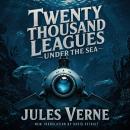
"This audiobook is narrated by an AI Voice. Something is attacking ships in the world's oceans. It is fast, nearly indestructible, and capable of punching holes through iron hulls. The scientific consensus, led by Professor Pierre Aronnax of the Paris Museum of Natural History, is that it must be a creature — a narwhal of extraordinary size, perhaps, something evolved in the ocean's unexplored depths. The consensus is wrong. It is not a creature. It is the Nautilus. And once Aronnax, his servant Conseil, and the Canadian harpooner Ned Land find themselves aboard it — guests, prisoners, the distinction is never quite established — they will not be going home until Captain Nemo decides they will. Jules Verne published Twenty Thousand Leagues Under the Sea in 1870, and it remains the most fully realized of all his creations: a novel in which the scientific imagination and the moral imagination operate at the same pitch of intensity, in which the wonders of the underwater world — the kelp forests, the drowned city of Atlantis glimpsed through a porthole, the South Pole reached by submarine — are inseparable from the question of the man who has made that world his permanent exile. Captain Nemo is one of the great figures of nineteenth-century fiction: a man of extraordinary cultivation and extraordinary fury, who has withdrawn from the human world for reasons the novel circles without fully revealing, and whose inner life remains finally unresolved — as oceanic, as deep, and as dark as the element he inhabits. Twenty thousand leagues is the distance traveled. It is, to be precise, roughly twice the circumference of the Earth, conducted entirely below the surface, in a vessel that had never existed before Verne imagined it. This edition presents the complete text — restoring the chapters and passages removed by earlier English translations — so that the novel can be read as Verne wrote it, in its full scientific and human complexity. Inexhaustible, strange, and as deep as it promises."
Jules Verne (Author), AI Voice Charles Owen (Narrator)
Audiobook · 15 hrs 46 mins
©PTC International Ltd T/A LoveReading is registered in England. Company number: 10193437. VAT number: 270 4538 09. Registered address: 157 Shooters Hill, London, SE18 3HP.
Terms & Conditions | Privacy Policy | Disclaimer