"Konstantin der Große (306-337 nach Christus) gilt als der Begründer des christlichen Europa, als derjenige Kaiser, der den Weg von der heidnischen Antike ins christliche Mittelalter gewiesen hat.
Diese moderne Sichtweise verkürzt jedoch das Wirken und die Bedeutung dieses zweifellos herausragenden römischen Kaisers: Konstantin war nämlich vor allem ein machtbewusster und machtorientierter Pragmatiker, der sich auch auf dem Feld der Religionspolitik seine Handlungsfreiheit bewahrte. Die konstantinische Wende hat es tatsächlich gegeben wie diese vonstatten ging, unter welchen Bedingungen und mit welchen Konsequenzen, dies wird in der vorliegenden Vorlesung auf der Basis des neuesten Wissensstandes erläutert."
"Die Antike: Blutige Kriege, geisteskranke Despoten und grausame Gladiatoren stehen für eine Zeit, in der die Menschen besonders verroht erscheinen. Bei näherer Betrachtung stellt sich aber heraus, dass die antiken Zeitgenossen Gewalt ebenso verabscheuten wie wir heute. Wie sind dann aber die vielen Berichte über Gewalttaten gerade bei Tyrannen zu bewerten? Bei näherer Betrachtung zeigt sich, dass Berichte über Gräueltaten wenig Vertrauen erweckend sind. Oft werden politische Gegner verunglimpft, indem man ihnen Gewaltexzesse unterstellt. Die weitere Geschichte der Gewaltdarstellungen zeigt, dass bis weit in die römische Kaiserzeit die Schilderung von brutalen Morden benutzt wurde, um Politik zu machen. Dabei werden in ihrer Grausamkeit bisweilen absurd wirkende Episoden erzählt. Für den Historiker sind sie von hohem Interesse, da sie die Kommunikation antiker Gesellschaften besser verstehen lassen."
"Die griechische Polis ist die wohl wichtigste Urform staatlicher Organisation im Abendland. Auf dem Höhepunkt ihrer Entwicklung ist mit ihr die kulturelle Blüte des antiken Griechenlands verbunden. Diese spezielle Form des griechischen Stadtstaates war zudem die Keimzelle der Demokratie wie verschiedener anderer Verfassungsmodelle, die noch heute nachwirken. Die Polis entstand im 8. Jh. v. Chr. aus dörflichen Siedlungen, in denen die Bewohner sich zu einer Bürgergemeinde zusammenschlossen. Bei der Organisation staatlichen Lebens gab es immer wieder Rückschläge und Krisen: Hungersnöte, Bürgerkrieg und andere Formen des inneren Zwistes gefährdeten die Poleis. Aber sie führten auch zu immer neuen Lösungsansätzen, welche die Stadtstaaten schließlich zu einem großen Erfolgsmodell werden ließen. Auf dem Höhepunkt der Entwicklung finden sich viele hundert dieser Gemeinwesen vor allem im östlichen Mittelmeerraum."
"Die Antike (ca. 1200 vor Christus ca. 500 nach Christus) ist hochaktuell: Das heutige Europa mit seiner Bürgergesellschaft und der Demokratie, mit der bedeutenden Rolle von Religion(en) und Kirche(n), mit seinem Städtewesen, mit seiner Verwaltung und seinem Rechtssystem fußt in vielerlei Hinsicht auf der griechisch-römischen Antike.
Moderne wissenschaftliche Kontroversen (zum Beispiel über Troja oder die Dichtungen Homers) finden Eingang in die Medien. Wer sich ein eigenes Urteil bilden oder gar mitreden möchte, muss über die Antike Bescheid wissen: über die Entstehung der griechischen Bürgergemeinde (Polis), die Demokratie in Athen, den Aufstieg Roms zur Weltmacht, über die römischen Kaiser und die Christianisierung der antiken Welt in der Spätantike."
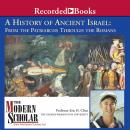
"Israel conjures up myriad associations for peoples of all cultures and religious backgrounds. Inextricably associated with the world's three most prominent religions (Judaism, Christianity, and Islam), Israel is steeped in history and conflict, much of which is known through the tales of biblical figures such as Moses, David, Solomon, and, of course, Jesus Christ. But how much of the Bible can be relied upon as accurate history? And how much of the biblical record can be verified through archaeology? Esteemed professor, researcher, and author Eric H. Cline of The George Washington University addresses these and other questions in this fascinating series of lectures. A History of Ancient Israel follows the course of Israel's history from Abraham and the Patriarchs through the Exodus, Exile, and two great Jewish rebellions, encompassing a rich history that increases one's understanding of Israel's place in the world today. In addition to this storied region's tumultuous past, Professor Cline delves into such compelling digressions as lectures on the Ark of the Covenant, the Dead Sea Scrolls, and controversy surrounding the fabled mass suicide at Masada."
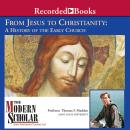
"Entrusting the apostles to continue the work he had started by instructing them to 'Go therefore and make disciples of all nations, baptizing them in the name of the Father, the Son and the Holy Spirit . . .,' Jesus kindled the fires of a new religion in a world largely dominated by polytheism, cult leader worship, and mysticism. In the first century of its existence, Christianity was both welcomed and vilified throughout the Roman Empire. Many of Christianity's original adherents were martyred -murdered by those who believed it a danger to their authority or, at the very least, the cause of unrest among an otherwise docile populace. Christians themselves practiced their religion with great diversity, linked as much to local influences as theology. Political intrigue, theological beliefs, and simple misunderstandings created a need for dialogue between the many practitioners of the growing faith. Christianity's adoption as the official faith of the Roman state tied it inexorably to the fortunes of the Empire. This also helped to create a gulf between the two main theological branches of the religion, which remain to this day."
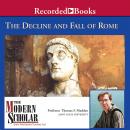
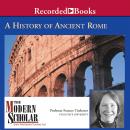
"Even millennia after its fall, the grand expanse of Roman achievement continues to affect not only American society, but the entire world as well. What caused a civilization of such accomplishments to disintegrate? In this informative and lively series of lectures, renowned history professor Thomas F. Madden serves as the ultimate guide through the fall of ancient Rome. Professor Madden correlates the principles of Roman conduct-both governmental and military- that would forever change the world. Rome was an empire unlike the world had ever seen, and one that will likely never be duplicated. Peopled with personages of great distinction and even greater ambition, at once notable for humanity's great promise and flawed nature, the Roman Empire contributed many of history's proudest advancements. Here Professor Madden invites audiences to explore all the grandeur of this lost empire."
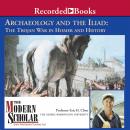
"The Trojan War, captured forever in Homer's epic poem the Iliad, resonates to the present day in the popular imagination, and this magnificent confrontation continues to exert a tremendous influence on modern audiences. But did Troy actually exist? And if so, where is it located? Was the Trojan War actually fought? If it was, did it take place over the course of ten years, as Homer wrote, or was it a much longer series of battles? And why was the war fought? Could Helen's face alone really have launched a thousand ships? In this course, esteemed professor Eric H. Cline examines the real history of Troy and delves into the archaeological discoveries (which continue to the present day) that help to answer the questions above. Through an entertaining and incisive analysis of known data, Professor Cline provides a fuller, richer understanding of this historic clash."
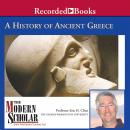
"Professor Eric H. Cline-The George Washington University In this intriguing series of lectures, prolific researcher, author, and professor Eric H. Cline delves into the history of ancient Greece, frequently considered to be the founding nation of democracy in Western civilization. The history of this remark- able civilization abounds with momentous events and cultural landmarks that resonate through the millennia. Professor Cline touches on the most compelling and informa- tive aspects of Greek history and accomplishment, providing revealing insights along the way and lending a fresh perspective throughout this entertaining and evocative course."
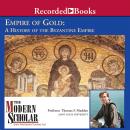
"In Empire of Gold: A History of the Byzantine Empire, esteemed university professor Thomas F. Madden offers a fascinating series of lectures on the history of the remarkable culture and state that developed out of the ancient Roman Empire, particularly its eastern portion, throughout the Middle Ages. The story here therefore begins at an ending, that of the Roman Empire, in the third century AD, and continues over the next one thousand years. This new culture arising from the old will have a dramatic impact on western European culture and on the culture of the Islamic East, and most especially on the culture and modern history of Greeks, Greek Orthodox, and Russians, who were all very much affected by the Byzantine Empire. With incisive commentary, Professor Madden leads a discussion covering Justinian's reconquest of the West, the great city of Constantinople, and the aftermath and influence of this extraordinary empire."
"Sein Ruhm überstrahlte Jahrtausende, seine Taten sind Legende: Alexander der Große schrieb Weltgeschichte, als er im Jahre 334 vor Christus von Griechenland nach Asien übersetzte und den persischen Großkönig Dareios in den drei Schlachten am Granykos, bei Issos und in Gaugamela vernichtend schlug. Er gründete das ägyptische Alexandria und stieß mit seinen mazedonischen Truppen bis ins ferne Indien vor. Auf dem Höhepunkt seiner Macht, 323 vor Christus, starb der unwiderstehliche Eroberer, der sich als Gott huldigen ließ, im jugendlichen Alter von 33 Jahren an einem mysteriösen Fieber in Babylon."
Join our community for the latest bookish news, reading recommendations, exclusive opening extracts, author events and competitions. It\'s all free. And enter a monthly draw to win a £50 Gift Card. See past winners here


![[German] - Konstantin der Grosse Audiobook](https://covers.audiobooks.com/images/covers/large/4056198071779.jpg)
![[German] - Gewaltexzesse antiker Tyrannen Audiobook](https://covers.audiobooks.com/images/covers/large/4056198065082.jpg)
![[German] - Die griechische Polis: Stadt und Bürgergemeinde: Alte Geschichte Audiobook](https://covers.audiobooks.com/images/covers/large/4056198035726.jpg)
![[German] - Die griechisch-römische Antike: Eine Einführung Audiobook](https://covers.audiobooks.com/images/covers/large/4056198035771.jpg)
![[German] - Alexander der Große Audiobook](https://covers.audiobooks.com/images/covers/large/4056198014226.jpg)