Browse audiobooks by Rolf Hedger, listen to samples and when you're ready head over to Audiobooks.com where you can get 3 FREE audiobooks on us
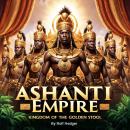
Ashanti Empire: Kingdom of the Golden Stool
"This audiobook is narrated by an AI Voice. The Ashanti Empire, flourishing from the 17th to the 19th century in what is now Ghana, stands as a testament to the resilience and sophistication of African states. This powerful kingdom was established through a unique blend of indigenous cultural traditions and political innovations, creating a centralized authority that not only governed a vast territory but also unified diverse ethnic groups under a single national identity. At the heart of this unity was the revered Golden Stool, a symbol of divine providence and the collective spirit of the Ashanti people. Emerging from a landscape rich in natural resources and strategic trade routes, the Ashanti Empire developed robust economic foundations. Gold, kola nuts, and other valuable commodities flowed through well-established networks, facilitating both internal prosperity and external exchanges with neighboring regions and distant trading partners. This economic strength enabled the empire to invest in military expansion and administrative structures that further consolidated its power. The political organization of the Ashanti Empire was characterized by a sophisticated hierarchy led by the Asantehene, whose authority was both political and spiritual. This dual role was crucial in maintaining social order and ensuring loyalty among the various clans and communities within the empire. The administration was further supported by councils of elders and local chiefs, who played significant roles in the governance process by mediating disputes and enforcing the laws that held the society together."
Rolf Hedger (Author), AI Voice Juniper (Narrator)
Audiobook
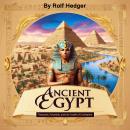
Ancient Egypt: Pharaohs, Pyramids, and the Cradle of Civilization
"This audiobook is narrated by an AI Voice. The Nile River was the lifeblood of ancient Egypt, shaping its civilization, economy, and culture. Flowing over 4,000 miles from the heart of Africa to the Mediterranean Sea, the river provided a reliable source of water in an otherwise arid landscape. Without the Nile, Egypt as we know it would not have existed. Each year, the river’s annual flooding deposited nutrient-rich silt onto the surrounding land, creating fertile soil ideal for agriculture. This natural cycle allowed the Egyptians to grow crops such as wheat, barley, and flax, sustaining a thriving population. The predictability of the flooding led to the development of an agricultural calendar, which played a crucial role in the organization of society. Farmers planted their crops after the waters receded and harvested them before the next flood, ensuring a steady food supply. Beyond agriculture, the Nile was also Egypt’s main highway. With deserts on either side of the river, travel by land was difficult, but the Nile provided an efficient means of transportation. Boats carried goods, people, and even large stone blocks for temple and pyramid construction. Trade flourished as the Egyptians exchanged gold, papyrus, and linen for exotic products from neighboring regions, including spices from the east and cedarwood from Lebanon."
Rolf Hedger (Author), AI Voice Juniper (Narrator)
Audiobook
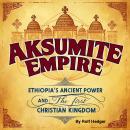
Aksumite Empire: Ethiopia's Ancient Power and the First Christian Kingdom
"This audiobook is narrated by an AI Voice. The Aksumite Empire was one of the most significant and influential civilizations of ancient Africa. Emerging around the first century AD, it became a powerful and sophisticated state that played a crucial role in connecting diverse cultures and trade networks across continents. Its strategic location, bridging the Red Sea and the interior of the African continent, allowed Aksum to flourish as both a political and economic hub, facilitating exchanges between the Mediterranean world, the Arabian Peninsula, and beyond. At the heart of Aksum’s success was its remarkable ability to integrate various cultural and economic influences. The empire was not only a center for commerce but also a melting pot of traditions, languages, and beliefs. This rich cultural mosaic is reflected in its unique art, architecture, and inscriptions, which have provided modern scholars with invaluable insights into the life and achievements of this ancient society. The monuments and stelae scattered across the landscape serve as enduring testaments to the empire's power and its sophisticated understanding of both artistry and engineering. The rise of Aksum was deeply intertwined with the development of its political structures and the establishment of a centralized administration. Early rulers of the empire forged alliances through both diplomacy and military might, thereby securing their territories against external threats and internal discord. As the state grew in power, it adopted innovative approaches to governance that balanced traditional practices with the demands of a rapidly expanding empire. These innovations laid the groundwork for what would later be recognized as the first Christian kingdom in Africa."
Rolf Hedger (Author), AI Voice Juniper (Narrator)
Audiobook
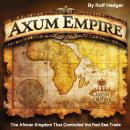
Axum Empire: The African Kingdom That Controlled the Red Sea Trade
"This audiobook is narrated by an AI Voice. The Axum Empire was one of the most influential civilizations in ancient Africa, flourishing between the 4th and 7th centuries AD. It was located in what is today northern Ethiopia and parts of Eritrea, strategically positioned along the Red Sea trade routes. This placement not only allowed Axum to thrive economically but also made it a key player in global trade between Africa, the Middle East, and Asia. The kingdom of Axum’s rise to prominence marked a pivotal moment in African history, shaping the culture, economy, and politics of the region for centuries. The origins of the Axum Empire are somewhat shrouded in mystery, but its establishment is often linked to the rise of the city of Axum (also spelled Aksum) around the 1st century AD. According to various historical accounts, Axum was originally a small kingdom that grew in power through trade, conquest, and political alliances. It eventually became one of the most advanced civilizations of its time, possessing advanced knowledge of agriculture, architecture, and metallurgy. At its height, the Axum Empire was an extraordinary political and economic entity. The kingdom controlled an extensive territory that stretched from modern-day Ethiopia and Eritrea to parts of Sudan and Arabia. Axum became a major center for trade, exporting goods such as ivory, gold, frankincense, and myrrh, while also importing luxury goods from Roman, Indian, and Arabian merchants. The city of Axum itself was known for its monumental obelisks, palaces, and sophisticated urban planning."
Rolf Hedger (Author), AI Voice Juniper (Narrator)
Audiobook
©PTC International Ltd T/A LoveReading is registered in England. Company number: 10193437. VAT number: 270 4538 09. Registered address: 157 Shooters Hill, London, SE18 3HP.
Terms & Conditions | Privacy Policy | Disclaimer
Join our community for the latest bookish news, reading recommendations, exclusive opening extracts, author events and competitions. It\'s all free. And enter a monthly draw to win a £50 Gift Card. See past winners here
Join Our Community