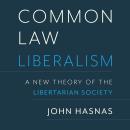
"In conventional political philosophy, law is understood as consciously created rules that are a necessary mechanism for regulating the excesses of the free market. Although coercive in nature, law is seen as a necessary defense against anarchy. But is the situation that simple? In his examination of the purpose and functioning of the legal system, John Hasnas challenges this false dichotomy, presenting a new theory of liberalism that demonstrates that the common law can serve as an effective alternative to traditional politically created legislation.
Hasnas argues that there are options beyond the unregulated market or a market regulated by consciously created government law. Instead, he suggests, law can arise through a process of unplanned evolution in which those subject to law are bound, but not by the will of any identifiable human beings. Anglo-American common law, which evolved without a guiding human intelligence, showcases this. Over the centuries of its development, the common law process created the rules of contract, property, tort, and commercial law that define key aspects of liberal society. Common law's decentralized and continually evolving nature renders it resistant to political rent-seeking and responsive to changing economic and social conditions--allowing it to adapt to the needs of those it serves to protect, rather than to the desires of a powerful few.
Hasnas suggests that while the enforcement of law may involve coercion, law in and of itself is not destined to be a vehicle for domination. Common Law Liberalism demonstrates that the common law can provide all rules necessary to sustain a peaceful, prosperous, liberal society--without intervention by politically created legislation and the exploitation and oppression it so often engenders."
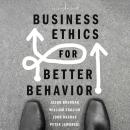
"A clear and concise roadmap for ethical business behavior using commonsense moral principles
Business Ethics for Better Behavior concisely answers the three most pressing ethical questions business professionals face: What makes business practices right or wrong?; Why do normal, decent businesspeople of good will sometimes do the wrong thing?; and How can we use the answer to these questions to get ourselves, our coworkers, our bosses, and our employees to behave better?
Bad behavior in business rarely results from bad will. Most people mean well much of the time. But most of us are vulnerable. We all fall into moral traps, usually without even noticing.
Business Ethics for Better Behavior teaches business professionals, students, and other listeners how to become aware of those traps, how to avoid them, and how to dig their way out if they fall in. It integrates the best work in psychology, economics, management theory, and normative philosophy into a simple action plan for ensuring the best ethical performance at all levels of business practice. This is a book anyone in business, from an entry-level employee to CEO, can use."
Join our community for the latest bookish news, reading recommendations, exclusive opening extracts, author events and competitions. It\'s all free. And enter a monthly draw to win a £50 Gift Card. See past winners here