Browse audiobooks by David Hume, listen to samples and when you're ready head over to Audiobooks.com where you can get 3 FREE audiobooks on us
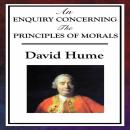
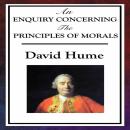
An Enquiry Concerning the Principles of Morals
"This audiobook is narrated by a digital voice. David Hume's An Enquiry Concerning the Principles of Morals argues that morals are not based in rational thought, but rather are sentimental endeavors. This text highlights how approval and disapproval can be used to make moral judgments, and how this might elevate certain aspects of society. Hume's book delves into the human psyche and, therefore, aids our understanding of society and life as a whole."
David Hume (Author), Digital Voice Martin G (Narrator)
Audiobook
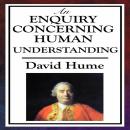
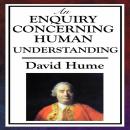
An Enquiry Concerning Human Understanding
"This audiobook is narrated by a digital voice. David Hume, an empiricist philosopher, takes on perhaps one of the most challenging of conceivable problems in An Enquiry Concerning Human Understanding. Moving beyond Descartes classic statement, I think, therefore I am, Hume addresses issues of knowing that fall outside the realms of active thought or incremental learning. While innumerable philosophers discuss various aspects of experience, Hume stands alone in his successful treatise on the nature of experience itself."
David Hume (Author), Digital Voice Martin G (Narrator)
Audiobook
An Enquiry Concerning Human Understanding
"This audiobook is narrated by a digital voice. David Hume, an empiricist philosopher, takes on perhaps one of the most challenging of conceivable problems in An Enquiry Concerning Human Understanding. Moving beyond Descartes classic statement, I think, therefore I am, Hume addresses issues of knowing that fall outside the realms of active thought or incremental learning. While innumerable philosophers discuss various aspects of experience, Hume stands alone in his successful treatise on the nature of experience itself."
David Hume (Author), Digital Voice Martin G (Narrator)
Audiobook
An Enquiry Concerning the Principles of Morals
"This audiobook is narrated by a digital voice. David Hume's An Enquiry Concerning the Principles of Morals argues that morals are not based in rational thought, but rather are sentimental endeavors. This text highlights how approval and disapproval can be used to make moral judgments, and how this might elevate certain aspects of society. Hume's book delves into the human psyche and, therefore, aids our understanding of society and life as a whole."
David Hume (Author), Digital Voice Martin G (Narrator)
Audiobook
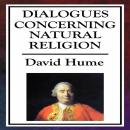
Dialogues Concerning Natural Religion
"This audiobook is narrated by a digital voice. Dialogues Concerning Natural Religion is an important philosophical work written by the Scottish philosopher David Hume. Through dialogue three fictional characters named Demea, Philo, and Cleanthes debate the nature of God's existence. While all three agree that a god exists, they differ sharply in opinion as to God's nature. They also differ as to whether or not humankind can come to knowledge of a deity."
David Hume (Author), Digital Voice Martin G (Narrator)
Audiobook
[Portuguese] - Dissertação sobre as paixões: e outros textos
"O Sr. Hume possui um sentimento delicado, um pensamento de feitio original, uma linguagem perspícua, não raro elegante, qualidades que não poderiam deixar de recomendar seus escritos a todo leitor de bom gosto. É pena que um gênio como esse empregue as suas habilidades como frequentemente o faz em seus ataques à religião de seu país. Ele não age como um inimigo franco e leal, mas tenta enfraquecer a autoridade dela por meio de sugestões oblíquas e insinuações ardilosas. Desse ponto de vista, sua obra não merece muita estima, se é que merece alguma; e poucos leitores dotados de discernimento o louvarão com epítetos de acuidade ou elegância, se considerarem que ele emprega essas qualidades para preencher a mente com as incômodas flutuações do ceticismo e com uma infidelidade sombria. William Rose, 1757 As paixões nunca foram bem vistas pelos filósofos. De Platão e Aristóteles a Descartes e Hobbes, elas são o contraponto da razão. Imiscuindo-se na imaginação, atrapalham as deliberações razoáveis e perturbam a conduta. Incontornáveis, porque enraizadas no corpo, devem ser contidas. Em manuais dedicados à conduta do entendimento, Locke e Espinosa tentam proteger as ideias retas e sãs contra a ação insidiosa desse inimigo formidável. Nessa história de desconfiança, Hume é a exceção. Adepto de uma filosofia experimental pautada por um rigoroso método de análise da experiência moral, ele se distancia dos filósofos e aproxima-se dos moralistas. É um admirador dos preceitos clássicos do Grande Século francês, época em que a boa sociedade se dedicava ao que Auerbach chamou de 'culto das paixões'. Leitor de Racine, Hume descobre nas próprias paixões o antídoto para os males que elas causam. Doravante, não se trata mais de suprimi-las, nem mesmo de contê-las. Apropriando-se da sua força magnífica, a arte, e em especial a arte de escrever, elabora uma pedagogia da sensibilidade. A partir desse preceito, Hume tece considerações críticas sobre a oratória, a tragédia, a poesia e a história, ocupando-se delas em seus ensaios morais e literários (publicados pela Iluminuras no volume A arte de escrever ensaio). Já neste outro volume, o leitor encontrará, além da Dissertação sobre as paixões, que retoma o livro II do Tratado da natureza humana, o opúsculo História natural da religião. Esse texto veemente encontra as paixões na origem primeira da religião. Mas que não se espere desse cético convicto uma defesa da 'religião natural', baseada na ciência e na razão. A implacável descrição da gênese do fenômeno religioso termina com um elogio da descrença. Mas não do niilismo. Para Hume, a contraparte da dessacralização do mundo é, justamente, aquele 'culto das paixões' que ensina a conviver em sociedade e a usufruir do prazer a que a natureza humana está predisposta. Pedro Paulo Pimenta"
David Hume (Author), Alberto Eloy (Narrator)
Audiobook
The History of England Volume 6: Containing the Commonwealth, Charles II and James II
"David Hume's great, enduring reputation in philosophy tends to obscure the fact that, among his contemporaries, his history of England was a more successful work. The history covers almost 1800 years. Hume saw English history as an evolution from a government of will to a government of law. Advanced in Hume's masterly prose, this argument continues to make the 'History' a valuable study for the modern reader. This Liberty Fund edition is based on the edition of 1778, the last to contain corrections by Hume. The typography has been modernised for ease of reading. Hume's own index to the entire work may be found at the conclusion of volume VI."
David Hume (Author), Mark Elstob (Narrator)
Audiobook
The History of England Volume 5: James I and Charles I
"Despite considerable concerns throughout England, the transition of the House of Tudor to the House of Stewart, from Elizabeth to James I (reigned 1603-1625) proved untroubled, not least because the queen left the country in ‘flourishing circumstances’. The new monarch moved to London and, despite being James VI of Scotland, made it his home for the next two decades. Unsurprisingly, his early distribution of honours benefitted more Scots figures than English, and coloured the nature of his English court, though he prudently left most of the main offices in the hands of Elizabeth’s ministers. Various plots – involving among others Sir Walter Raleigh, and, in 1605 the ‘Gunpower Conspiracy’ – were swiftly dealt with; and though James regarded himself ‘an absolute king’, this was leavened by pragmatism. Hume considers the continuing activity of learning and the arts in the reign of James, through the work of Shakespeare, Ben, Johnson, John Donne and Francis Bacon; and that James himself was a ‘middling’ writer. He died aged 58 in 1625. Unlike his father, Charles I (reigned 1625-1649) came to the throne aged 25 ‘unexperienced and impolitic,’ and was further challenged by personal debts and public commitments due to overseas military ventures. This forced him to request Parliament for extra funds, which he expected would be little more than a formality, and, bearing in mind this was a new relationship, Parliament acceded. But the strengthening of the ‘puritanical’ party in the house of commons set the seeds of future disruption, flames which were fuelled by the king’s increasingly ‘lofty ideas’ of his monarchical authority over constitutional practices in the government of the country. Hume’s extensive research presents the growing animosity between king and Parliament in detail, culminating Charles ordering the dissolution of Parliament on 10 March 1629. For the next 11 years the king ruled alone. Hume takes a balanced view of Charles the man and Charles the king. ‘A kind husband, an indulgent father, a gentle master, a steadfast friend; to all these eulogies, his conduct in private life fully entitled him. As a monarch too, in the exterior qualities, he excelled; in the essential, he was not defective…But the high idea of his own authority, which he had imbibed, made him incapable of giving way to the spirit of liberty, which began to prevail among his subjects.’ What’s more, Charles allowed himself, inadvisedly, to be influenced by a few strong personalities which eventually led to his destruction. 1639 finds Charles, ‘in despair of being able to stem the torrent’. With a historian’s care, but with a natural flair for telling the story, Hume relates the descent into civil war, the fluctuating fortunes of both sides, the ascendence of the new model army, and the execution of the king. This, one of the astounding moments in English history, is finely told, with Hume uncovering the conflicting emotions on all sides, adding vivid colour to the facts."
David Hume (Author), Mark Elstob (Narrator)
Audiobook
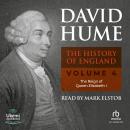
The History of England Volume 4: The Reign of Queen Elizabeth I
"In Volume 4, Hume closes his account of ‘England Under the House of Tudor’ begun in Volume 3, and devotes it entirely to the reign of Queen Elizabeth I. It was not really expected that she would survive to accede to the monarchy; and it was certainly unexpected that she would rule for so long (1558-1603) while steadfastly declining to take a husband. All in all, her reign was a remarkable achievement. Elizabeth had so much to contend with over the years. From the start, she had to oversee the reinstatement of the Protestant religion after the tumultuous reign of her sister, Mary. Then came the testing matter of Mary, Queen of Scots which dragged on for decades. There were also numerous Catholic conspiracies (many threats to her personally), requiring close attention by her protective spymaster ministers William Cecil and Francis Walsingham. Then there were the complex relationships with other leading European powers, France and Spain, culminating in the spectacular climax in 1588 when Sir Francis Drake (and the weather) routed the Spanish Armada. Hume does not approach Elizabeth and her reign with the ‘unbounded panegyrics’ so often adopted by historians before him. He criticises them for ‘having been so extremely ignorant of the transactions of this reign as to extol her for a quality which, of all others, she was the least possessed of – a tender regard for the constitution, and a concern for the liberties and privileges of her people.’ This, Hume insists, was not quite Elizabeth. Despite acknowledging her popularity, Hume is at pains in his History to present a more rounded portrait. ‘The prerogatives of this princess were scarcely ever disputed, and she therefore employed them without scruple: Her imperious temper, a circumstance in which she went far beyond her successors, rendered her exertions of power violent and frequent, and discovered the full extent of her authority. However, he continues, ‘the great popularity, which she enjoyed proves that she did not infringe any established liberties of the people’. In Volume 4, Hume shows himself to be a historian of character and clarity, but also demonstrates his scholarly integrity. In the controversial issue of the guilt or innocence of Mary, for example, he went back to original documents to support his opinion. This is why his History of England remains an informative and stimulating account in the 21st century."
David Hume (Author), Mark Elstob (Narrator)
Audiobook

A Treatise of Human Nature Book 2
"David Hume's 'A Treatise of Human Nature' is a monumental work that reshapes the landscape of philosophy by examining the foundations of human understanding. Through astute analysis, Hume investigates the nature of cognition, emotion, and morality, introducing the revolutionary concept of empiricism—that all knowledge stems from sensory experience. This treatise challenges traditional thought, questioning the limits of reason and the essence of human experience, influencing generations to come."
David Hume (Author), James Harrington (Narrator)
Audiobook
A Treatise of Human Nature Book 3
"The Treatise is a classic statement of philosophical empiricism, skepticism, and naturalism. In the introduction Hume presents the idea of placing all science and philosophy on a novel foundation: namely, an empirical investigation into human nature."
David Hume (Author), James Harrington (Narrator)
Audiobook
A Treatise of Human Nature Book 1
"David Hume's 'A Treatise of Human Nature' presents a revolutionary examination of human cognition. Through meticulous analysis, Hume delves into the complexities of perception, memory, and imagination, challenging age-old philosophical beliefs. By introducing empiricism, he argues that all knowledge originates from sensory experience. This foundational work redefines modern thought, probing the boundaries of understanding and the very essence of human reality."
David Hume (Author), James Harrington (Narrator)
Audiobook
©PTC International Ltd T/A LoveReading is registered in England. Company number: 10193437. VAT number: 270 4538 09. Registered address: 157 Shooters Hill, London, SE18 3HP.
Terms & Conditions | Privacy Policy | Disclaimer
Join our community for the latest bookish news, reading recommendations, exclusive opening extracts, author events and competitions. It\'s all free. And enter a monthly draw to win a £50 Gift Card. See past winners here
Join Our Community