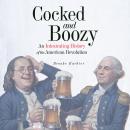
"America’s founding generation drank a staggering amount of alcohol by today’s standards.
It influenced their politics, built and sustained their relationships, and drove the economy. Booze was not a small part of colonial society, nor covertly consumed in private spaces—it was integral to American life.
Historians have been reluctant to discuss the influence of alcohol on the founding of the United States, but it is necessary if we want to gain a full picture of the movement—it’s time to reveal the drunken side of the American Revolution.
In Cocked and Boozy—two of Benjamin Franklin’s two hundred terms for drunkenness—public historian Brooke Barbier examines the role that alcohol played in spurring, binding, and winning the American Revolution and how it shaped the nascent United States. Every chapter concludes with an eighteenth-century cocktail recipe made for modern tastes, so listeners can participate in their own historic tippling.
The intoxicating story begins in 1763 after the end of the French and Indian War and spans until 1800, with the presidential election of Thomas Jefferson. During these nearly four decades, Americans witnessed unprecedented disorder and prodigious growth, and through it all—powering it, in fact—was alcohol. Put simply, drink helped transform British subjects into Americans."
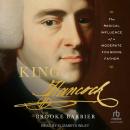
"Americans are more familiar with his signature than with the man himself. In this spirited account of John Hancock's life, Brooke Barbier depicts a patriot of fascinating contradictions—a child of enormous privilege who would nevertheless become a voice of the common folk; a pillar of society uncomfortable with radicalism who yet was crucial to independence.
Orphaned young, Hancock was raised by his merchant uncle, whose business and vast wealth he inherited—including household slaves, whom Hancock later freed. By his early thirties, he was one of New England's most prominent politicians, earning a place on Britain's most-wanted list and the derisive nickname King Hancock. While he eventually joined the revolution against England, his ever moderate—and moderating—disposition would prove an asset after 1776. Barbier shows Hancock appealing to southerners and northerners, Federalists and Anti-Federalists. He was a famously steadying force as president of the fractious Second Continental Congress. As governor of Massachusetts, Hancock convinced its delegates to vote for the federal Constitution and calmed the fallout from the shocking Shays's Rebellion. An insightful study of leadership in the revolutionary era, King Hancock traces a moment when passion was on the side of compromise and accommodation proved the basis of profound social and political change."
Join our community for the latest bookish news, reading recommendations, exclusive opening extracts, author events and competitions. It\'s all free. And enter a monthly draw to win a £50 Gift Card. See past winners here