

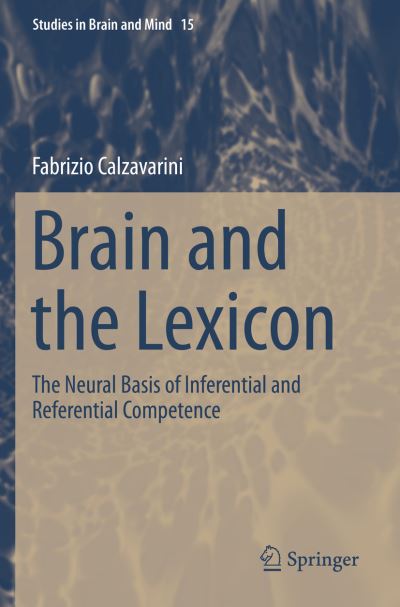
This monograph offers a novel, neurocognitive theory concerning words and language. It explores the distinction between inferential and referential semantic competence. The former accounts for the relationship of words among themselves, the latter for the relationship of words to the world. The author discusses this distinction at the level of the human brain on both theoretical and neuroscientific grounds. In addition, this investigation considers the relation between the inf/ref neurocognitive theory and other accounts of semantic cognition proposed in the field of neurosemantics, as well as some potential implications of the theory for clinical neuroscience and the philosophy of semantics. Overall, the book offers an important contribution to the debate about lexical semantic competence. It combines a strong philosophical and linguistic background with a comprehensive and critical analysis of neurosemantic literature. Topics discussed lie at the intersection of philosophical semantics, linguistics, neurolinguistics, cognitive science, artificial intelligence, cognitive neuroscience, and clinical psychology. Due to its interdisciplinary orientation, coverage is rich in introductory remarks and not overly technical, therefore it is accessible to non-experts as well.
| ISBN: | 9783030275907 |
| Publication date: | 26th August 2021 |
| Author: | Fabrizio Calzavarini |
| Publisher: | Springer an imprint of Springer International Publishing |
| Format: | Paperback |
| Pagination: | 215 pages |
| Series: | Studies in Brain and Mind |
| Genres: |
Philosophy of mind Psycholinguistics and cognitive linguistics Physiological and neuro-psychology, biopsychology |
This monograph offers a novel, neurocognitive theory concerning words and language. It explores the distinction between inferential and referential semantic competence. The former accounts for the relationship of words among themselves, the latter for the relationship of words to the world. The author discusses this distinction at the level of the human brain on both theoretical and neuroscientific grounds. In addition, this investigation considers the relation between the inf/ref neurocognitive theory and other accounts of semantic cognition proposed in the field of neurosemantics, as well as some potential implications of the theory for clinical neuroscience and the philosophy of semantics. Overall, the book offers an important contribution to the debate about lexical semantic competence. It combines a strong philosophical and linguistic background with a comprehensive and critical analysis of neurosemantic literature. Topics discussed lie at the intersection of philosophical semantics, linguistics, neurolinguistics, cognitive science, artificial intelligence, cognitive neuroscience, and clinical psychology. Due to its interdisciplinary orientation, coverage is rich in introductory remarks and not overly technical, therefore it is accessible to non-experts as well.
Brain and the Lexicon features in the following genres: Philosophy of mind, Psycholinguistics and cognitive linguistics, Physiological and neuro-psychology, biopsychology
Brain and the Lexicon is available in Paperback, Hardback
Brain and the Lexicon was written by Fabrizio Calzavarini and published by Springer an imprint of Springer International Publishing
Brain and the Lexicon has 215 pages
Yes it is part of Studies in Brain and Mind series
£80.99