

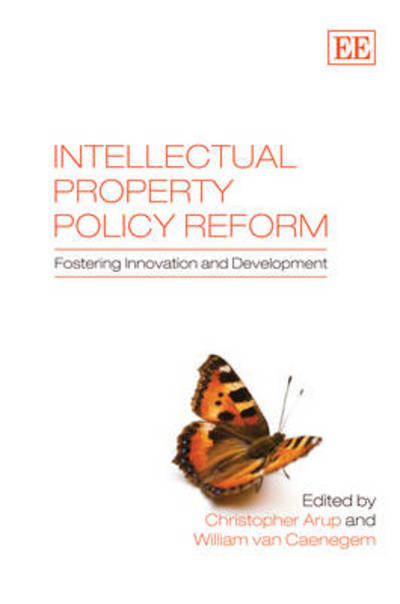
This state-of-the-art study argues that reforms to intellectual property (IP) should be based on the ways IP is interacting with new technologies, business models, work patterns and social mores. It identifies emerging IP reform proposals and experiments, indicating first how more rigor and independence can be built into the grant of IP rights so that genuine innovations are recognized.
The original contributions illustrate how IP rights can be utilised, through open source licensing systems and private transfers, to disseminate knowledge. Reforms are recommended. The discussion takes in patents, copyright, trade secrets and relational obligations, considering the design of legislative directives, default principles, administrative practices, contractual terms and license specifications.
Providing contemporary empirical studies and covering public administration, collective and open approaches, and regulation of private transactions, this comprehensive book will prove a stimulating read for academics and students of law, business and management and development studies. Government policy makers and regulators as well as IP managers and advocates will also find much to provoke thought.
| ISBN: | 9781848441637 |
| Publication date: | 30th July 2009 |
| Author: | Christopher Arup |
| Publisher: | Edward Elgar Publishing |
| Format: | Hardback |
| Pagination: | 324 pages |
| Genres: |
Intellectual property law Industrial applications of scientific research and technological innovation |
This state-of-the-art study argues that reforms to intellectual property (IP) should be based on the ways IP is interacting with new technologies, business models, work patterns and social mores. It identifies emerging IP reform proposals and experiments, indicating first how more rigor and independence can be built into the grant of IP rights so that genuine innovations are recognized.
The original contributions illustrate how IP rights can be utilised, through open source licensing systems and private transfers, to disseminate knowledge. Reforms are recommended. The discussion takes in patents, copyright, trade secrets and relational obligations, considering the design of legislative directives, default principles, administrative practices, contractual terms and license specifications.
Providing contemporary empirical studies and covering public administration, collective and open approaches, and regulation of private transactions, this comprehensive book will prove a stimulating read for academics and students of law, business and management and development studies. Government policy makers and regulators as well as IP managers and advocates will also find much to provoke thought.
Intellectual Property Policy Reform features in the following genres: Intellectual property law, Industrial applications of scientific research and technological innovation
Intellectual Property Policy Reform is available in Hardback
Intellectual Property Policy Reform was written by Christopher Arup and published by Edward Elgar Publishing
Intellectual Property Policy Reform has 324 pages