

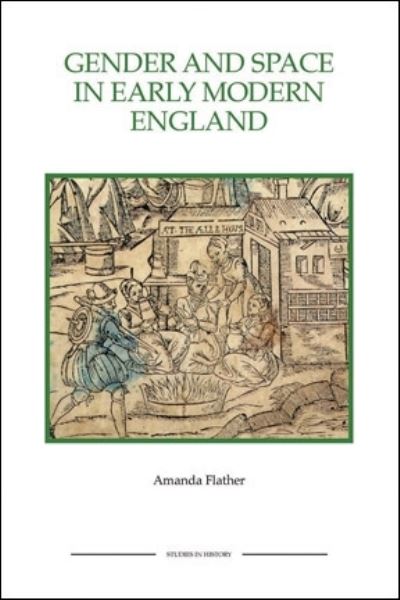
A nuanced re-evaluation of the ways in which gender affected the use of physical space in early modern England. Space was not simply a passive backdrop to a social system that had structural origins elsewhere; it was vitally important for marking out and maintaining the hierarchy that sustained social and gender order in sixteenth- and seventeenth-century England. Gender had a considerable influence on its use and organization; status and gender were displayed physically and spatially every moment of the day, from a person's place at table to the bed on which he orshe slept, in places of work and recreation, in dress, gesture and modes of address. Space was also the basis for the formation of gender identities which were constantly contested and restructured, as this book shows. Examining in turn domestic, social and sacred spaces and the spatial division of labour in gender construction, the author demonstrates how these could shift, and with them the position and power of women. She shows that the ideologicalassumption that all women are subject to all men is flawed, and exposes the limitations of interpretations which rely on the model and binary opposition of public/private, male/female, to describe gender relations and their changes across the period, thus offering a much more complex and picture than has hitherto been perceived. The book will be essential reading not just for historians of the family and of women, but for all those studying early modern social history. AMANDA FLATHER is a lecturer in the Department of History at the University of Essex.
| ISBN: | 9781843836506 |
| Publication date: | 15th September 2011 |
| Author: | Amanda Flather, Royal Historical Society Great Britain |
| Publisher: | The Boydell Press an imprint of Boydell & Brewer Ltd |
| Format: | Paperback |
| Pagination: | 216 pages |
| Series: | Royal Historical Society Studies in History. New Series |
| Genres: |
General and world history Social and cultural history European history |
A nuanced re-evaluation of the ways in which gender affected the use of physical space in early modern England. Space was not simply a passive backdrop to a social system that had structural origins elsewhere; it was vitally important for marking out and maintaining the hierarchy that sustained social and gender order in sixteenth- and seventeenth-century England. Gender had a considerable influence on its use and organization; status and gender were displayed physically and spatially every moment of the day, from a person's place at table to the bed on which he orshe slept, in places of work and recreation, in dress, gesture and modes of address. Space was also the basis for the formation of gender identities which were constantly contested and restructured, as this book shows. Examining in turn domestic, social and sacred spaces and the spatial division of labour in gender construction, the author demonstrates how these could shift, and with them the position and power of women. She shows that the ideologicalassumption that all women are subject to all men is flawed, and exposes the limitations of interpretations which rely on the model and binary opposition of public/private, male/female, to describe gender relations and their changes across the period, thus offering a much more complex and picture than has hitherto been perceived. The book will be essential reading not just for historians of the family and of women, but for all those studying early modern social history. AMANDA FLATHER is a lecturer in the Department of History at the University of Essex.
Gender and Space in Early Modern England features in the following genres: General and world history, Social and cultural history, European history
Gender and Space in Early Modern England is available in Paperback, Hardback
Gender and Space in Early Modern England was written by Amanda Flather, Royal Historical Society Great Britain and published by The Boydell Press an imprint of Boydell & Brewer Ltd
Gender and Space in Early Modern England has 216 pages
Yes it is part of Royal Historical Society Studies in History. New Series series