

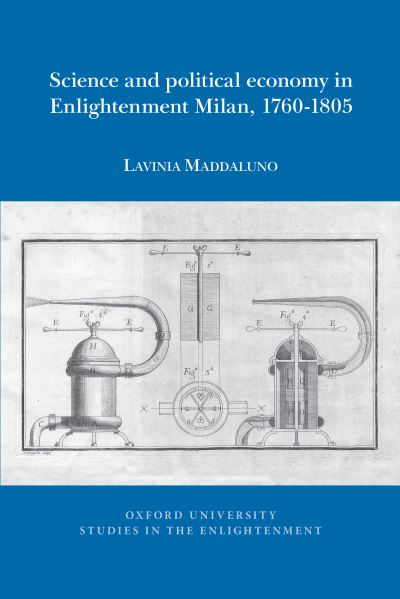
This book is about the parlance of political economic ideas with scientific practices in the Duchy of Milan, from the late eighteenth-century Habsburg monarchy to the early nineteenth-century Napoleonic era. It advocates for a shift in perspective from the history of ideas of political economy to the history of scientific practices, as an innovative methodological stance, to offer a more articulated understanding of how political economic ideas circulated and were appropriated in Europe and Milan between the eighteenth and early nineteenth centuries. In sum, the book asserts that the making and enforcement of political economic ideas into policies could not be possible without the mediation of scientific practices, and draws on a number of concrete examples to substantiate this claim. Following approval, policies had to be tested; tests involved practitioners such as mechanicks, artisans, bakers and land surveyors, alongside institutions. These figures, mostly kept out of the picture of eighteenth-century political economy; built machines to grind grain in a Physiocratic fashion; drained marshes to realise Joseph II's plans of economic improvement; surveyed abandoned mines as a way to embrace Cameralist conceptions of the state; and wrote chemistry manuals as a celebration of Republican values and models of production. It was these figures, mostly kept out of the picture of eighteenth-century political economy, built machines to grind grain in a Physiocratic fashion; drained marshes to realise Joseph II's plans of economic improvement; surveyed abandoned mines as a way to embrace Cameralist conceptions of the state; and wrote chemistry manuals as a celebration of Republican values and models of production. More broadly, this book also situates the Duchy of Milan at the centre of European transfers of political economic knowledge, delving into the broad interconnections between ideas and technological practices in the Enlightenment.
| ISBN: | 9781835534045 |
| Publication date: | 8th October 2024 |
| Author: | Lavinia Maddaluno |
| Publisher: | Voltaire Foundation an imprint of Liverpool University Press |
| Format: | Paperback |
| Pagination: | 336 pages |
| Series: | Oxford University Studies in the Enlightenment |
| Genres: |
Language: history and general works Literary studies: c 1600 to c 1800 Social theory Western philosophy from c 1800 Political science and theory |
This book is about the parlance of political economic ideas with scientific practices in the Duchy of Milan, from the late eighteenth-century Habsburg monarchy to the early nineteenth-century Napoleonic era. It advocates for a shift in perspective from the history of ideas of political economy to the history of scientific practices, as an innovative methodological stance, to offer a more articulated understanding of how political economic ideas circulated and were appropriated in Europe and Milan between the eighteenth and early nineteenth centuries. In sum, the book asserts that the making and enforcement of political economic ideas into policies could not be possible without the mediation of scientific practices, and draws on a number of concrete examples to substantiate this claim. Following approval, policies had to be tested; tests involved practitioners such as mechanicks, artisans, bakers and land surveyors, alongside institutions. These figures, mostly kept out of the picture of eighteenth-century political economy; built machines to grind grain in a Physiocratic fashion; drained marshes to realise Joseph II's plans of economic improvement; surveyed abandoned mines as a way to embrace Cameralist conceptions of the state; and wrote chemistry manuals as a celebration of Republican values and models of production. It was these figures, mostly kept out of the picture of eighteenth-century political economy, built machines to grind grain in a Physiocratic fashion; drained marshes to realise Joseph II's plans of economic improvement; surveyed abandoned mines as a way to embrace Cameralist conceptions of the state; and wrote chemistry manuals as a celebration of Republican values and models of production. More broadly, this book also situates the Duchy of Milan at the centre of European transfers of political economic knowledge, delving into the broad interconnections between ideas and technological practices in the Enlightenment.
Science and Political Economy in Enlightenment Milan, 1760-1805 features in the following genres: Language: history and general works, Literary studies: c 1600 to c 1800, Social theory, Western philosophy from c 1800, Political science and theory
Science and Political Economy in Enlightenment Milan, 1760-1805 is available in Paperback
Science and Political Economy in Enlightenment Milan, 1760-1805 was written by Lavinia Maddaluno and published by Voltaire Foundation an imprint of Liverpool University Press
Science and Political Economy in Enlightenment Milan, 1760-1805 has 336 pages
Yes it is part of Oxford University Studies in the Enlightenment series