

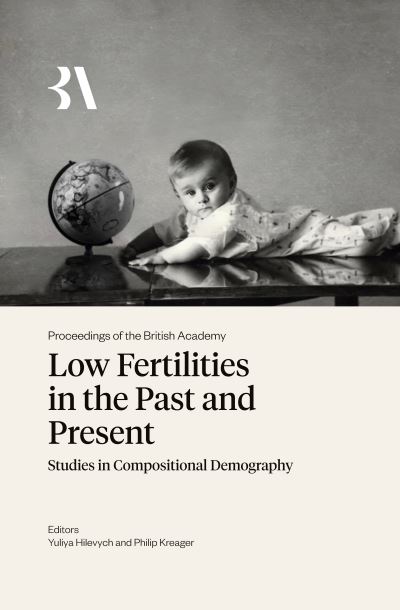
Sustained population studies of fertility over the last two centuries have come to question the extent to which trends in low fertility may be understood as universal. Improved knowledge of variations within countries and between communities has revealed heterogeneity in reproductive behaviours at sub-national levels - whether before, during, or after the so-called 'fertility transition'. Population studies have also come to give more attention to the role of structural inequalities, including around family, class, gender, and health, and of people's diverse and changing reproductive strategies that underpin varying low fertilities at sub-national levels.
This collection develops compositional demography approaches to address the advancements in sub-national variations. It brings together studies in anthropology, demography, history, and sociology, that have together developed an analytical lens for examining the low fertility phenomenon not as a mere average but as a composite of different reproductive behaviours and regimes. The volume is among the first to collect historical patterns of low fertilities and their underlying structural conditions in a long-term comparative perspective. It is also the first to detail comprehensively the compositional demography approach, which can be also applied to the study of various demographic phenomena around fertility, mortality, ageing, migration, and other population issues.
| ISBN: | 9781805966661 |
| Publication date: | 28th February 2026 |
| Author: | British Academy |
| Publisher: | The British Academy an imprint of Liverpool University Press |
| Format: | Hardback |
| Pagination: | 440 pages |
| Series: | Proceedings of the British Academy |
| Genres: |
Regional / International studies Social and cultural history Historical geography History: theory and methods Sociology and anthropology Economics |
Sustained population studies of fertility over the last two centuries have come to question the extent to which trends in low fertility may be understood as universal. Improved knowledge of variations within countries and between communities has revealed heterogeneity in reproductive behaviours at sub-national levels - whether before, during, or after the so-called 'fertility transition'. Population studies have also come to give more attention to the role of structural inequalities, including around family, class, gender, and health, and of people's diverse and changing reproductive strategies that underpin varying low fertilities at sub-national levels.
This collection develops compositional demography approaches to address the advancements in sub-national variations. It brings together studies in anthropology, demography, history, and sociology, that have together developed an analytical lens for examining the low fertility phenomenon not as a mere average but as a composite of different reproductive behaviours and regimes. The volume is among the first to collect historical patterns of low fertilities and their underlying structural conditions in a long-term comparative perspective. It is also the first to detail comprehensively the compositional demography approach, which can be also applied to the study of various demographic phenomena around fertility, mortality, ageing, migration, and other population issues.
Low Fertilities in the Past and Present features in the following genres: Regional / International studies, Social and cultural history, Historical geography, History: theory and methods, Sociology and anthropology, Economics
Low Fertilities in the Past and Present is available in Hardback
Low Fertilities in the Past and Present was written by British Academy and published by The British Academy an imprint of Liverpool University Press
Low Fertilities in the Past and Present has 440 pages
Yes it is part of Proceedings of the British Academy series