

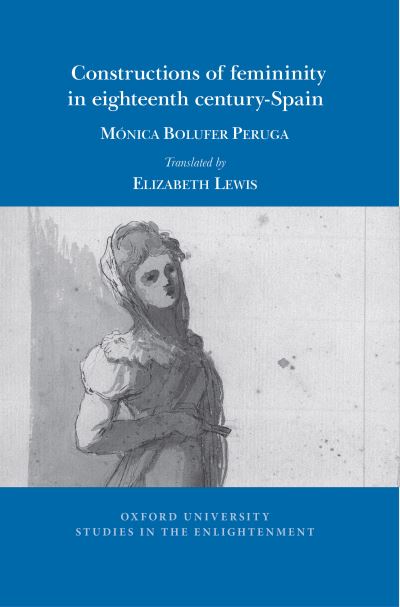
Spain's eighteenth century was a crossroads between traditionalist views of the physical, intellectual, and emotional inferiority of women, and a new way of understanding femininity and its importance to society. In her groundbreaking book, Mujeres e Ilustración. La construcción de la feminidad en la España del siglo XVIII, Mónica Bolufer Peruga finds the "woman question" (la querella de las mujeres)-as expressed by both men and women, conservatives and liberals, in a variety of literary, political, medical, pedagogic, and journalistic texts-to be a central point of conflict of the eighteenth century in Spain. From the early intellectual debates, to pedagogical and medical texts about women, and finally to examples of women's active participation in Spanish Enlightenment culture, Bolufer traces the debates over gendered definitions of femininity and of women's proper place in society. A standard for feminist studies in the Hispanic Enlightenment since its publication in 1998, this new English translation, updated and accompanied by a bibliographic survey of important publications since (and many as a result of) the publication of Mujeres e Ilustración, reintroduces the book and the important subject of women, gender and the Spanish Enlightenment to Hispanist and non-Hispanist scholars of the eighteenth-century and beyond, especially in the UK and US.
| ISBN: | 9781805966050 |
| Publication date: | 28th August 2026 |
| Author: | Mónica Bolufer Peruga |
| Publisher: | Voltaire Foundation an imprint of Liverpool University Press |
| Format: | Paperback |
| Series: | Oxford University Studies in the Enlightenment |
| Genres: |
History of ideas European history |
Spain's eighteenth century was a crossroads between traditionalist views of the physical, intellectual, and emotional inferiority of women, and a new way of understanding femininity and its importance to society. In her groundbreaking book, Mujeres e Ilustración. La construcción de la feminidad en la España del siglo XVIII, Mónica Bolufer Peruga finds the "woman question" (la querella de las mujeres)-as expressed by both men and women, conservatives and liberals, in a variety of literary, political, medical, pedagogic, and journalistic texts-to be a central point of conflict of the eighteenth century in Spain. From the early intellectual debates, to pedagogical and medical texts about women, and finally to examples of women's active participation in Spanish Enlightenment culture, Bolufer traces the debates over gendered definitions of femininity and of women's proper place in society. A standard for feminist studies in the Hispanic Enlightenment since its publication in 1998, this new English translation, updated and accompanied by a bibliographic survey of important publications since (and many as a result of) the publication of Mujeres e Ilustración, reintroduces the book and the important subject of women, gender and the Spanish Enlightenment to Hispanist and non-Hispanist scholars of the eighteenth-century and beyond, especially in the UK and US.
Constructions of Femininity in Eighteenth-Century Spain features in the following genres: History of ideas, European history
Constructions of Femininity in Eighteenth-Century Spain is available in Paperback
Constructions of Femininity in Eighteenth-Century Spain was written by Mónica Bolufer Peruga and published by Voltaire Foundation an imprint of Liverpool University Press
Yes it is part of Oxford University Studies in the Enlightenment series
£85.00