

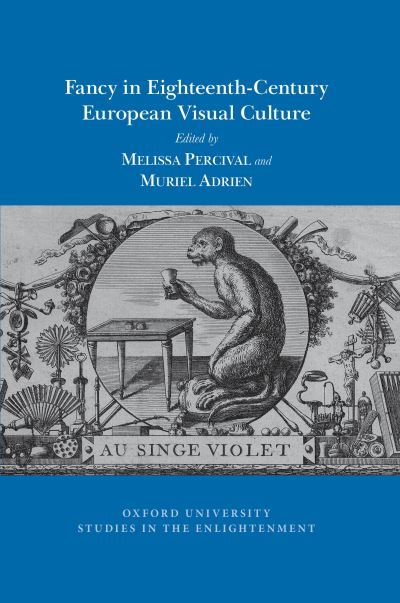
Fancy in the eighteenth century
was part of a rich semantic network, connecting wit, whimsicality, erotic
desire, spontaneity, deviation from norms and triviality. It was also a contentious term, signifying excess,
oddness and irrationality, liable to offend taste, reason and morals. This
collection of essays foregrounds fancy - and its close synonym, caprice - as a
distinct strand of the imagination in the period. As a prevalent, coherent and enduring concept in aesthetics
and visual culture, it deserves a more
prominent place in scholarly understanding than it has hitherto occupied. Fancy is here understood as a type of creative output
that deviated from rules and relished artistic freedom. It was also a mode of
audience response, entailing a high degree of imaginative engagement with
playful, quirky artworks, generating pleasure, desire or anxiety. Emphasizing
commonalities between visual productions in different media from diverse
locations, the authors interrogate and celebrate the expressive freedom of
fancy in European visual culture. Topics
include: the seductive fictions of the fancy picture, Fragonard and galanterie, fancy in drawing manuals,
pattern books and popular prints, fans and fancy goods, chinoiserie, excess and virtuality in garden design, Canaletto's
British 'capricci', urban design in Madrid, and Goya's 'Caprichos'.
| ISBN: | 9781789620030 |
| Publication date: | 13th April 2020 |
| Author: | Melissa Percival, Muriel Adrien |
| Publisher: | Voltaire Foundation an imprint of Liverpool University Press |
| Format: | Paperback |
| Pagination: | 325 pages |
| Series: | Oxford University Studies in the Enlightenment |
| Genres: |
The Arts Social and cultural history Western philosophy: Enlightenment |
Fancy in the eighteenth century
was part of a rich semantic network, connecting wit, whimsicality, erotic
desire, spontaneity, deviation from norms and triviality. It was also a contentious term, signifying excess,
oddness and irrationality, liable to offend taste, reason and morals. This
collection of essays foregrounds fancy - and its close synonym, caprice - as a
distinct strand of the imagination in the period. As a prevalent, coherent and enduring concept in aesthetics
and visual culture, it deserves a more
prominent place in scholarly understanding than it has hitherto occupied. Fancy is here understood as a type of creative output
that deviated from rules and relished artistic freedom. It was also a mode of
audience response, entailing a high degree of imaginative engagement with
playful, quirky artworks, generating pleasure, desire or anxiety. Emphasizing
commonalities between visual productions in different media from diverse
locations, the authors interrogate and celebrate the expressive freedom of
fancy in European visual culture. Topics
include: the seductive fictions of the fancy picture, Fragonard and galanterie, fancy in drawing manuals,
pattern books and popular prints, fans and fancy goods, chinoiserie, excess and virtuality in garden design, Canaletto's
British 'capricci', urban design in Madrid, and Goya's 'Caprichos'.
Fancy in Eighteenth-Century European Visual Culture features in the following genres: The Arts, Social and cultural history, Western philosophy: Enlightenment
Fancy in Eighteenth-Century European Visual Culture is available in Paperback
Fancy in Eighteenth-Century European Visual Culture was written by Melissa Percival, Muriel Adrien and published by Voltaire Foundation an imprint of Liverpool University Press
Fancy in Eighteenth-Century European Visual Culture has 325 pages
Yes it is part of Oxford University Studies in the Enlightenment series