

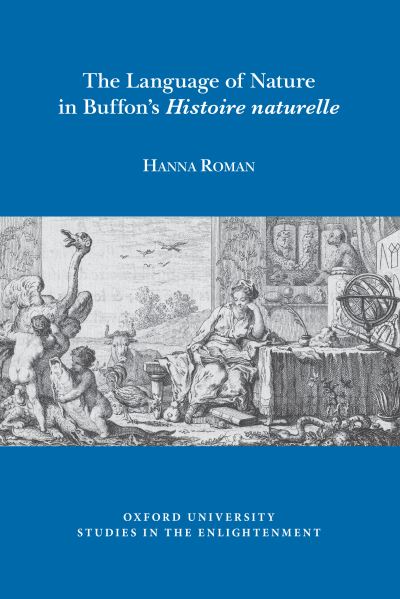
Drawing from literary studies, philosophy, and the history of science, in this interdisciplinary study Hanna Roman argues that the language of Buffon's Histoire naturelle (1749-1788) could not be separated from the science it conveyed; the language communicated nature's vital order, form and movement. In the Histoire naturelle, the ability of language to embody and communicate the living essence of nature grew increasingly poignant as Buffon established his hypothesis that the Earth, initially a molten ball of fire, was dying as it slowly became colder.
The author highlights Buffon's Époques de la nature (1778) in which he implied that to save nature from cold death, people must learn to create actual heat according to the model provided by his lyrical, dynamic language, the energy of which would transform into re-warming a cooling globe.
In this way, Roman argues that Buffon's literary simulacrum of nature taught his readers not only about the history of nature and its laws, but also how to interact with nature differently, transferring to them the skills necessary to modify the surrounding world in order to better fit the desires and dreams of humanity. A new world could be more than imagined-it could be engineered through language.
| ISBN: | 9781786941398 |
| Publication date: | 8th October 2018 |
| Author: | Hanna Roman |
| Publisher: | Voltaire Foundation an imprint of Liverpool University Press |
| Format: | Paperback |
| Pagination: | 224 pages |
| Series: | Oxford University Studies in the Enlightenment |
| Genres: |
History of science Nature and the natural world: general interest |
Drawing from literary studies, philosophy, and the history of science, in this interdisciplinary study Hanna Roman argues that the language of Buffon's Histoire naturelle (1749-1788) could not be separated from the science it conveyed; the language communicated nature's vital order, form and movement. In the Histoire naturelle, the ability of language to embody and communicate the living essence of nature grew increasingly poignant as Buffon established his hypothesis that the Earth, initially a molten ball of fire, was dying as it slowly became colder.
The author highlights Buffon's Époques de la nature (1778) in which he implied that to save nature from cold death, people must learn to create actual heat according to the model provided by his lyrical, dynamic language, the energy of which would transform into re-warming a cooling globe.
In this way, Roman argues that Buffon's literary simulacrum of nature taught his readers not only about the history of nature and its laws, but also how to interact with nature differently, transferring to them the skills necessary to modify the surrounding world in order to better fit the desires and dreams of humanity. A new world could be more than imagined-it could be engineered through language.
The Language of Nature in Buffon's Histoire Naturelle features in the following genres: History of science, Nature and the natural world: general interest
The Language of Nature in Buffon's Histoire Naturelle is available in Paperback
The Language of Nature in Buffon's Histoire Naturelle was written by Hanna Roman and published by Voltaire Foundation an imprint of Liverpool University Press
The Language of Nature in Buffon's Histoire Naturelle has 224 pages
Yes it is part of Oxford University Studies in the Enlightenment series