

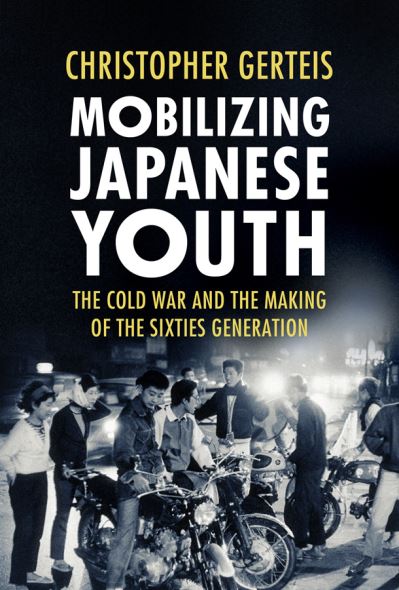
In Mobilizing Japanese Youth, Christopher Gerteis examines how non-state institutions in Japan-left-wing radicals and right-wing activists-attempted to mold the political consciousness of the nation's first postwar generation, which by the late 1960s were the demographic majority of voting-age adults. Gerteis argues that socially constructed aspects of class and gender preconfigured the forms of political rhetoric and social organization that both the far-right and far-left deployed to mobilize postwar, further exacerbating the levels of social and political alienation expressed by young blue- and pink- collar working men and women well into the 1970s, illustrated by high-profile acts of political violence committed by young Japanese in this era.
As Gerteis shows, Japanese youth were profoundly influenced by a transnational flow of ideas and people that constituted a unique historical convergence of pan-Asianism, Mao-ism, black nationalism, anti-imperialism, anticommunism, neo-fascism, and ultra-nationalism. Mobilizing Japanese Youth carefully unpacks their formative experiences and the social, cultural, and political challenges to both the hegemonic culture and the authority of the Japanese state that engulfed them. The 1950s-style mass-mobilization efforts orchestrated by organized labor could not capture their political imagination in the way that more extreme ideologies could. By focusing on how far-right and far-left organizations attempted to reach-out to young radicals, especially those of working-class origins, this book offers a new understanding of successive waves of youth radicalism since 1960.
| ISBN: | 9781501756313 |
| Publication date: | 15th July 2021 |
| Author: | Christopher Gerteis |
| Publisher: | Cornell University Press |
| Format: | Hardback |
| Pagination: | 192 pages |
| Series: | Studies of the Weatherhead East Asian Institute, Columbia University |
| Genres: |
Asian history Political ideologies and movements General and world history |
In Mobilizing Japanese Youth, Christopher Gerteis examines how non-state institutions in Japan-left-wing radicals and right-wing activists-attempted to mold the political consciousness of the nation's first postwar generation, which by the late 1960s were the demographic majority of voting-age adults. Gerteis argues that socially constructed aspects of class and gender preconfigured the forms of political rhetoric and social organization that both the far-right and far-left deployed to mobilize postwar, further exacerbating the levels of social and political alienation expressed by young blue- and pink- collar working men and women well into the 1970s, illustrated by high-profile acts of political violence committed by young Japanese in this era.
As Gerteis shows, Japanese youth were profoundly influenced by a transnational flow of ideas and people that constituted a unique historical convergence of pan-Asianism, Mao-ism, black nationalism, anti-imperialism, anticommunism, neo-fascism, and ultra-nationalism. Mobilizing Japanese Youth carefully unpacks their formative experiences and the social, cultural, and political challenges to both the hegemonic culture and the authority of the Japanese state that engulfed them. The 1950s-style mass-mobilization efforts orchestrated by organized labor could not capture their political imagination in the way that more extreme ideologies could. By focusing on how far-right and far-left organizations attempted to reach-out to young radicals, especially those of working-class origins, this book offers a new understanding of successive waves of youth radicalism since 1960.
Mobilizing Japanese Youth features in the following genres: Asian history, Political ideologies and movements, General and world history
Mobilizing Japanese Youth is available in Ebook, Hardback
Mobilizing Japanese Youth was written by Christopher Gerteis and published by Cornell University Press
Mobilizing Japanese Youth has 192 pages
Yes it is part of Studies of the Weatherhead East Asian Institute, Columbia University series
£31.50