

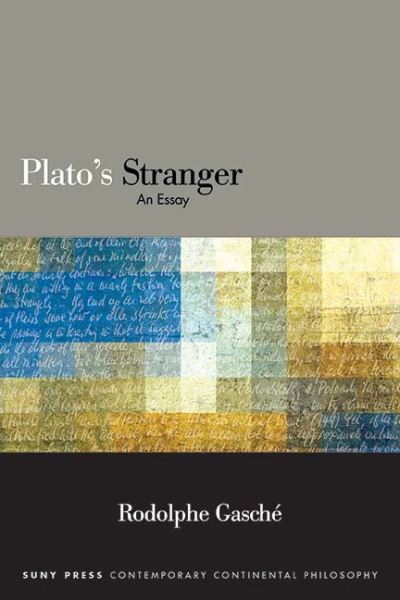
Meditation on the character of the Eleatic Stranger in Plato's late dialogues, arguing that the prominent place afforded to this foreigner-the other-represents an important philosophical and political legacy regarding the way thought, and life in the community, is understood.
The dramatic introduction in two of Plato's late dialogues-the Sophist and the Statesman, both part of a trilogy that also includes the Theaetetus-of a stranger, the Eleatic Stranger, who replaces Socrates, is a consequential move, especially since it occurs in the context of decidedly new insights into the philosophical logos and life together in a community. The introduction of a radical stranger, a stranger to all native identity, has theoretical implications, and, rather than a rhetorical or merely literary device, is of the order of an argument. Plato's Stranger argues that in these late dialogues, Plato bestows on the West a philosophical and political legacy at the core of which the stranger holds a prominent place because it provides the foreigner-the other-with a previously unheard-of constitutive role in the way thinking, as well as life in community, is understood. What is to be learned from these late dialogues is that, without a constitutive relation to otherness, discursive and political life in a community-in other words, also of the way one relates to oneself-remain lacking.
| ISBN: | 9781438490342 |
| Publication date: | 2nd April 2023 |
| Author: | Rodolphe Gasché |
| Publisher: | SUNY Press an imprint of State University of New York Press |
| Format: | Paperback |
| Pagination: | 221 pages |
| Series: | SUNY Series in Contemporary Continental Philosophy |
| Genres: |
Ancient Greek and Roman philosophy Philosophy: epistemology and theory of knowledge Ethics and moral philosophy Social and political philosophy |
Meditation on the character of the Eleatic Stranger in Plato's late dialogues, arguing that the prominent place afforded to this foreigner-the other-represents an important philosophical and political legacy regarding the way thought, and life in the community, is understood.
The dramatic introduction in two of Plato's late dialogues-the Sophist and the Statesman, both part of a trilogy that also includes the Theaetetus-of a stranger, the Eleatic Stranger, who replaces Socrates, is a consequential move, especially since it occurs in the context of decidedly new insights into the philosophical logos and life together in a community. The introduction of a radical stranger, a stranger to all native identity, has theoretical implications, and, rather than a rhetorical or merely literary device, is of the order of an argument. Plato's Stranger argues that in these late dialogues, Plato bestows on the West a philosophical and political legacy at the core of which the stranger holds a prominent place because it provides the foreigner-the other-with a previously unheard-of constitutive role in the way thinking, as well as life in community, is understood. What is to be learned from these late dialogues is that, without a constitutive relation to otherness, discursive and political life in a community-in other words, also of the way one relates to oneself-remain lacking.
Plato's Stranger features in the following genres: Ancient Greek and Roman philosophy, Philosophy: epistemology and theory of knowledge, Ethics and moral philosophy, Social and political philosophy
Plato's Stranger is available in Paperback, Hardback
Plato's Stranger was written by Rodolphe Gasché and published by SUNY Press an imprint of State University of New York Press
Plato's Stranger has 221 pages
Yes it is part of SUNY Series in Contemporary Continental Philosophy series
£22.96