

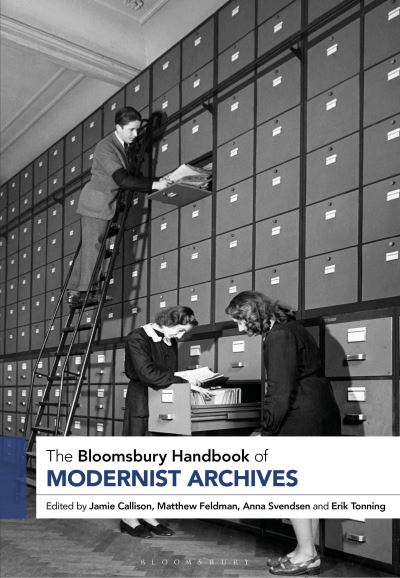
Providing a broad, definitive account of how the 'archival turn' in humanities scholarship has shaped modernist studies, this book also functions as an ongoing 'practitioner's toolkit' (including useful bibliographical resources) and a guide to avenues for future work.
Archival work in modernist studies has revolutionised the discipline in the past two decades, fuelled by innovative and ambitious scholarly editing projects and a growing interest in fresh types of archival sources and evidence that can re-contextualise modernist writing. Several theoretical trends have prompted this development, including the focus on compositional process within genetic manuscript studies, the emphasis on book history, little magazines, and wider publishing contexts, and the emphasis on new material evidence and global and 'non-canonical' authors and networks within the 'New Modernist Studies'.
This book provides a guide to the variety of new archival research that will point to fresh avenues and connect the methodologies and resources being developed across modernist studies. Offering a variety of single-author case studies on recent archival developments and editing projects, including Samuel Beckett, Hart Crane, H.D., James Joyce, Dorothy Richardson, May Sinclair and Virginia Woolf, it also offers a range of thematic essays that examine an array of underused sources as well as the challenges facing archival researchers of modernism
| ISBN: | 9781350450547 |
| Publication date: | 23rd July 2026 |
| Author: | Dr Jamie Callison, Dr Matthew Feldman, Anna Svendsen, Dr Erik Tonning |
| Publisher: | Bloomsbury Academic an imprint of Bloomsbury Publishing (UK) |
| Format: | Paperback |
| Pagination: | 384 pages |
| Series: | Bloomsbury Handbooks |
| Genres: |
Literary studies: c 1900 to c 2000 |
Providing a broad, definitive account of how the 'archival turn' in humanities scholarship has shaped modernist studies, this book also functions as an ongoing 'practitioner's toolkit' (including useful bibliographical resources) and a guide to avenues for future work.
Archival work in modernist studies has revolutionised the discipline in the past two decades, fuelled by innovative and ambitious scholarly editing projects and a growing interest in fresh types of archival sources and evidence that can re-contextualise modernist writing. Several theoretical trends have prompted this development, including the focus on compositional process within genetic manuscript studies, the emphasis on book history, little magazines, and wider publishing contexts, and the emphasis on new material evidence and global and 'non-canonical' authors and networks within the 'New Modernist Studies'.
This book provides a guide to the variety of new archival research that will point to fresh avenues and connect the methodologies and resources being developed across modernist studies. Offering a variety of single-author case studies on recent archival developments and editing projects, including Samuel Beckett, Hart Crane, H.D., James Joyce, Dorothy Richardson, May Sinclair and Virginia Woolf, it also offers a range of thematic essays that examine an array of underused sources as well as the challenges facing archival researchers of modernism
The Bloomsbury Handbook of Modernist Archives features in the following genres: Literary studies: c 1900 to c 2000
The Bloomsbury Handbook of Modernist Archives is available in Paperback
The Bloomsbury Handbook of Modernist Archives was written by Dr Jamie Callison, Dr Matthew Feldman, Anna Svendsen, Dr Erik Tonning and published by Bloomsbury Academic an imprint of Bloomsbury Publishing (UK)
The Bloomsbury Handbook of Modernist Archives has 384 pages
Yes it is part of Bloomsbury Handbooks series
£35.99