

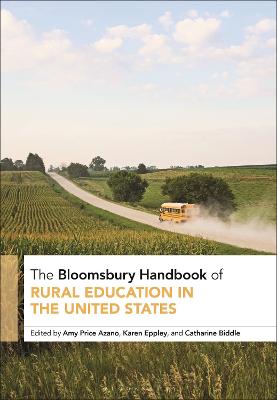
This handbook begins with a foundational overview of rural education, examining the ways in which definitions, histories, policies, and demographic changes influence rural schools. This foundational approach includes how corporatization, population changes, poverty, and the role of data affect everyday learning in rural schools. In following sections, the contributors consider how school closures, charter schools, and district governance influence decision making in rural schooling, while also examining the influence of these structures on higher education attainment, rural school partnerships, and school leadership. They explore curriculum studies in rural education, including place-based and trauma-informed pedagogies, rural literacies, rural stereotype threat, and achievement. Finally, they engage with issues of identity and equity in rural schools by providing an overview of the literature related to diverse populations in rural places, including Indigenous, Black, and Latinx communities, and exceptional learners. Importantly, this handbook applies theoretical tools to rural classroom experiences, demonstrating the potential of work centered at the intersection of theory, rurality, and classroom practice. Each section concludes with a response by an international scholar, situating the topics covered within the broader global context.
| ISBN: | 9781350172005 |
| Publication date: | 7th October 2021 |
| Author: | Amy Price Azano |
| Publisher: | Bloomsbury Academic an imprint of Bloomsbury Publishing PLC |
| Format: | Hardback |
| Pagination: | 416 pages |
| Series: | Bloomsbury Handbooks |
| Genres: |
Educational strategies and policy |
This handbook begins with a foundational overview of rural education, examining the ways in which definitions, histories, policies, and demographic changes influence rural schools. This foundational approach includes how corporatization, population changes, poverty, and the role of data affect everyday learning in rural schools. In following sections, the contributors consider how school closures, charter schools, and district governance influence decision making in rural schooling, while also examining the influence of these structures on higher education attainment, rural school partnerships, and school leadership. They explore curriculum studies in rural education, including place-based and trauma-informed pedagogies, rural literacies, rural stereotype threat, and achievement. Finally, they engage with issues of identity and equity in rural schools by providing an overview of the literature related to diverse populations in rural places, including Indigenous, Black, and Latinx communities, and exceptional learners. Importantly, this handbook applies theoretical tools to rural classroom experiences, demonstrating the potential of work centered at the intersection of theory, rurality, and classroom practice. Each section concludes with a response by an international scholar, situating the topics covered within the broader global context.
The Bloomsbury Handbook of Rural Education in the United States features in the following genres: Educational strategies and policy
The Bloomsbury Handbook of Rural Education in the United States is available in Hardback
The Bloomsbury Handbook of Rural Education in the United States was written by Amy Price Azano and published by Bloomsbury Academic an imprint of Bloomsbury Publishing PLC
The Bloomsbury Handbook of Rural Education in the United States has 416 pages
Yes it is part of Bloomsbury Handbooks series