

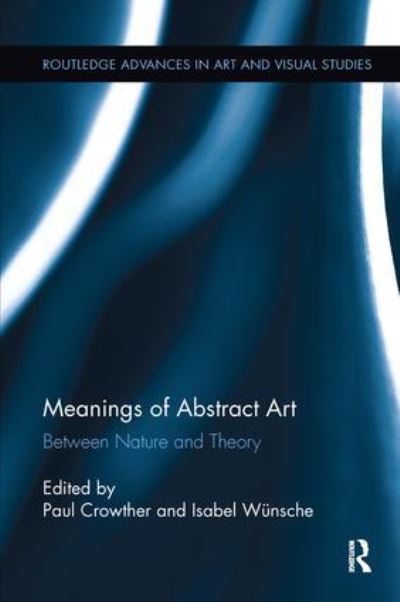
Traditional art is based on conventions of resemblance between the work and that which it is a representation "of". Abstract art, in contrast, either adopts alternative modes of visual representation or reconfigures mimetic convention. This book explores the relation of abstract art to nature (taking nature in the broadest sense-the world of recognisable objects, creatures, organisms, processes, and states of affairs).
Abstract art takes many different forms, but there are shared key structural features centered on two basic relations to nature. The first abstracts from nature, to give selected aspects of it a new and extremely unfamiliar appearance. The second affirms a natural creativity that issues in new, autonomous forms that are not constrained by mimetic conventions. (Such creativity is often attributed to the power of the unconscious.)
The book covers three categories: classical modernism (Mondrian, Malevich, Kandinsky, Arp, early American abstraction); post-war abstraction (Pollock, Still, Newman, Smithson, Noguchi, Arte Povera, Michaux, postmodern developments); and the broader historical and philosophical scope.
| ISBN: | 9781138233867 |
| Publication date: | 11th October 2016 |
| Author: | Paul Crowther, Isabel Wünsche |
| Publisher: | Routledge an imprint of Taylor & Francis |
| Format: | Paperback |
| Pagination: | 300 pages |
| Series: | Routledge Advances in Art and Visual Studies |
| Genres: |
History of art Media studies Theory of art History |
Traditional art is based on conventions of resemblance between the work and that which it is a representation "of". Abstract art, in contrast, either adopts alternative modes of visual representation or reconfigures mimetic convention. This book explores the relation of abstract art to nature (taking nature in the broadest sense-the world of recognisable objects, creatures, organisms, processes, and states of affairs).
Abstract art takes many different forms, but there are shared key structural features centered on two basic relations to nature. The first abstracts from nature, to give selected aspects of it a new and extremely unfamiliar appearance. The second affirms a natural creativity that issues in new, autonomous forms that are not constrained by mimetic conventions. (Such creativity is often attributed to the power of the unconscious.)
The book covers three categories: classical modernism (Mondrian, Malevich, Kandinsky, Arp, early American abstraction); post-war abstraction (Pollock, Still, Newman, Smithson, Noguchi, Arte Povera, Michaux, postmodern developments); and the broader historical and philosophical scope.
Meanings of Abstract Art features in the following genres: History of art, Media studies, Theory of art, History
Meanings of Abstract Art is available in Paperback, Hardback
Meanings of Abstract Art was written by Paul Crowther, Isabel Wünsche and published by Routledge an imprint of Taylor & Francis
Meanings of Abstract Art has 300 pages
Yes it is part of Routledge Advances in Art and Visual Studies series
£43.19