

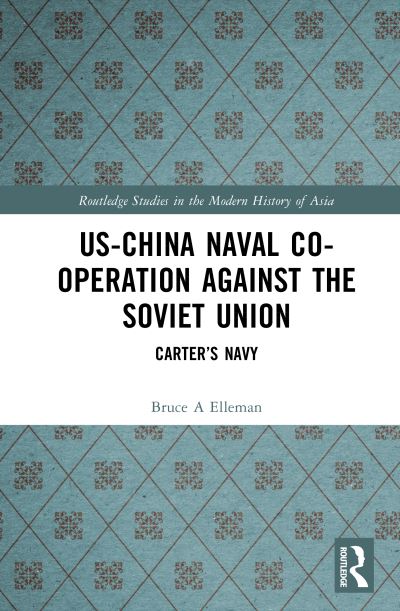
This book discusses the key role of the transfer of naval technology from the U.S. to China in building up the Chinese Navy during the Cold War.
Revealing how this process began in the late 1970s under the Carter Administration when Deng Xiaoping was newly in power, and how it accelerated under both the Reagan and Bush administrations, moving from the transfer of simple technology to entire naval systems the book highlights how the policy was successful in helping make China a serious threat to the Soviet Union, and how it thereby contributed to the collapse of the Soviet Union and the end of the Cold War. The book also demonstrates how this same policy also enabled China, now with the world's largest navy, to become much more assertive in East Asia more widely, resulting in the U.S. reversing its technology transfer policy following the Tiananmen Square massacre and in China turning to Russia and other former Soviet countries including Ukraine for the supply of Soviet-era equipment.
Utilising disclosed and formerly secret documents this book will be a valuable resource to both students and scholars of international relations, security studies and naval studies, particularly in relation to Chinese-U.S.-USSR relations during the Cold War.
| ISBN: | 9781032822068 |
| Publication date: | 25th July 2025 |
| Author: | Bruce A Elleman |
| Publisher: | Routledge an imprint of Taylor & Francis |
| Format: | Hardback |
| Pagination: | 236 pages |
| Series: | Routledge Studies in the Modern History of Asia |
| Genres: |
Politics and government Naval forces and warfare Cold wars and proxy conflicts Military history Regional / International studies Asian history Theory of warfare and military science History and Archaeology |
This book discusses the key role of the transfer of naval technology from the U.S. to China in building up the Chinese Navy during the Cold War.
Revealing how this process began in the late 1970s under the Carter Administration when Deng Xiaoping was newly in power, and how it accelerated under both the Reagan and Bush administrations, moving from the transfer of simple technology to entire naval systems the book highlights how the policy was successful in helping make China a serious threat to the Soviet Union, and how it thereby contributed to the collapse of the Soviet Union and the end of the Cold War. The book also demonstrates how this same policy also enabled China, now with the world's largest navy, to become much more assertive in East Asia more widely, resulting in the U.S. reversing its technology transfer policy following the Tiananmen Square massacre and in China turning to Russia and other former Soviet countries including Ukraine for the supply of Soviet-era equipment.
Utilising disclosed and formerly secret documents this book will be a valuable resource to both students and scholars of international relations, security studies and naval studies, particularly in relation to Chinese-U.S.-USSR relations during the Cold War.
US-China Naval Co-Operation Against the Soviet Union features in the following genres: Politics and government, Naval forces and warfare, Cold wars and proxy conflicts, Military history, Regional / International studies, Asian history, Theory of warfare and military science, History and Archaeology
US-China Naval Co-Operation Against the Soviet Union is available in Hardback
US-China Naval Co-Operation Against the Soviet Union was written by Bruce A Elleman and published by Routledge an imprint of Taylor & Francis
US-China Naval Co-Operation Against the Soviet Union has 236 pages
Yes it is part of Routledge Studies in the Modern History of Asia series
£154.79