

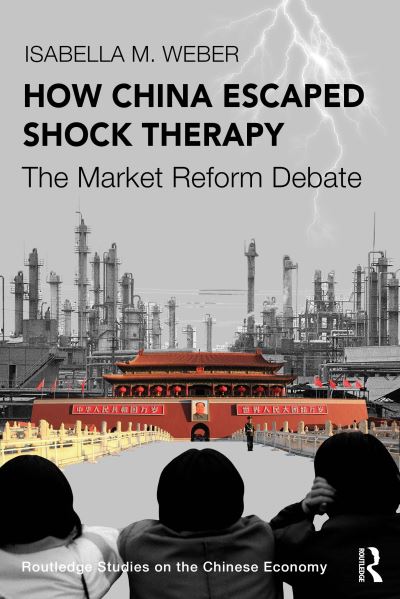
China has become deeply integrated into the world economy. Yet, gradual marketization has facilitated the country's rise without leading to its wholesale assimilation to global neoliberalism. This book uncovers the fierce contest about economic reforms that shaped China's path. In the first post-Mao decade, China's reformers were sharply divided. They agreed that China had to reform its economic system and move toward more marketization-but struggled over how to go about it. Should China destroy the core of the socialist system through shock therapy, or should it use the institutions of the planned economy as market creators? With hindsight, the historical record proves the high stakes behind the question: China embarked on an economic expansion commonly described as unprecedented in scope and pace, whereas Russia's economy collapsed under shock therapy. Based on extensive research, including interviews with key Chinese and international participants and World Bank officials as well as insights gleaned from unpublished documents, the book charts the debate that ultimately enabled China to follow a path to gradual reindustrialization. Beyond shedding light on the crossroads of the 1980s, it reveals the intellectual foundations of state-market relations in reform-era China through a longue durée lens. Overall, the book delivers an original perspective on China's economic model and its continuing contestations from within and from without.
| ISBN: | 9781032008493 |
| Publication date: | 27th May 2021 |
| Author: | Isabella Weber |
| Publisher: | Routledge an imprint of Taylor & Francis |
| Format: | Paperback |
| Pagination: | 358 pages |
| Series: | Routledge Studies on the Chinese Economy |
| Genres: |
Asian history Political economy Economic history |
China has become deeply integrated into the world economy. Yet, gradual marketization has facilitated the country's rise without leading to its wholesale assimilation to global neoliberalism. This book uncovers the fierce contest about economic reforms that shaped China's path. In the first post-Mao decade, China's reformers were sharply divided. They agreed that China had to reform its economic system and move toward more marketization-but struggled over how to go about it. Should China destroy the core of the socialist system through shock therapy, or should it use the institutions of the planned economy as market creators? With hindsight, the historical record proves the high stakes behind the question: China embarked on an economic expansion commonly described as unprecedented in scope and pace, whereas Russia's economy collapsed under shock therapy. Based on extensive research, including interviews with key Chinese and international participants and World Bank officials as well as insights gleaned from unpublished documents, the book charts the debate that ultimately enabled China to follow a path to gradual reindustrialization. Beyond shedding light on the crossroads of the 1980s, it reveals the intellectual foundations of state-market relations in reform-era China through a longue durée lens. Overall, the book delivers an original perspective on China's economic model and its continuing contestations from within and from without.
How China Escaped Shock Therapy features in the following genres: Economic theory and philosophy, Development economics and emerging economies, Political economy, Economic history, Asian history, Regional / International studies, Politics and government
How China Escaped Shock Therapy is available in Hardback, Paperback
How China Escaped Shock Therapy was written by Isabella Weber and published by Routledge an imprint of Taylor & Francis
How China Escaped Shock Therapy has 358 pages
Yes it is part of Routledge Studies on the Chinese Economy series
£35.99