

A darkly alluring plant family and the arrival of modernity
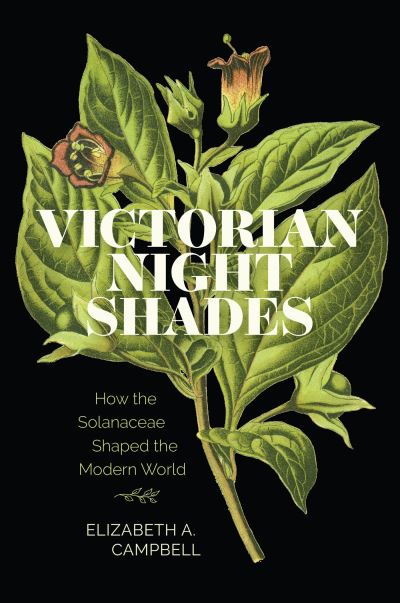
Victorian Nightshades tells the story of how one plant family-notorious for centuries in England because of its frequently psychoactive and poisonous properties-rose to social and economic prevalence during the nineteenth century. Beginning with bittersweet and belladonna, the Old World species associated with evil, witchcraft, and dangerous women in an era when traditional botanical beliefs not only assigned morality to plants but also gendered them, Campbell then moves to the ubiquitous potato and tobacco before concluding with four of the Solanaceae that achieved the widest national favor by the end of the century: the ornamental petunia and the edible pepper, eggplant, and tomato.
The story of the nightshades exposes the conflicts between science and popular sentiment and between knowledge and received opinion that defined the nineteenth century. Campbell compellingly details how advances in medical and botanical knowledge, evolutionary theory, and the vagaries of human desire transformed the Solanaceae from a plant family plagued by fear and hostility in the British imagination to one of cultural favor and celebration by the turn of the century-encapsulating the Victorian era's course to modernity.
| ISBN: | 9780813952543 |
| Publication date: | 31st March 2025 |
| Author: | Elizabeth A Campbell |
| Publisher: | University of Virginia Press |
| Format: | Paperback |
| Pagination: | 348 pages |
| Series: | Victorian Literature and Culture Series |
| Genres: |
Literary studies: c 1800 to c 1900 Ecological science, the Biosphere European history Trees, wildflowers and plants: general interest Literature: history and criticism Nature and the natural world: general interest |
A darkly alluring plant family and the arrival of modernity
Victorian Nightshades tells the story of how one plant family-notorious for centuries in England because of its frequently psychoactive and poisonous properties-rose to social and economic prevalence during the nineteenth century. Beginning with bittersweet and belladonna, the Old World species associated with evil, witchcraft, and dangerous women in an era when traditional botanical beliefs not only assigned morality to plants but also gendered them, Campbell then moves to the ubiquitous potato and tobacco before concluding with four of the Solanaceae that achieved the widest national favor by the end of the century: the ornamental petunia and the edible pepper, eggplant, and tomato.
The story of the nightshades exposes the conflicts between science and popular sentiment and between knowledge and received opinion that defined the nineteenth century. Campbell compellingly details how advances in medical and botanical knowledge, evolutionary theory, and the vagaries of human desire transformed the Solanaceae from a plant family plagued by fear and hostility in the British imagination to one of cultural favor and celebration by the turn of the century-encapsulating the Victorian era's course to modernity.
Victorian Nightshades features in the following genres: Literary studies: c 1800 to c 1900, Ecological science, the Biosphere, European history, Trees, wildflowers and plants: general interest, Literature: history and criticism, Nature and the natural world: general interest
Victorian Nightshades is available in Hardback, Paperback
Victorian Nightshades was written by Elizabeth A Campbell and published by University of Virginia Press
Victorian Nightshades has 348 pages
Yes it is part of Victorian Literature and Culture Series series