

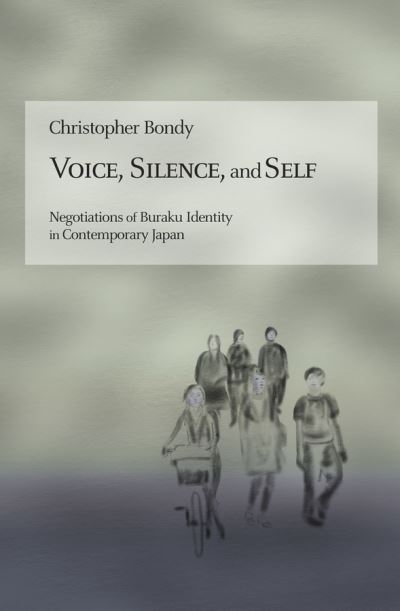
The Burakumin. Stigmatized throughout Japanese history as an outcaste group, their identity is still "risky," their social presence mostly silent, and their experience marginalized in public discourse. They are contemporary Japan's largest minority group-between 1.5 and 3 million people. How do young people today learn about being burakumin? How do they struggle with silence and search for an authentic voice for their complex experience?
Voice, Silence, and Self examines how the mechanisms of silence surrounding burakumin issues are reproduced and challenged in Japanese society. It explores the ways in which schools and social relationships shape people's identity as burakumin within a "protective cocoon" where risk is minimized. Based on extensive ethnographic research and interviews, this longitudinal work explores the experience of burakumin youth from two different communities and with different social movement organizations.
Christopher Bondy explores how individuals navigate their social world, demonstrating the ways in which people make conscious decisions about the disclosure of a stigmatized identity. This compelling study is relevant to scholars and students of Japan studies and beyond. It provides crucial examples for all those interested in issues of identity, social movements, stigma, and education in a comparative setting.
| ISBN: | 9780674088405 |
| Publication date: | 23rd October 2015 |
| Author: | Christopher Bondy, Harvard University |
| Publisher: | Harvard University Asia Center an imprint of Harvard University Press |
| Format: | Hardback |
| Pagination: | 200 pages |
| Series: | Harvard East Asian Monographs |
| Genres: |
Asian history Social classes Social and cultural anthropology |
The Burakumin. Stigmatized throughout Japanese history as an outcaste group, their identity is still "risky," their social presence mostly silent, and their experience marginalized in public discourse. They are contemporary Japan's largest minority group-between 1.5 and 3 million people. How do young people today learn about being burakumin? How do they struggle with silence and search for an authentic voice for their complex experience?
Voice, Silence, and Self examines how the mechanisms of silence surrounding burakumin issues are reproduced and challenged in Japanese society. It explores the ways in which schools and social relationships shape people's identity as burakumin within a "protective cocoon" where risk is minimized. Based on extensive ethnographic research and interviews, this longitudinal work explores the experience of burakumin youth from two different communities and with different social movement organizations.
Christopher Bondy explores how individuals navigate their social world, demonstrating the ways in which people make conscious decisions about the disclosure of a stigmatized identity. This compelling study is relevant to scholars and students of Japan studies and beyond. It provides crucial examples for all those interested in issues of identity, social movements, stigma, and education in a comparative setting.
Voice, Silence, and Self features in the following genres: Asian history, Social classes, Social and cultural anthropology
Voice, Silence, and Self is available in Hardback
Voice, Silence, and Self was written by Christopher Bondy, Harvard University and published by Harvard University Asia Center an imprint of Harvard University Press
Voice, Silence, and Self has 200 pages
Yes it is part of Harvard East Asian Monographs series