

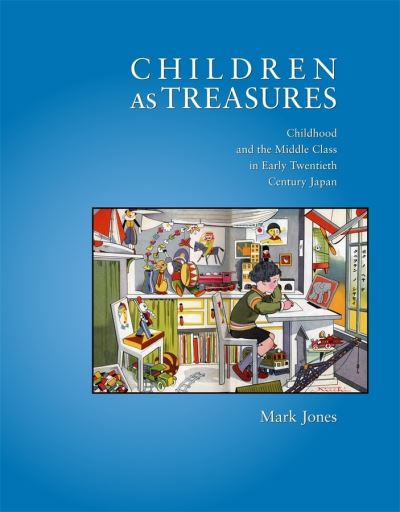
Mark Jones examines the making of a new child's world in Japan between 1890 and 1930 and focuses on the institutions, groups, and individuals that reshaped both the idea of childhood and the daily life of children. Family reformers, scientific child experts, magazine editors, well-educated mothers, and other prewar urban elites constructed a model of childhood-having one's own room, devoting time to homework, reading children's literature, playing with toys-that ultimately became the norm for young Japanese in subsequent decades.
This book also places the story of modern childhood within a broader social context-the emergence of a middle class in early twentieth century Japan. The ideal of making the child into a "superior student" (yutosei) appealed to the family seeking upward mobility and to the nation-state that needed disciplined, educated workers able to further Japan's capitalist and imperialist growth. This view of the middle class as a child-centered, educationally obsessed, socially aspiring stratum survived World War II and prospered into the years beyond.
| ISBN: | 9780674053342 |
| Publication date: | 1st October 2010 |
| Author: | Mark A Jones |
| Publisher: | Harvard University Asia Center an imprint of Harvard University Press |
| Format: | Hardback |
| Pagination: | 407 pages |
| Series: | Harvard East Asian Monographs |
| Genres: |
Geography |
Mark Jones examines the making of a new child's world in Japan between 1890 and 1930 and focuses on the institutions, groups, and individuals that reshaped both the idea of childhood and the daily life of children. Family reformers, scientific child experts, magazine editors, well-educated mothers, and other prewar urban elites constructed a model of childhood-having one's own room, devoting time to homework, reading children's literature, playing with toys-that ultimately became the norm for young Japanese in subsequent decades.
This book also places the story of modern childhood within a broader social context-the emergence of a middle class in early twentieth century Japan. The ideal of making the child into a "superior student" (yutosei) appealed to the family seeking upward mobility and to the nation-state that needed disciplined, educated workers able to further Japan's capitalist and imperialist growth. This view of the middle class as a child-centered, educationally obsessed, socially aspiring stratum survived World War II and prospered into the years beyond.
Children as Treasures features in the following genres: Geography
Children as Treasures is available in Hardback
Children as Treasures was written by Mark A Jones and published by Harvard University Asia Center an imprint of Harvard University Press
Children as Treasures has 407 pages
Yes it is part of Harvard East Asian Monographs series