

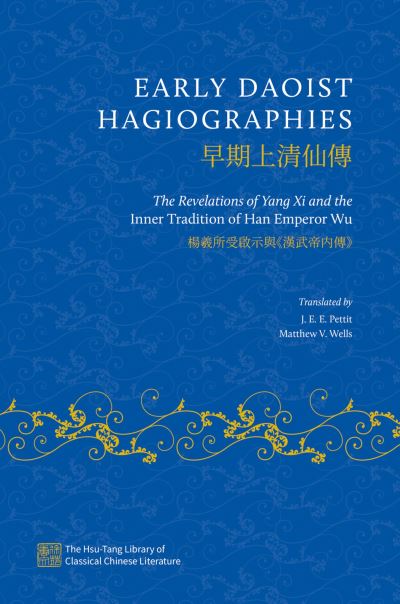
Early Daoist Hagiographies offers an engaging new translation of six key Daoist texts that illuminate the interplay between religion and literature in medieval China. Five of the texts are hagiographies from the fourth-century Supreme Purity (Shangqing) tradition, attributed to Yang Xi, who claimed to receive divine revelations from perfected beings during nightly séances. These narratives recount the trials and spiritual practices of early Daoist practitioners who ascended to godhood, serving as models for moral and ritual behavior. Complementing these is the Inner Tradition of Han Emperor Wu, an early sixth-century tale of Emperor Wu's failed pursuit of immortality, blending Daoist cosmology with cautionary themes about human desire. Together, these texts showcase the dynamic ways Daoist religious traditions shaped literary imagination during a period of political upheaval and cultural innovation. They provide insights into early medieval Daoist practices--such as meditative techniques, alchemy, and celestial bureaucracy--while reflecting the social lives and concerns of the era's elite. Through detailed introductions, this book reveals how esoteric Daoist beliefs were adapted into more accessible, popular forms, influencing Tang poetry, historiography, and public memory. The result is a fascinating glimpse into a time when gods, mortals, and cosmic forces converged to create enduring narratives of transcendence and caution.
| ISBN: | 9780197580004 |
| Publication date: | 2nd April 2026 |
| Author: | J E E Pettit, Matthew V Wells |
| Publisher: | Oxford University Press an imprint of OUP USA |
| Format: | Hardback |
| Pagination: | 292 pages |
| Series: | The Hsu-Tang Library of Classical Chinese Literature |
| Genres: |
East Asian and Indian philosophy Literature: history and criticism |
Early Daoist Hagiographies offers an engaging new translation of six key Daoist texts that illuminate the interplay between religion and literature in medieval China. Five of the texts are hagiographies from the fourth-century Supreme Purity (Shangqing) tradition, attributed to Yang Xi, who claimed to receive divine revelations from perfected beings during nightly séances. These narratives recount the trials and spiritual practices of early Daoist practitioners who ascended to godhood, serving as models for moral and ritual behavior. Complementing these is the Inner Tradition of Han Emperor Wu, an early sixth-century tale of Emperor Wu's failed pursuit of immortality, blending Daoist cosmology with cautionary themes about human desire. Together, these texts showcase the dynamic ways Daoist religious traditions shaped literary imagination during a period of political upheaval and cultural innovation. They provide insights into early medieval Daoist practices--such as meditative techniques, alchemy, and celestial bureaucracy--while reflecting the social lives and concerns of the era's elite. Through detailed introductions, this book reveals how esoteric Daoist beliefs were adapted into more accessible, popular forms, influencing Tang poetry, historiography, and public memory. The result is a fascinating glimpse into a time when gods, mortals, and cosmic forces converged to create enduring narratives of transcendence and caution.
Early Daoist Hagiographies features in the following genres: East Asian and Indian philosophy, Literature: history and criticism
Early Daoist Hagiographies is available in Hardback
Early Daoist Hagiographies was written by J E E Pettit, Matthew V Wells and published by Oxford University Press an imprint of OUP USA
Early Daoist Hagiographies has 292 pages
Yes it is part of The Hsu-Tang Library of Classical Chinese Literature series
£20.69